The Democratic Party Ahead of the 2026 Midterms
The Democrats’ losses in the 2024 electoral cycle exposed weaknesses in their platform on migration, border control and public safety, as well as in economic policy, and highlighted a broader leadership deficit within the party. It forced a strategic recalibration and a renewed focus on the issues that resonate most strongly with voters, particularly the cost of living. The effects of this adjustment were visible in state and local elections in 2025. Although these changes have improved the party’s short-term competitiveness and may strengthen its prospects in the November 2026 midterm elections for Congress, in themselves, they do not resolve the question of how the party intends to position itself in the 2028 presidential race.
 Adrees Latif / Reuters / Forum
The 2024 Defeat and Its Aftermath
The Democratic Party’s defeat in the most recent presidential and congressional elections revealed the limitations of its existing electoral strategy, especially around economic messaging and in its approach to migration, border control and security. The administration of Joe Biden, followed by the campaign operations of both Biden and Kamala Harris, failed to put forward proposals for these areas that convincingly addressed voters’ primary concerns. Macroeconomic indicators—including job growth and infrastructure investment—did not translate into perceptible improvements in household finances. This created space for Republicans to frame the political debate around declining living standards and the perception of weakening state control over migration and public order. The campaign itself, shaped by visible concerns over Biden’s health and his late decision to withdraw from seeking re-election, resulted in Harris becoming the nominee without sufficient consolidation of the party’s base or a clearly established mandate among voters. At the same time, she was unable to distance herself from the administration’s most controversial policies. As a consequence, the 2024 defeat prompted an internal reassessment of priorities. Identity-based and cultural issues have receded from prominence, replaced by a stronger emphasis on the cost of living, economic security and the effective functioning of the state. However, Democratic circles have not yet embarked on a structured effort to prepare for a return to power that would constitute an equivalent – in organisational or programmatic terms – to the conservative “Project 2025.”
The Road to the 2026 Midterms
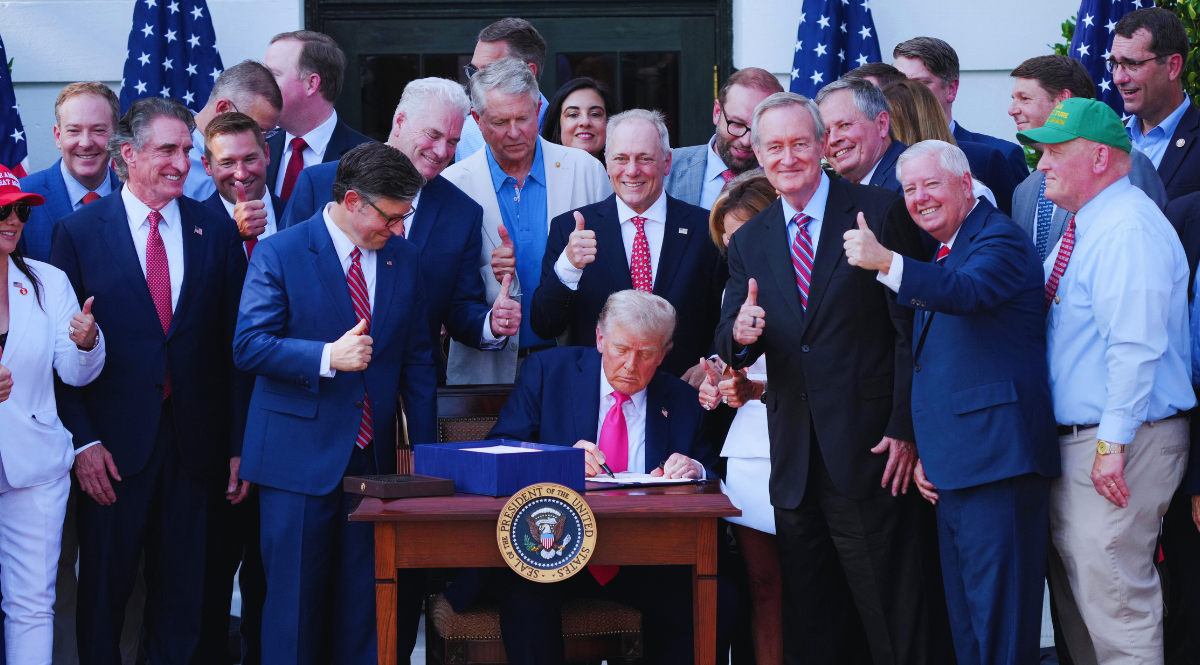
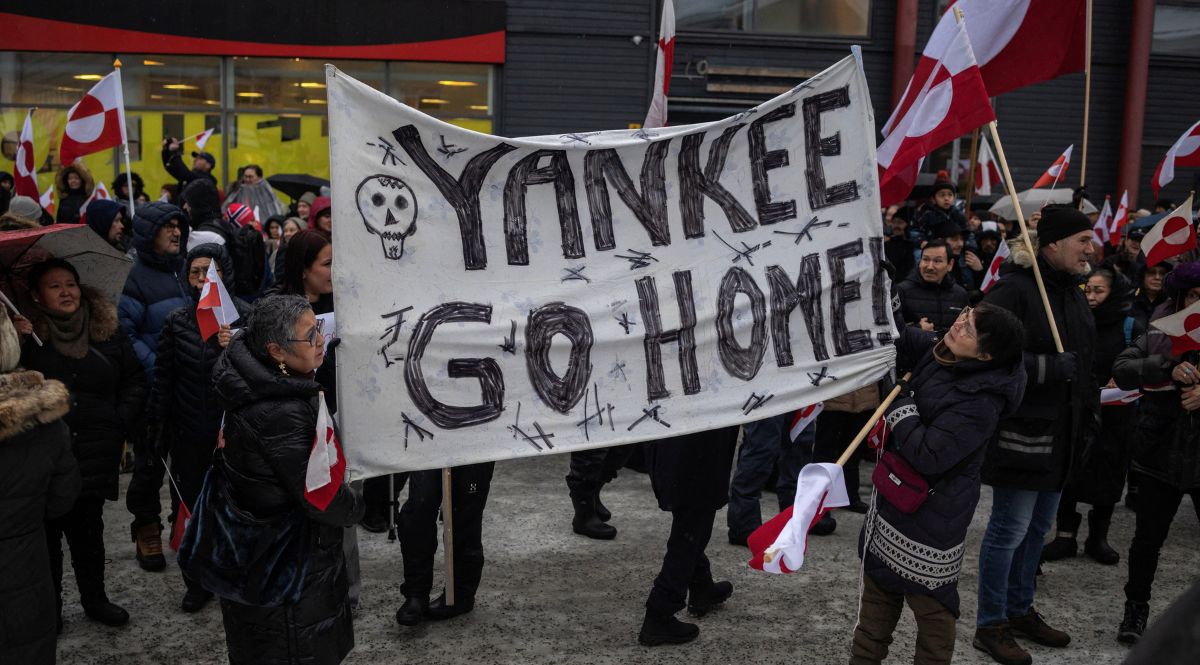
The Democratic Party has not undertaken a comprehensive diagnosis of the factors that prevented it from mounting a successful bid for the presidency and Congress in the last electoral cycle. This restraint reflects concerns that a full internal reckoning could deepen existing divisions at a time when the party is gradually recovering lost support, as evidenced by local and state elections in 2025. These elections highlighted the effectiveness of solutions proposed by individual politicians and reshaped the dynamics of preparation for the November 2026 midterms. Zohran Mamdani, aligned with the left wing of the Democratic Socialists of America, won the New York mayoral election through a grassroots campaign centred on the cost of living and an expansive social policy agenda. Given the institutional limits of the mayor’s office, elements of this platform carried a distinctly populist rhetorical tone. His victory underscored the mobilising potential of a more progressive or social-democratic approach to economic policy in activating a broad coalition of voters, including younger constituencies, the urban middle class and racial minorities. At the same time, the victories of former Democratic members of Congress in the gubernatorial races in New Jersey (Mikie Sherrill) and Virginia (Abigail Spanberger) – states reclaimed after four years of Republican control – demonstrated the party’s capacity to compete in politically diverse environments where independent voters are decisive. These elections showed improved Democratic effectiveness in mobilising supporters and driving turnout. Gains in suburban districts, long a central battleground in inter-party competition, were particularly notable, while Republican margins narrowed even in traditionally conservative areas. This shift reflects not only Democratic tactical adjustments but also rising dissatisfaction with the policies of Donald Trump and the Republican Party more broadly. Democrats have therefore sharpened their focus on rent and mortgage costs, energy prices, and access to healthcare and education. Another growing source of public concern has been the Trump administration’s deployment of the National Guard to address crime in Democrat-led cities, as well as the expanded role of US Immigration and Customs Enforcement (ICE) and US Customs and Border Protection (CBP) in operations targeting migrants. The fatal shooting of two Americans in Minneapolis by these services in January of this year generated significant public reaction.
Leadership and the 2028 Presidential Race
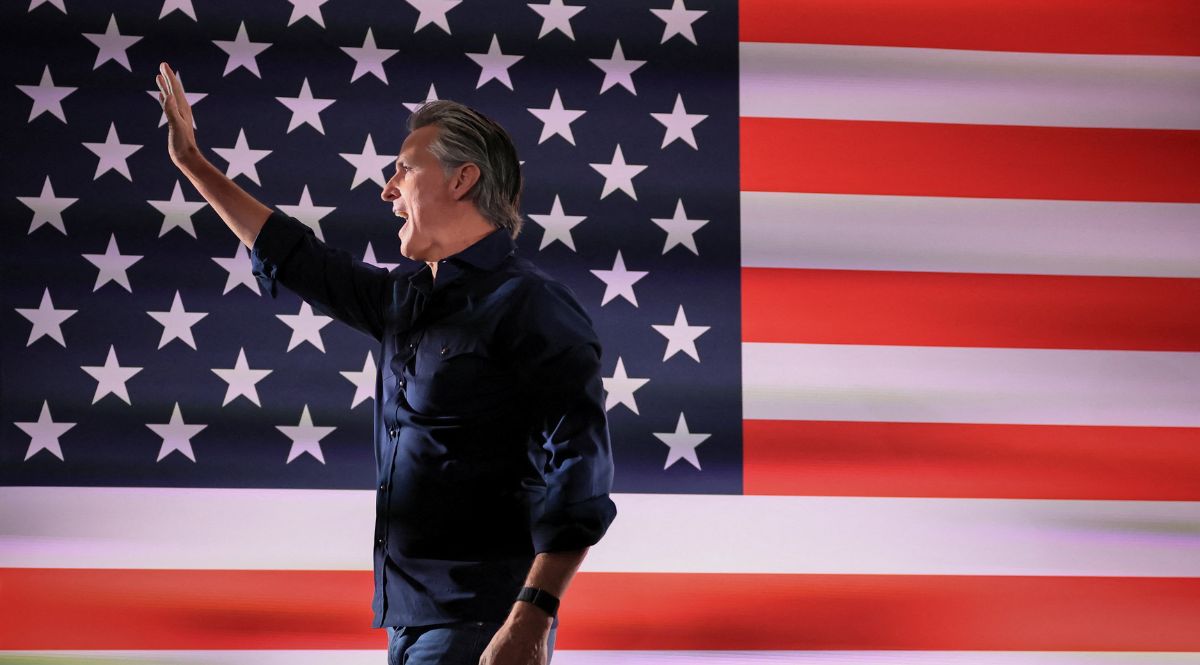
The absence of a clear leader within the Democratic Party, a legacy of the previous electoral setbacks, opens the possibility that as many as a dozen candidates could seek the party’s nomination in the 2028 presidential primaries. According to polling, including a YouGov survey conducted on 9–14 January, Kamala Harris (20%) remains the frontrunner. However, her capacity to consolidate the party’s electorate appears limited. Second in the polls is Gavin Newsom (17%), the Governor of California, whose candidacy is widely expected. He has built a national profile through sustained confrontation with the Trump administration, using his gubernatorial office as a political platform, and through selective international engagement intended to reinforce his stature. His strategy incorporates a populist edge that increases visibility and energises segments of the electorate, while simultaneously exposing vulnerabilities linked to his record in California. Congresswoman Alexandria Ocasio-Cortez (9%) represents the progressive wing of the party, mobilising younger voters and setting the stage for ideologically-defined primaries. Her more left-leaning positions are unlikely to be acceptable to a portion of moderate voters, yet she may still mount a credible bid for the nomination. Her growing influence suggests that she could inherit the political movement that coalesced around Senator Bernie Sanders (7%) during his 2016 and 2020 campaigns. Given his age (84), Sanders is unlikely to run again. Pete Buttigieg (8%), former mayor of a small Indiana city and Secretary of Transportation in the Biden administration, remains a recognisable national figure with executive experience and broadly moderate views. Whether this profile is sufficient to secure a leading position in the race remains uncertain. Senator Mark Kelly (7%), a former astronaut and husband of Congresswoman Gabby Giffords (who survived an assassination attempt), projects a moderate image grounded in themes of security and institutional credibility. Considered as a potential vice-presidential candidate of Kamala Harris in 2024, Kelly has further raised his national profile through a public dispute with President Trump over appeals to members of the armed forces to refuse unlawful orders. His prospects depend largely on whether party dynamics favour a consensus-oriented and comparatively uncontroversial nominee.
Conclusions
The Democratic Party is in a phase of gradual recovery, reflected in its performance in state and local elections. This improvement stems in part from a recalibrated policy emphasis and a sharper focus on rising living costs, including unmet campaign promises by Trump. Effectively addressing these concerns in 2026 and 2028 will be critical to rebuilding credibility among a broad electorate, particularly independent voters from the working middle class. Migration and security – key Republican strengths in 2024 – may, under current conditions, evolve into areas where Democrats can seize the initiative. The administration’s hard-line approach to migration and the partial erosion of public support for radical measures create space for a counter-narrative centred on proportionality and congressional oversight of executive authority. In the presidential race, Democratic candidates are likely to distance themselves from the more liberal migration policies associated with previous years, which may complicate efforts by figures such as Harris and Buttigieg to establish credibility on this issue. More explicitly progressive candidates, led by Ocasio-Cortez, are unlikely to recalibrate their positions. While Newsom is expected to challenge Trump and the Republicans through high-visibility, populist messaging, Kelly may seek to cultivate the image of a restrained statesman defending institutional norms against executive overreach. These issues reveal the potential for numerous divisions that may continue to pull the Democratic Party apart internally in the coming years—unless voters clearly indicate a preferred candidate at an early stage of the campaign, such as Newsom—thereby making it more difficult for the party to present a coherent programme as an alternative to the Republicans.