
The Economic Dimension of Donald Trump's Trip to Asia
A series of meetings with leaders of Indo-Pacific countries forms part of Donald Trump's economic agenda for his second term. The main goals are new trade and investment agreements that will strengthen the US position in the region and reduce mutual dependence on China. Most of the agreements are declarative in nature and designed to be implemented over time, so there is no certainty that the US administration, led by President Trump, will maintain its interest in their effective implementation.
 Evelyn Hockstein / Reuters / Forum
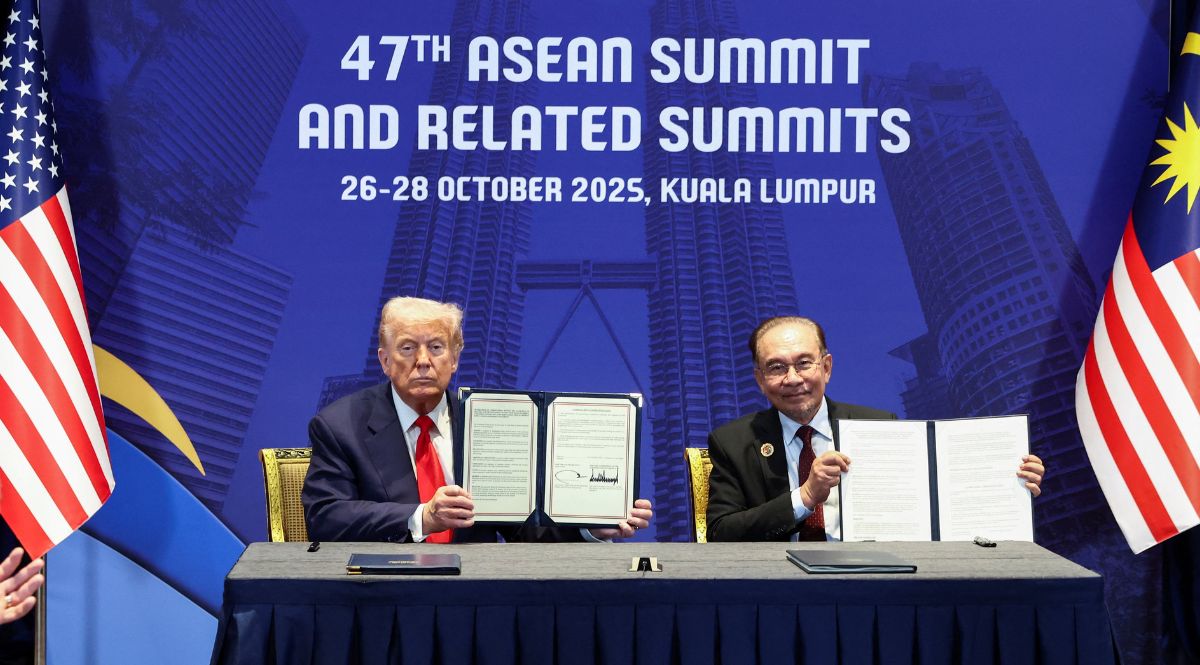
The US president's trip to Malaysia–during which he also met, inter alia, with the leaders of Cambodia, Thailand, and Vietnam on the sidelines of the ASEAN summit–as well as to Japan and South Korea in October 2025, highlighted the economic dimension of the Trump administration's approach to the Indo-Pacific. During the trip, the United States announced a series of agreements with Malaysia, Cambodia, Thailand, Vietnam, Japan, and South Korea, covering trade, raw materials, and industrial policy coordination.
The actions towards ASEAN countries were aimed at maintaining restrictive and conditional rules governing access to the US market, while simultaneously expanding the US economic presence in the region. In its relations with Japan and South Korea, the Trump administration focused on deepening investment cooperation aimed at attracting foreign capital into the United States. This differentiated set of instruments is part of a strategy to gradually reduce economic dependence on China on the part of both the United States and its Asian partners. The coherence of this approach was confirmed by the announcement in December 2025 of the Pax Silica initiative, a US-led framework for cooperation with selected partners, aimed at securing supply chains for semiconductors, critical raw materials, and technological infrastructure.
Trade Issues
Trade agreements with Malaysia and Cambodia lay the groundwork for opening local markets to US goods and reducing supply chain reliance on China, which remains the most important trading partner for all Southeast Asian countries. Cambodia has announced the elimination of tariffs on all industrial and agricultural goods, along with the reduction of a wide range of non-tariff barriers. Malaysia has adopted a similarly broad market opening and is committed to recognising US technical and sanitary standards. For both countries, the United States will maintain a 19% tariff rate on all imports. However, trade agreements with Thailand and Vietnam, where US tariffs remain at 19% and 20% respectively, are framework agreements and require further negotiation. More broadly, these solutions are part of US efforts to limit the use of ASEAN countries as intermediaries in trade that enables China to circumvent American tariffs and sanctions. Tariff reductions and preferential terms for Japan (15% on all imports) were linked to an investment program, industrial policy coordination mechanisms, and cooperation on critical raw materials and export controls. With regard to South Korea, the reduction in tariffs on cars and car parts (from 25% to 15%, applied as a base rate) has been linked to an investment package and commitments to remove non-tariff barriers, with lower tariffs remaining dependent on their implementation.
The Importance of Investment Cooperation
Japan has announced a broad $550 billion investment program in the United States, covering energy, infrastructure, and advanced industrial technologies, including components for the semiconductor sector. It will be implemented using public and private funds over several years, without a fixed timetable. However, in December 2025, a formal process for identifying and selecting projects under this framework was launched, with the participation of both governments’ administrations. South Korea, in turn, announced a $350 billion package, including investments in the US shipbuilding sector (approximately $150 billion), energy infrastructure, and LNG projects, encompassing both infrastructure development and long-term contracts for the purchase of US gas. The final investment decisions remain with the US authorities, which limits the influence of the Japanese and South Korean governments over the allocation of capital and may further reduce the likelihood of the announced programs being fully implemented. Cooperation packages with both countries are intended to support the implementation of US reindustrialisation objectives, but their ultimate economic impact will depend on the pace of administrative decision-making and the extent of private-sector involvement on both sides.
Malaysia, Thailand, and Vietnam have also declared investment cooperation with the United States, covering both investments by American companies in their markets and potential capital investment in the United States, primarily in the energy, logistics, and digital sectors. As with the agreements with Japan and South Korea, most of these initiatives remain at the level of declarations and cooperation frameworks, although their scale is considerably smaller.
Critical Raw Materials
Agreements with Japan and Malaysia, framework arrangements with Thailand, and the inclusion of Japan and South Korea in the Pax Silica initiative, establish the foundations for cooperation on securing the supply of critical raw materials, including their extraction, processing, and recycling. These initiatives focus on gradually relocating the most sensitive segments of supply chains to countries perceived as politically and regulatorily stable partners. However, their implementation will be protracted and require substantial capital investment. Within this architecture, Japan and South Korea play a particularly important role as countries with advanced processing and manufacturing technologies. Cooperation with Japan includes the development of capabilities in rare earth separation and processing, as well as the production of components for high-tech sectors, including permanent magnets and batteries. South Korea, in turn, is involved in projects related to the processing of these elements, the production of materials for the automotive and energy industries, and nuclear fuel technologies. Closer cooperation in these areas will strengthen US capabilities in the segments most vulnerable to Chinese export restrictions.
Conclusions
The results of Trump's trip to Asia remain mixed: alongside trade agreements and announcements of major investments, numerous declarations and framework arrangements were unveiled, the significance of which depends on further political and executive decisions by both sides and progress in their implementation. At this stage, they are mainly of political significance, serving primarily as a means of image-building and signalling. However, the implementation of at least some of these initiatives will give ASEAN countries the opportunity to leverage cooperation with the United States in their policy towards China, signalling the availability of alternatives and a degree of strategic autonomy. In the short term, they reinforce Trump's message about the benefits to the US economy of a "fair trade" approach. In the long term, assuming effective implementation, they may support the US strategy of limiting the PRC's ability to use ASEAN as a channel for circumventing high tariffs and sanctions. They will not, however, offset China's deeply entrenched economic ties in the region.
At the same time, the US model of trade cooperation–based on maintaining high tariffs and conditional access to the American market–may, in the medium term, encourage Asian partners to diversify their trade relationships, including away from the United States. In practice, this encourages deeper engagement with other major economic centres, including the European Union, thereby limiting Washington’s ability to bind regional partners durably to its market solely through trade instruments.
Rare earth elements remain a particularly significant challenge, as a sector in which China maintains a dominant position in terms of global processing capacity and control over key market segments, including separation and refining, permanent magnet production, and battery components. Diversifying supply chains in this area will be costly and time-consuming, and its effectiveness will depend on the consistent implementation of investment projects, streamlined regulatory processes, and the willingness of Asian partners to bear the economic and political costs associated with reducing cooperation with China.
Sustained and credible US engagement in the areas of military and economic security could reduce China's influence in the Indo-Pacific. However, the Trump administration's approach to trade to date, combined with the suspension of foreign aid, has weakened the US position in the region. For US allies outside the region, including Poland, Washington’s strategy of economic engagement in the Indo-Pacific signals the consolidation of a cooperation model based on investment, regulatory alignment, and expanded US access to foreign markets, accompanied by tariff pressure rooted in “fair trade” principles. This makes it all the more likely that the United States will increase pressure on the European Union and its member states, particularly with regard to deregulation and minimising constraints on the operations of American companies.



.png)
(1).png)
.png)