The challenges of Syria's economic recovery
After more than a decade of civil war, Ahmed al-Sharaa’s transitional government is now seeking to attract foreign investors. The unstable security situation remains the main obstacle to this process. Meanwhile, the emphasis on costly long-term infrastructure projects may lead to the marginalisation of the immediate needs of Syrian society and exacerbate inequalities. The European Union and European businesses involved in Syria’s reconstruction should focus on measures that will realistically and directly improve the standard of living of Syrians.
 Khalil Ashawi / Reuters / Forum
The scale of destruction and the most urgent needs
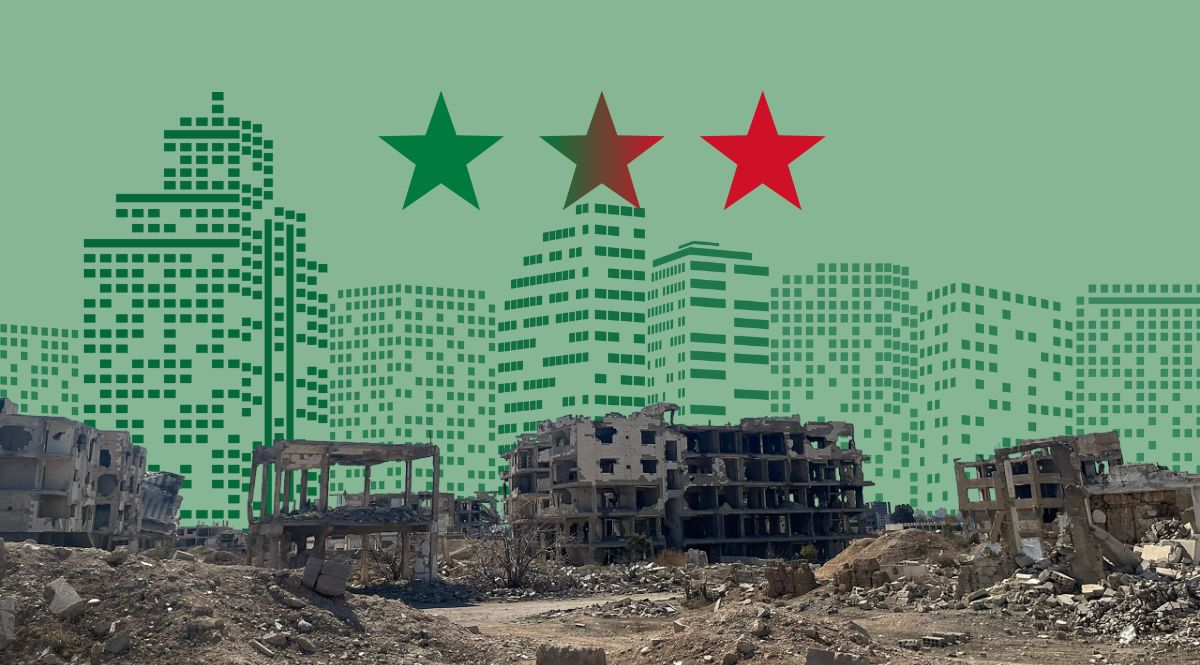
Nearly fourteen years of civil war, military interventions by neighbouring countries and Russia, and the activities of the so-called Islamic State have led to widespread destruction in Syria. The unstable situation resulted in the mass emigration of Syrians (and the associated “brain drain”) and the intensification of sectarian and ethnic conflicts. From an economic perspective, prolonged conflict has led to stunted development, currency devaluation, and damage to and destruction of infrastructure and residential buildings. The country’s cultural heritage has also suffered—with historic monuments being looted and demolished. The change of regime following the overthrow of Bashar al-Assad has halted these processes, but has not yet provided the conditions necessary to reverse them.
One of the transitional government’s main tasks is to lead Syria out of the crisis and create the conditions for reconstruction. According to World Bank estimates from 2025, the costs will amount to around $216 billion—almost 62 times more than the total Syrian budget revenue in that year ($3.5 billion). The reconstruction and modernisation of infrastructure is expected to be the costliest, with the provinces of Aleppo, Homs and Damascus (Rif Dimashq, which does not include the capital—the City of Damascus) requiring the greatest investment. Economic recovery will require the restoration of international trade relations and Syria’s reintegration into the global financial system. A significant step in this direction is the gradual lifting of sanctions by the EU and the US, and Syria’s removal from the US list of state sponsors of terrorism.
Reconstruction projects
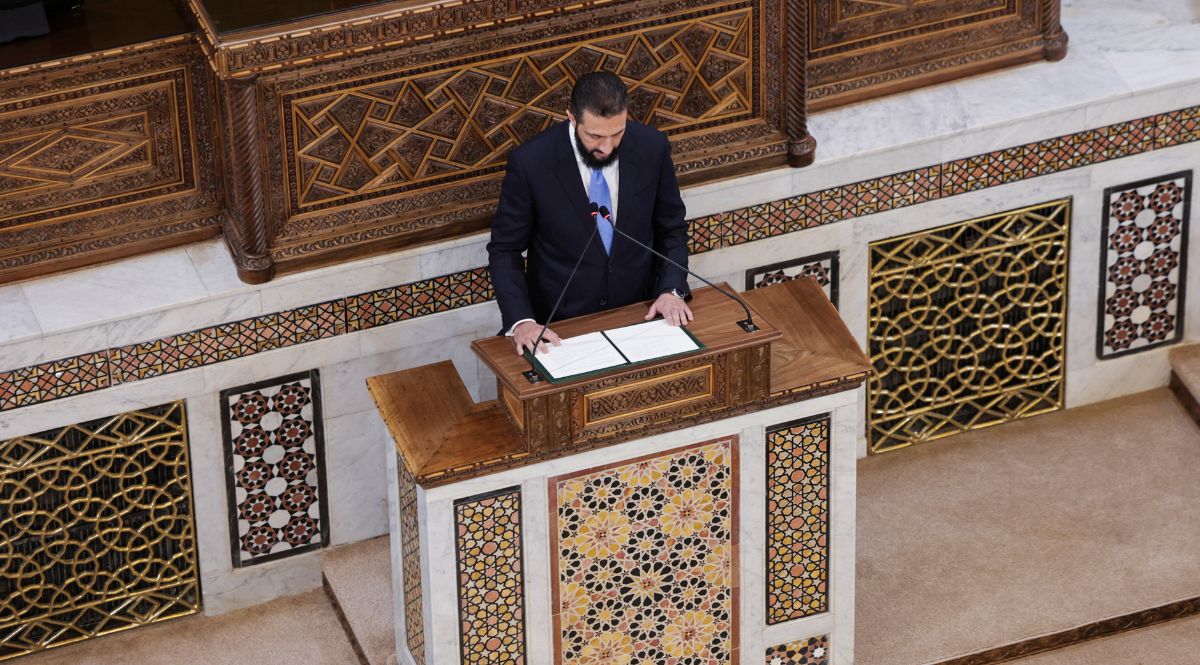
President Ahmed al-Sharaa, who previously led the insurgent group Hayat Tahrir al-Sham, is seeking reconstruction funding in Europe, the United States, Turkey and the Arabian Peninsula, endeavouring to promote Syria as a logistics and transport hub for the movement of goods—including energy resources—between Europe and Asia. Over the past 18 months, Syria has concluded a number of preliminary intergovernmental agreements and deals with private entities concerning construction and technology projects. For example, the French company CMA CGM has been awarded a concession to expand and manage the port of Latakia, as well as two dry ports and cargo transport at Damascus Airport. A Turkish-Qatari-American consortium is to be responsible for the development of passenger transport. The Turkish companies Kayan Commercial Holding Group and MYB will develop a special economic zone in Raqqa. The United Arab Emirates (UAE) will be involved in the expansion of the port of Tartus and housing projects, such as the “Damascus Hills” estate in Latakia, whilst Saudi companies have concluded several agreements concerning technology and infrastructure projects (e.g. the modernisation of Aleppo airport).
Syria is also being integrated into interregional economic corridor projects—it has been added to the Medusa fibre-optic network linking Europe and West Asia, and to the “Hejaz Railway” project—a rail link running from Turkey, through Syria and Jordan, to Saudi Arabia (KSA). The ports of Tartus and Latakia are identified as potential branches of the IMEC corridor, which is intended to link India, the Arabian Peninsula, East Asia and Europe. In the medium to long term, plans are being put forward for the construction of new energy corridors—for example, a gas pipeline transporting gas from Qatar via the KSA, Jordan and Syria to Turkey, or an oil pipeline between Kirkuk in Iraq and the Syrian port of Baniyas, which already serves as an export point for Iraqi oil transported via the land corridor. These initiatives will help position Syria as a transit country between the Persian Gulf and the Mediterranean (and, subsequently, Turkey and Europe). Syrian decision-makers are clearly pursuing this vision by promoting the “Four Seas-Nine Corridors” initiative—a strategic project announced in April this year by Ahmed al-Sharaa. The framework places Syria at the centre of nine land corridors and pipelines directly linking the Mediterranean, Caspian, Black, and Red Seas. In the long term, integration into global value chains should have a positive impact on Syria’s economic growth and enable the country to secure support in combating destabilising factors, such as fundamentalist groups.
Internal and external constraints
The security situation remains the main obstacle to stabilising and improving the country’s economic situation. The government in Damascus still does not have full territorial control, as Israel occupies the Golan Heights and adjacent areas, with the process of reintegrating the north-eastern territories, thus far under the control of the Kurdish Syrian Democratic Forces, yet to be completed. Turkish forces, allied with the government, also remain present in the north of the country. Terrorist attacks carried out by so-called Islamic State militants continue to occur. Another problem is sectarian violence directed against non-Sunni religious minorities—Druze, Alawites, Christians and Shia.
Syrians are also feeling the effects of the energy crisis triggered by the war in Iran. This situation is further exacerbated by disruptions to fuel supplies from Russia—according to figures from May this year, Syria was importing around 60,000 barrels of Russian oil per day. Rises in government-set fuel prices led in September to the outbreak of the largest demonstrations since the overthrow of the al-Assad regime. Protesters argued that the new leadership is focusing on high-profile projects carried out by foreign partners, while failing to address the immediate needs of Syrian society. According to World Bank forecasts, 21 per cent of Syrians will live below the global poverty line (US$3 per day) in 2026—compared with 18 per cent in 2022. Inflation, despite a sharp fall in 2025, significantly exceeded 20 per cent in 2026. As a result, the purchasing power of the Syrian population remains low, which negatively affects the prospects for stable economic growth.
A further risk is developing an excessive reliance on funding from third countries. A focus on attracting foreign capital will encourage, for example, the employment of highly skilled foreign workers, the outsourcing of certain tasks and services, or the restriction of access to transactions to only a narrow circle of local entrepreneurs close to the centre of power. This may hinder opportunities for local entities to become active in the reconstruction process. At the same time, the extensive involvement of regional powers such as Turkey, Saudi Arabia and the UAE creates scope for intense competition for influence, which may adversely affect the prospects for stabilisation. Sabotage operations cannot be ruled out either, either from Iran—for whom Syria’s rapprochement with the US and the pro-American axis in the region is highly unfavourable—or from so-called Islamic State terrorist cells.
Conclusions
Ahmed al-Sharaa’s government faces the challenge of balancing infrastructure reconstruction and participation in international mega-projects with delivering a steady improvement in its citizens’ standard of living. Syria should focus on developing its own potential—domestic extraction and refining of energy resources, local construction and transport companies—as well as creating favourable conditions for the repatriation of those who left the country after 2011. This will promote job creation and sustainable, long-term development. It will also help to reduce dependence on foreign capital, which is accompanied by an expansion of the political influence of the countries involved in the reconstruction. Whilst the implementation of major infrastructure projects is necessary and requires the involvement of international partners, it is equally important to improve the current economic situation of the country’s inhabitants.
The European Union and private sector entities across Europe could play a significant role in Syria’s reconstruction. Programmes supporting the reconstruction of institutions, civil society and public services—such as the “Technical Support Hub,” a programme implemented as part of the EU’s Team Europe initiative—will be important tools for fostering a just transition. This will contribute to the country’s stabilisation and political rapprochement with the EU. The stabilisation of Syria is also in Poland’s interest, primarily from the perspective of migration management; Poland’s active participation in EU initiatives will therefore be crucial. Investments should be directed towards directly improving the material situation and development opportunities of Syrians, whilst engaging local communities. Promising areas for private-sector cooperation could include affordable housing, the modernisation of public hospitals, schools and universities, and telecommunications. It will also be important to increase the country’s energy generation capacity to systematically extend electricity supply hours and limit blackouts.