"Strategic stability" in the Trump administration's China policy
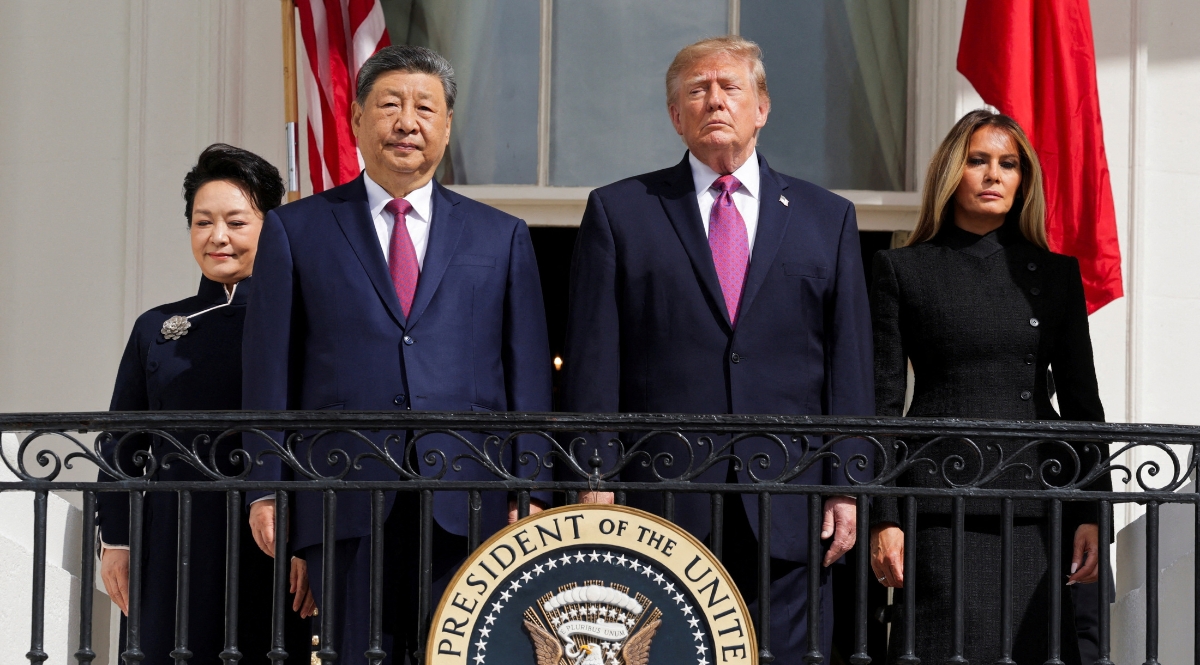
Chinese leader Xi Jinping’s visit to the US from 23 to 25 September and his talks with Donald Trump provided an opportunity to take stock of and build on the agreements reached at their previous meeting in May. The two sides agreed to extend existing trade concessions, brought the trade and investment boards into operation and opened a dialogue on artificial intelligence (AI). The main disputes concern exports of technology and critical raw materials as well as relations with Taiwan. The course of the talks and their limited results highlight the difficulties the US faces in exerting pressure on China.
 Jonathan Ernst / Reuters / Forum
Xi’s September state visit to Washington marked the third meeting for the two leaders since Trump returned to office. In October 2025, on the sidelines of the APEC summit in South Korea, they agreed to suspend some of the most severe trade restrictions until 10 November 2026. They agreed further concessions at their summit in Beijing in May. The US kept its technology export restrictions in place, while China retained the ability to curb exports of critical raw materials. The US administration has nevertheless strengthened China’s position and international standing by adopting Beijing’s term “strategic stability” to describe bilateral relations. Trump’s decision to withhold approval for deliveries under a new arms package for Taiwan has also worked to Beijing’s advantage.
Trade arrangements
The principal outcome of the September summit was a two-month extension of the Busan arrangements until 10 January 2027. According to the Trump administration, China also committed to purchasing at least 10 million tonnes of US coal in each of 2027 and 2028. No new agreements on agricultural trade were announced, but the two countries said they would establish a joint working group for the sector.
The leaders brought the US–China Board of Trade and the US–China Board of Investment into operation. The Board of Trade oversees trade in non-sensitive goods and tariff changes. Through the board, the two sides agreed on lists of goods to receive preferential tariff treatment, with a combined value of around $60 billion. According to China, more than 90 per cent of the products selected are to be exempted from additional tariffs.
Implementation of earlier commitments remains incomplete, however. China announced in May that it would purchase 200 Boeing aircraft. According to official US information, in September orders for 140 were at an advanced stage, and paperwork for around 10 more was being prepared. At the beginning of September, China purchased around 1 million tonnes of US soya beans, partially fulfilling its commitment from October last year, but remained behind in fulfilling its May commitment to purchase at least $17 billion worth of US agricultural products annually in 2027 and 2028 and a pro rata amount in 2026.
The Trump administration intends to monitor whether China fulfils its purchasing commitments and removes barriers to US agricultural products. It also expects the Board of Trade to implement preferential tariff rates for the agreed lists of goods.
Technology competition and access to critical raw materials
US semiconductor export controls and Chinese restrictions on exports of critical raw materials remain the main points of contention in bilateral relations. The September summit produced no new agreements in either area, only an announcement that talks would continue. The two sides did, however, launch a dialogue on the risks and benefits of AI and establish a communication channel for AI-related incidents. The next round is due to take place before the end of November.
Since the start of the year, the US has blocked exports of the most advanced technologies, including processors, high-bandwidth memory, and equipment used to manufacture these components. It continues to permit sales of some less advanced semiconductors. Under pressure from US companies, including Nvidia, the Department of Commerce is reviewing license applications on a case-by-case basis for sales of Nvidia H200 and AMD MI325X processors to China. US companies have persuaded the administration that cutting China off entirely from US processors only accelerates the development of Chinese alternatives and unnecessarily reduces the country’s dependence on US technology. Limited shipments of H200 processors to China have begun. Chinese exports of critical raw materials to the US have also increased, although Beijing maintains its licensing system and continues to restrict access to materials including yttrium, indium phosphide and tungsten.
The US objective remains maintaining Chinese dependence on US technology in some areas while protecting key technologies critical to AI and military applications. On raw materials, the administration will continue to seek predictable licensing practices and continuity of supply. In parallel, the US is developing alternative supply chains, including through Pax Silica and the FORGE forum, launched in February 2026. Poland, which has an agreement with the US on critical raw materials, is considering joining FORGE.
Support for Taiwan
At the September summit, Xi called on the US to “adhere to the correct position of opposing Taiwan ‘independence’ ” and handle the issue with caution. He reiterated arguments made at the May summit in Beijing, where he had warned Trump that further increases in US support for the island could lead to escalation in the Taiwan Strait.
The US administration officially supports Taiwan’s capacity for self-defense and has announced no change to this policy. The Taiwan Relations Act requires the US to provide the island with the arms and military support, including training and equipment maintenance, needed to sustain that capacity. The State Department maintains that arms sales to Taiwan are not subject to negotiation with China. Nevertheless, in recent months Trump’s position has been deliberately ambiguous.
In December 2025, the US approved $11.1 billion in arms sales to Taiwan, while a further package worth around $14 billion remains on hold. The package has undergone informal congressional review, but the administration has yet to formally notify Congress of the proposed sale. This is a necessary step before deliveries can proceed. After the May summit, Trump made clear that he was using approval of the package as a bargaining chip in negotiations with China.
Conclusions
The limited results of the September summit in Washington highlight weaknesses in the Trump administration’s negotiating strategy and its limited ability to exert pressure on China. The two sides have made some progress through reciprocal trade concessions and the establishment of formal negotiating mechanisms, chiefly the trade and investment boards. The US and China have agreed on lists of goods for tariff reductions, and Beijing has pledged, for example, to buy coal. Implementation of China’s earlier commitments on aircraft and agricultural products nevertheless remains incomplete.
The most pressing disputes remain unresolved, calling into question the narrative of “strategic stability” in bilateral relations. The US maintains restrictions on its most advanced technologies, while China retains the ability to regulate access to certain critical raw materials through its licensing system. The bilateral AI dialogue could provide a useful channel for managing the risks associated with the technology’s development, but it will not alter the nature of technological competition.
The Taiwan arms package remains on hold following the September summit. This indicates that Trump still hopes to use it as leverage to secure further concessions from China, particularly on US access to critical raw materials. Prolonged delays in approving the package and delivering the arms could, however, weaken deterrence and increase uncertainty in Taiwan and among other partners about the reliability of US support.
The trajectory of US-China competition matters for Europe. Restrictions on Chinese goods entering the US market increase pressure to redirect exports to the EU, while China’s licensing system for critical raw materials also limits European companies’ access to the materials they need. The concessions negotiated by the two countries could also complicate current efforts by the US and EU to cooperate on technology export controls and restrictions on Chinese investment. The EU, including Poland, needs more diversified supply chains and effective trade defence instruments, for example, to respond to import surges. European NATO members face a growing need to secure critical raw materials from alternative suppliers, including in Africa, Latin America, Southeast Asia and Australia. Stockpiling and the joint procurement of arms are also becoming more important.