Russia Supports North Korea's Nuclear and Missile Programmes
As part of closer cooperation with North Korea, Russia has supported its nuclear and missile programmes politically, financially and, likely assisted technologically since 2022. This means that, after years of strict compliance with the Nuclear Non-Proliferation Treaty (NPT) and voting for UN Security Council sanctions against North Korea, Russia may become a state that supports proliferation. In order to counteract this possibility, it is necessary to strengthen intelligence cooperation between the U.S. and its Asian and European allies, among other actions.
 AA/ABACA / Abaca Press / Forum
Russia’s inability to win the war in Ukraine has opened up new opportunities for cooperation between Russia and the Democratic People’s Republic of Korea (DPRK). In exchange for North Korean ammunition, weapons and soldiers, Russia has provided the DPRK with political and economic support. Russia is also helping to bolster North Korea’s conventional capabilities, as evidenced by the ongoing or planned delivery of air defence systems, electronic warfare equipment, drones, MiG-29 and Su-27 fighter jets, and equipment for Choe Hyon-class destroyers. Russia is also supporting the development of the DPRK’s nuclear and conventional short-range missile arsenal. Beyond the political and financial dimensions, Russian support may easily be supplemented by technological assistance in further areas.
Political Dimension
Since 2022, Russia has taken steps that demonstrate its de facto recognition of the DPRK as a nuclear state, as well as its acceptance of the DPRK’s development of missile and nuclear programmes. This is reflected in Russia’s activity in the UN Security Council. For example, in May 2022, for the first time, Russia and China vetoed a U.S. draft resolution proposing further sanctions against North Korea in response to its progress in developing its missile and nuclear programmes. In March 2024, Russia vetoed a resolution to extend the mandate of the UN expert panel monitoring the implementation of sanctions imposed on the DPRK.
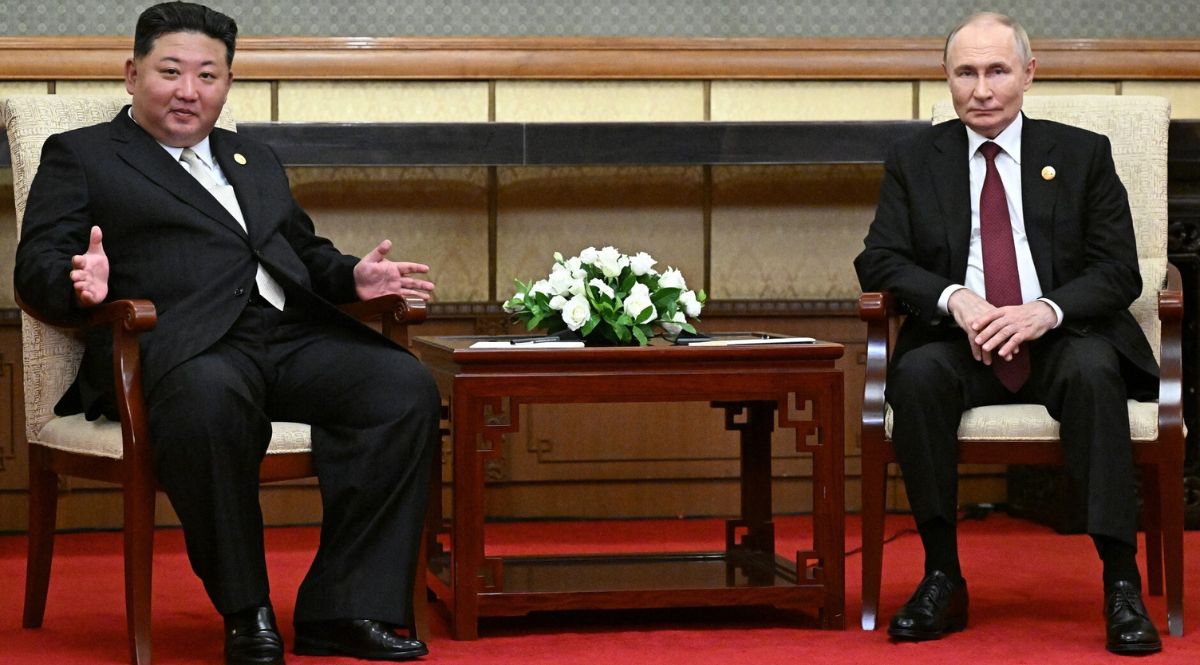
Following his meeting with Kim Jong-un in June 2024, Vladimir Putin acknowledged that North Korea has the right to develop its defence capabilities to ensure its security. The Russian president also hinted that, in response to Western support for Ukraine, Russia may offer military-technical cooperation to North Korea. In September 2024, Russian Foreign Minister Sergey Lavrov stated that the term ‘denuclearisation’ in relation to the DPRK had ‘lost all meaning’. After meeting with Kim in July 2025, Lavrov added that Russia respects and understands the reasons why North Korea is developing a nuclear programme, which he said was necessary in the face of threats from the U.S. and its allies.
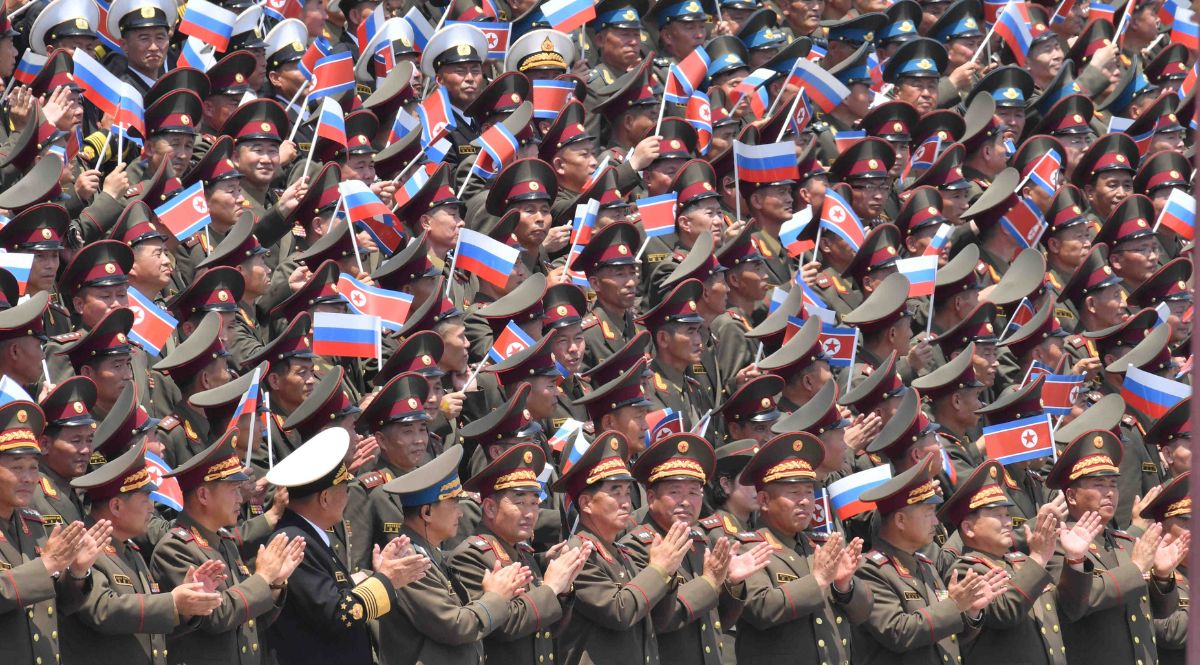
Statements following meetings between the leaders of Russia and China also indicate recognition of the DPRK’s nuclear status. The denuclearisation of the Korean Peninsula has not been referenced in any of the statements made by Putin and Xi Jinping since May 2024. In a document issued in May this year, China and Russia advocated lifting UN sanctions on North Korea, de facto justifying the development of its nuclear and missile capabilities by pointing to its “legitimate security interests”. The participation of China’s Prime Minister, Li Qiang, and Russia’s Security Council Deputy Chairman, Dmitry Medvedev, in the 80th anniversary celebrations of the Workers’ Party of Korea in Pyongyang in October this year was also an expression of approval for North Korea’s actions. During the military parade, the hosts presented new missile systems, among other materiel.
Financial Dimension
According to UN Security Council Resolution 1718, countries are obliged to prevent the DPRK from financing proliferation. However, despite the financial sanctions imposed on Russia following the war in Ukraine, it has allowed North Korea access to the international financial system, which is a clear violation of this resolution. This was demonstrated in 2024 when a Russian bank unfroze DPRK assets worth $9 million. Furthermore, Russia has enabled North Korea to circumvent sanctions by permitting transactions by North Korean financial institutions, including the Foreign Trade Bank and the Korea Kwangson Banking Corporation, both of which are on the UN sanctions list, via Ruble accounts established for this purpose in 2023. Russia has also allowed the DPRK to establish companies in the country and opened accounts for North Korean banks. The practice of circumventing restrictions, as established by the Central Bank of Russia, included the use of MRB Bank in South Ossetia, TSMR Bank, and the Russian Financial Corporation. In September 2024, the U.S. Department of the Treasury added these entities to its sanctions lists. As the 2024 Russia-North Korea agreement on a comprehensive strategic partnership includes a commitment to banking sector cooperation, it is likely that collaboration between the two countries’ financial institutions is progressing.
Technological Dimension
DPRK has ambitious plans and is demonstrating new nuclear capabilities. The alliance with Russia potentially offers broader opportunities in the areas of delivery means, fissile materials and weaponisation. These may be gained via access to higher schools and industry, joint projects, and espionage in Russia, of which there have been cases since 1991.
North Korea is delivering short-range ballistic missiles of the Hwasong-11 family (KN-23 and KN-24) to Russia, and their targeting precision was reportedly improved by experts from the Russian KBM company in Kolomna. That partnership may slightly upgrade the construction of these missiles and increase the scale of their production in the DPRK and Russia. The Russian Novator and Raduga companies may also – if they have not already – assist the DPRK in further development of the new cruise missiles in the Hwasal family. Less probable is Russian assistance with further development of the DPRK’s solid fuel intercontinental ballistic missiles, especially their command and control systems or multiple re-entry vehicle technologies (MIRV-class). This is partly because Russia is concerned that such missiles would cover its entire territory, making it vulnerable to nuclear blackmail by the DPRK in the future. Instead of these, Russia may transfer obsolete Soviet space technologies useful for liquid fuel ballistic missiles, as well as assisting with upgrades of Romeo-class submarines (Type 033) to operate as a platform for sea-launched ballistic missiles. Moreover, according to South Korean intelligence, in 2025, Russia transferred some reactor, turbine and cooling systems for the DPRK’s new nuclear-powered submarine with more missile launchers. While the type, power and date of production of this reactor are still unclear, it will certainly help in the development of the DPRK’s naval nuclear forces.
The unconfirmed scale and structure of the North Korean nuclear arsenal complicates any estimate of potential Russian assistance with fissile materials. With the DPRK’s plans for enlargement of its arsenal, current production levels would probably be constrained even if it has indigenous reserves of natural uranium. Russia may help with upgrades to a plutonium-producing reactor in Yongbyon and in finishing some other North Korean projects. Much easier for the West to detect, and very risky for Russia, would be any transfers from its reserves of 190 tons of plutonium or of 680 tons of highly-enriched uranium. The easier and less risky option for Russia would be to deliver low-enriched uranium (from its reserve of 1,200 tons) under the cover of fuel for reactors and/or ships. Of utmost importance for DPRK would be the trace amounts of tritium necessary for the construction, testing and production of future thermonuclear weapons, and this would also be easier for Russia to hide (Russia has reserves of up to 20 kg of this material).
In light of the history of the Soviet Union and Russia’s current policies, any proliferation of blueprints for designs of modern thermonuclear weapons, constructed by the centres in Sarov (VNIIEF) and Chelyabinsk-70 (VNIITF) would be less probable, and extremely risky. Due to this, Kim’s regime might be left with a dependence on North Korean scientists and engineers, as well as making use of opportunities for broader access for North Korean students to a limited number of Russian universities and higher schools, along with espionage there.
Conclusions
Thanks to Russia’s support, North Korea has gained new opportunities to develop its nuclear capabilities, posing an even greater threat to the U.S., South Korea and Japan. It has also strengthened its position in relation to China, which fears a weakening of its influence on the Korean Peninsula and restored high-level contacts with North Korea in September this year. By backing the DPRK, Russia is effectively blackmailing the U.S. and its Asian allies. The intention behind the destabilisation of the situation in East Asia is to divert U.S. attention and resources away from Europe, test U.S. commitments to South Korea and Japan, and persuade these countries to limit their support for Ukraine.
Although Russia de facto recognises North Korea as a nuclear power, there is no clear evidence that it is providing full-scale technological assistance for its nuclear and missile programmes. However, this can no longer be ruled out in some particular aspects, which would allow Russia to be seen as a state that facilitates nuclear weapons proliferation. Russia’s current and potential actions in these directions require publicity in the international arena and active countermeasures. Subsequent EU sanctions packages against Russia should also target Russian financial institutions that enable proliferation. Cooperation between the U.S. and its European and Asian allies, as well as Ukraine, should also be deepened in order to analyse and hinder further transfers of Russian military and dual-use technologies to North Korea.
Poland should emphasise that Russia is not only violating international law and destabilising the global situation through its aggression against Ukraine, hybrid activities and threats to use nuclear weapons, but also by enabling progress in the development of the DPRK’s nuclear and missile arsenal in violation of numerous UN Security Council resolutions and the provisions of the NPT.



.jpg)
.jpg)