Prospects for the Launch of the Digital Yuan
Among the digital currency projects developed by major economies, the Chinese digital yuan (e-CNY) is the most advanced. After pilot projects in selected Chinese regions, the biggest test was to be at the Winter Olympics in Beijing. The spread of the digital yuan will enable the Chinese Communist Party (CCP) to expand its digital authoritarianism through increased surveillance of citizens’ finances. It may also increase the Chinese currency’s share of international transactions in the region. The success of the e-CNY should accelerate the ECB’s work on a privacy-preserving digital euro.
 Fot. Reuters/ ALY SONG/ FORUM
Central Bank Digital Currencies (CBDCs)
Work on CBDCs is being carried out by around 100 countries. It is the culmination of four processes—digitisation, the massive spread of cashless transactions and money, the development of cryptocurrencies together with the blockchain technology on which they are built, and the expansion of technology companies into the payments sphere. CBDCs are a new, entirely digital form of money, issued by central banks, and will be legal tender. Unlike digital money created by commercial banks and backed by a fractional reserve, CBDCs are, like cash, an entirely collateralised liability of the central bank. Unlike cryptocurrencies, CBDCs are not decentralised. Nonetheless, they may offer similar technical capabilities, including blockchain infrastructure, which enables them to support anonymous transactions.
A key benefit of CBDCs arises from the possibility—but not the necessity—of bypassing intermediary institutions such as commercial banks. This significantly reduces transaction costs and makes the system faster, especially for international settlements. It also makes it possible to reach those excluded from participation in the banking system due to the lack of existing infrastructure. Thanks to a CBDC, a central bank will be able to reach citizens directly, for example, by distributing transfers as part of fiscal stimulation. It will also gain access to the public’s financial data to detect, track, and analyse irregularities and consumer behaviour. It also can be used for surveillance. In addition, due to the possibility of programming digital currencies, the central bank may gain access to new monetary policy tools, such as negative interest rates on funds or their expiry dates.
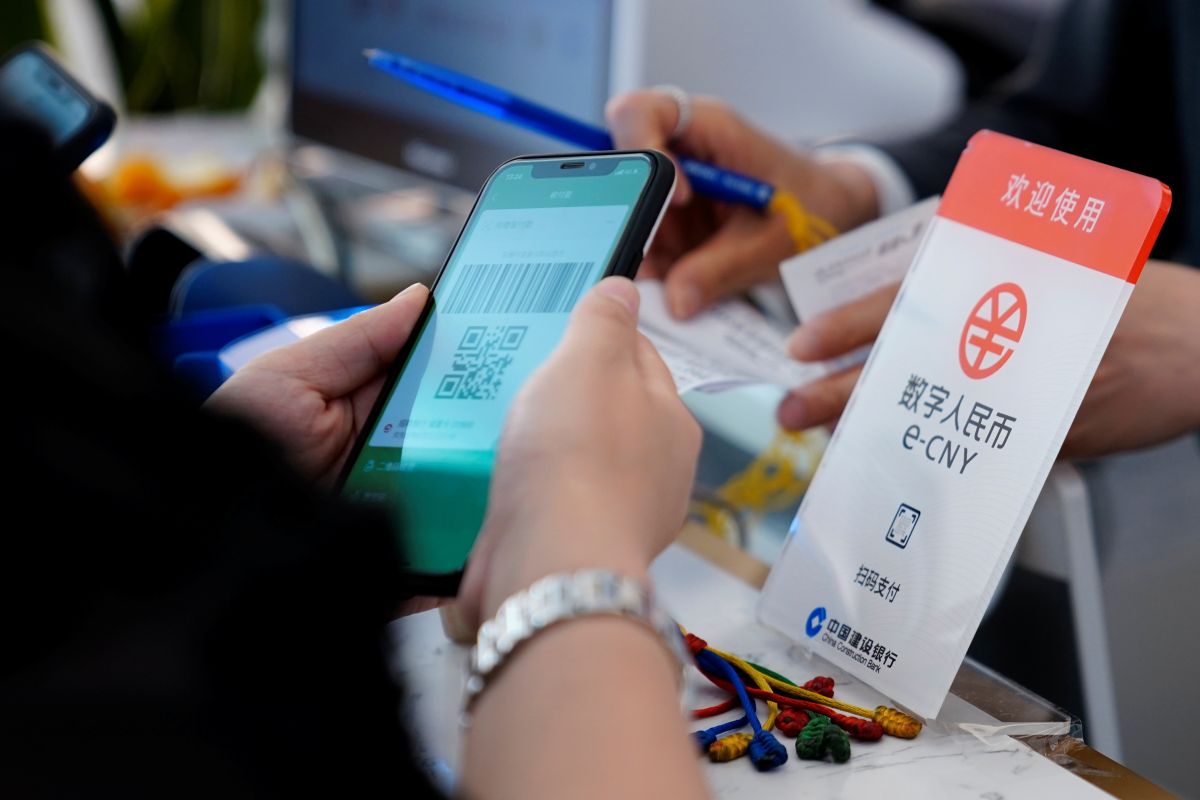
The Digital Yuan. The digital yuan, the digital currency of the Chinese central bank (PBOC), is constructed in a hybrid way involving intermediary institutions such as banks (conversion between standard funds and the digital yuan) and mobile payment operators. Initially, the digital yuan infrastructure was to be based on blockchain technology, but this was abandoned due to limitations in the volume of transactions processed. According to the PBOC, transactions are supposed to be anonymous for small amounts and traceable for larger ones, but the details of this mechanism have not been made public. In addition, currently opening a wallet that allows the use of digital yuan requires linking a bank account that can be easily identified. The digital yuan is currently classified by the central bank as cash in circulation, which prevents the introduction of interest on funds and limits e-CNY competition with bank deposits. It allows the use of mobile payments, phones, cards and wearable devices (e.g., wristbands, smartwatches) and also supports offline payments (which do not require internet access) using NFC technology.
The official motivation for introducing the digital yuan is to create a cheaper and faster payment system, also for international transactions, better suited to the needs of the digital economy. It is also intended to reduce treasury crime and corruption and to include the 120 million Chinese who remain outside the banking system. In addition, it will break up the duopoly of technology companies: Alibaba (Alipay) and Tencent (WeChatPay) in the mobile payment market. The CCP will thus receive an additional instrument of control over the technology companies, in the spirit of its current regulatory actions, under the pretext of seeking competition in the market. At the same time, it will allow for increased CCP control over the public’s financial data. The development of the digital yuan is to take place in three phases: integration with public institutions and services, then with the domestic private sector, and finally the spread of e-CNY beyond China’s borders. For the digital yuan’s internationalisation, the Belt and Road Initiative (BRI) is to be used, under which participating countries will eventually settle with Chinese corporations using e-CNY. This is meant to increase—at the dollar’s expense—the role of the yuan in the global financial system and to provide an alternative to the SWIFT system.
Application in Practice. In 2020 and 2021, the PBOC launched pilot tests of the digital yuan in a dozen selected regions and cities, including Beijing, Shanghai, and Shenzhen. Each time, selected inhabitants of these cities received funds worth several million dollars, which could be used at several million points accepting this form of payment (e.g., in restaurants, when paying for transport services, etc.). At the same time, a large educational campaign on the digital currency was launched. Last November, e-CNY was also used at the China International Import Expo. At the beginning of 2022, an application acting as a wallet for e-CNY funds appeared on mobile platforms (iOS and Android), through which more than 250 million users opened accounts. The total volume of transactions with the digital yuan has already exceeded the equivalent of $10 billion.
The biggest test of the digital yuan was to be the Winter Olympics in Beijing (4-20 February). As part of the event, foreign athletes, their entourages, and tourists (before China moved to the anti-COVID 19 bubble system) will be able to open wallets in e-CNY for the first time using, for example, self-service vending machines. Payments in the digital yuan are to be supported in the Olympic village, on the public transport, in available restaurants and tourist attractions, as well as in cities where pilots previously took place. The use of e-CNY is useful propaganda-wise to build a narrative about China’s technological power and of an advantage it has achieved over the U.S. in this area.
Three U.S. senators reacted to the announcement of the launch of e-CNY during the Olympics by pointing to the threat of surveillance and asked the National Olympic Committee to ban American athletes from using the digital yuan (the request remains unanswered for now).
Conclusions and Outlook. So far, statistics on app downloads and accounts created indicate success in uptake of the digital yuan in China. However, these may be due to the novelty effect and material benefits of using the digital currency, such as the giveaways by the Chinese government. In the longer term, the popularity of this payment system will depend on new ways of using it, taking advantage of its programmability. Furthermore, the performance and scalability of the e-CNY infrastructure remains unknown. The test during the Olympics will take place on a much smaller scale than, for example, the size of China’s mobile payments market. Moreover, due to the COVID-19 pandemic, it will be further limited—as will its potential propaganda effect—by the much smaller number of visitors from outside China allowed into the Olympics areas.
The digital yuan will give the Chinese government direct access to the financial data of citizens and possible foreign users, further increasing its surveillance capabilities of the public. It will also strengthen the CCP’s control over the payment system, limiting the influence of technology companies. It may also expand the use of the yuan in international transactions, especially in the region and within the BRI, but is unlikely to pose a greater threat to the dollar’s international position as the main settlement currency. China being the first major economy with a functioning digital currency will greatly enhance its ability to shape global norms and standards for CBDCs. Massive uptake of the e-CNY should signal the ECB to accelerate work on the digital euro. It could compete with the digital yuan as a model on which subsequent countries’ solutions are based. However, designing a privacy-aware European CBDC will prove crucial in this context.