Polish-German defence cooperation agreement signed
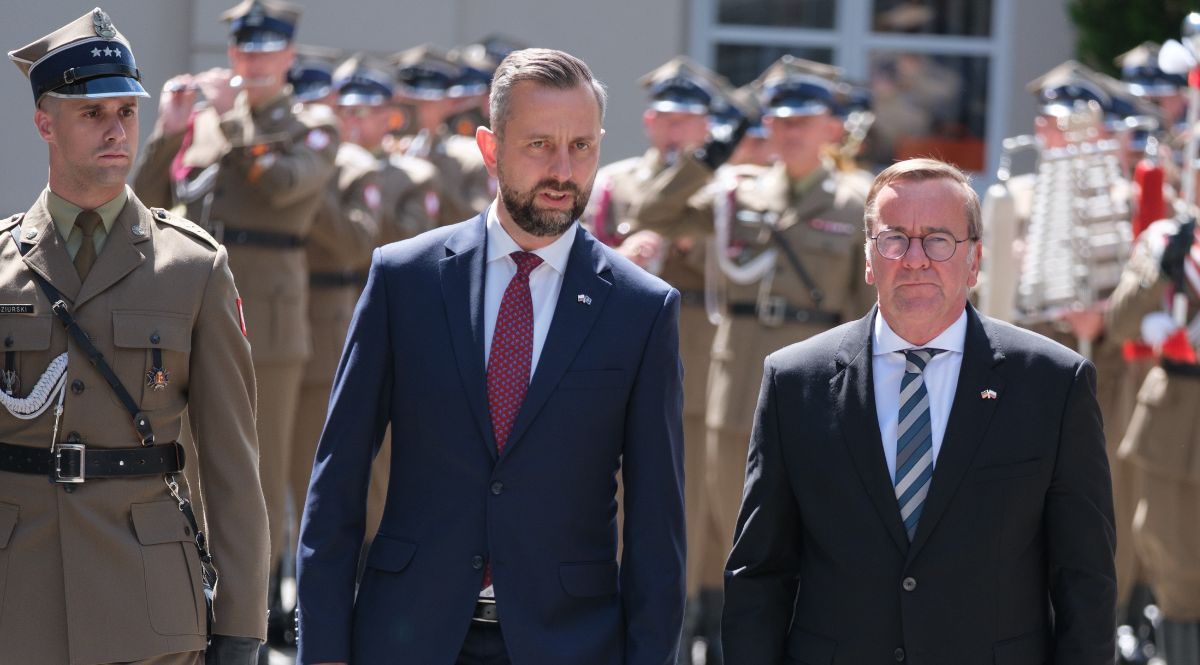
On 17 June, Poland and Germany signed a military cooperation agreement that will replace the existing one from 2011. It envisages coordination and closer cooperation in areas such as military mobility and interoperability, cybersecurity, and space. Due to its technical nature, the agreement will not significantly affect political relations between the two countries, although its conclusion signals a willingness to cooperate. Unlike, for example, the Polish-French treaty signed in May of last year, this agreement does not provide additional security guarantees. The cooperation within NATO, and the related alliance obligations, has a key role to play for both Poland and Germany.
 Roman Koziel / Zuma Press / Forum
What were the origins and circumstances of the agreement?
Poland and Germany announced their intention to conclude a new defence agreement during intergovernmental consultations on 1 December last year. The text of the agreement was developed by the two countries’ defence ministries. The date of the signing—marking the 35th anniversary of the conclusion of the Treaty on Good Neighborliness and Friendly Cooperation between Poland and Germany—symbolically emphasises the importance of bilateral relations. Both Poland and Germany regard NATO as the foundation of their security; however, given the uncertain future of transatlantic relations, they are seeking additional bilateral partnerships. To this end, Poland concluded a treaty with France last year and, in May of this year, signed an agreement with the United Kingdom—with which Germany, in turn, had established a treaty last year. The goal of the governments of both countries was to clarify the principles of military cooperation and adapt them to current threats that were not envisaged by the 2011 document. Poland and Germany are also implementing programs to modernise and expand their armed forces, which—in light of the reduction in U.S. military engagement in Europe—are intended to serve as a key element of conventional deterrence against Russia within NATO. Germany is currently deploying a land forces brigade to Lithuania, and according to its new military strategy, the Bundeswehr is set to become the strongest conventional army on the continent by 2035.
What were the objectives of both sides?
For Poland, the strategic objective was to persuade Germany to commit as fully and sustainably as possible to defending NATO’s eastern flank, so that Germany views securing that flank as an indispensable condition for its own security. For Germany, deepening defence cooperation with Poland is part of the gradual realisation of its ambition to assume greater responsibility for security in Europe. Both governments shared the goal of highlighting the indispensability of mutual cooperation, but without creating new treaty-based obligations; for this reason, they adopted the format of a technical agreement between the ministries of defence. This approach stems from the priority given to transatlantic relations and the conviction that NATO—and, to a lesser extent, the EU—plays a fundamental role. The new document adapts the provisions of the 2011 framework agreement—which defined the general areas of cooperation and coordination in the fields of security and defence—to current challenges.
What are the most important aspects of the agreement?
At the strategic level, Poland and Germany have emphasised and reaffirmed their alliance commitments resulting from their membership in NATO (in particular Article 5 of the North Atlantic Treaty) and the EU (Article 42(7) of the Treaty on European Union). In doing so, they recognise the key role of these organisations in their security and defence policies. The new agreement defines three key areas of future cooperation: cybersecurity, combating disinformation and hybrid threats, and building capabilities in the space domain. It also lays the groundwork for closer cooperation between their respective defence industries and in the procurement of military equipment, although without specifying particular types of weapons. It prioritises military mobility, which will be supported by infrastructure development and simplification of bureaucratic procedures related to the transport of military personnel and equipment. Poland and Germany will also develop the interoperability of their armed forces through joint exercises, training programs, and the exchange of information, including intelligence. The agreement ensures the continuation and development of cooperation in ensuring security in the Baltic Sea.
What is the relevance of the agreement for Polish-German relations?
The defence agreement reflects a shared perception of the threats and challenges confronting Poland and Germany. However, because both countries remain anchored to their cooperation and alliance commitments within NATO and the EU, the new agreement will likely have minimal impact on their political relations. It may serve to foster closer bilateral military cooperation and contribute to the implementation of joint projects by their defence industries in the areas of production, procurement, and research into new technologies. An example of military cooperation is the planned participation of Bundeswehr engineering troops in the construction of fortifications along the Polish-Russian border, known as the “Eastern Shield.” Improved military mobility will have a positive impact on the security of Poland and NATO’s eastern flank, including the Baltic states. However, due to the framework nature of the agreement, specific actions and joint projects will require additional negotiations at both political, military, and defence-industry levels, coordinated between both countries’ respective governments and commercial industries.