OSCE Ministerial Council Meets in Malta
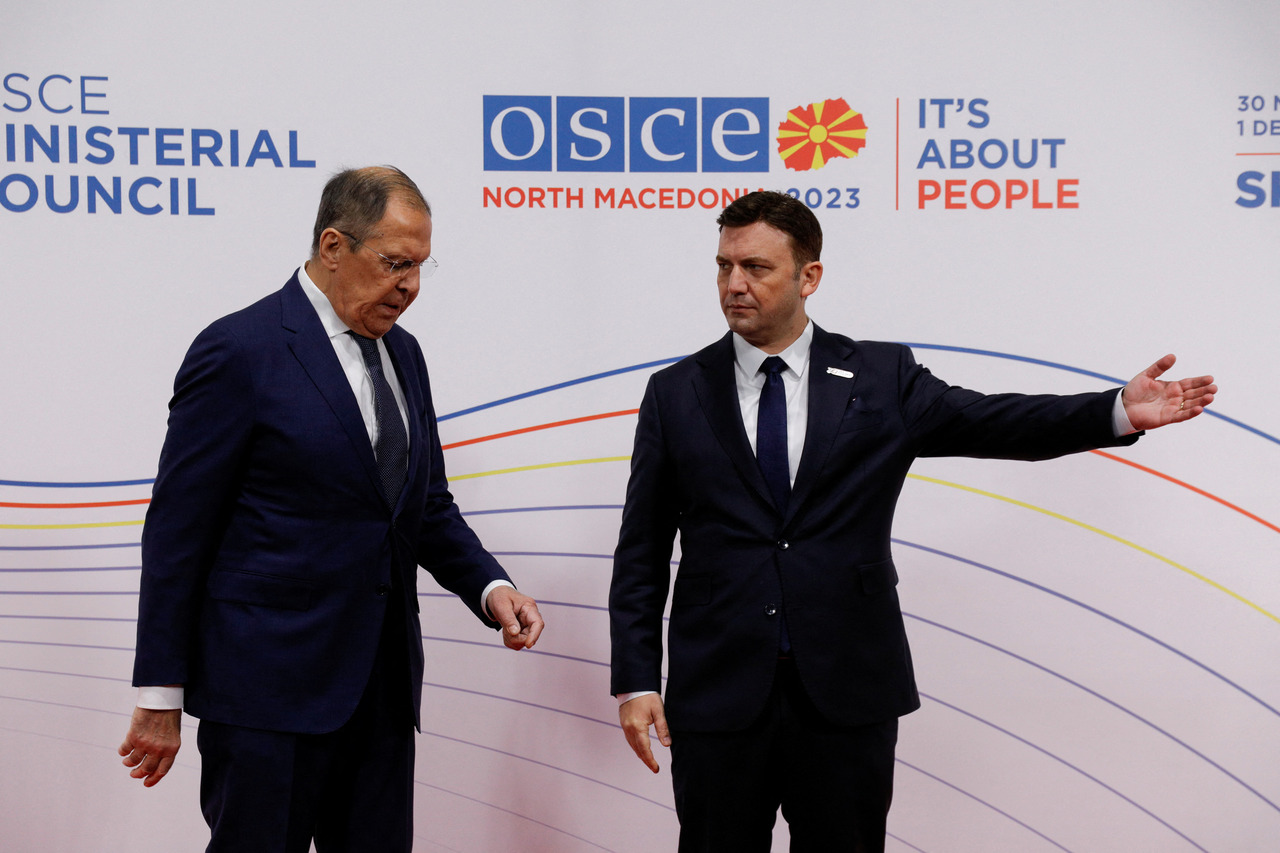
On 5-6 December, an OSCE Ministerial Council was held in Malta. It featured the first visit to EU territory by Russian Foreign Minister Sergey Lavrov since Russia’s full-scale invasion of Ukraine in February 2022. Allowing his participation was intended to support decision-making relevant to the continued functioning of the organisation. The Council approved candidates to fill senior positions in the OSCE, but some of the challenges for the organisation’s continued functioning remains the adoption of a budget and ongoing cooperation with the aggressor state.
.png) Florion Goga / Reuters / Forum
Florion Goga / Reuters / Forum
Under what circumstances did the Council take place?
The annual meeting of foreign ministers of the 57 OSCE states took place against the backdrop of a deepening crisis within the organisation. Since 2021, the states have failed to reach a consensus on its budget (blocked mainly by Russia), so the organisation is operating on a provisional basis. Malta’s chair of the OSCE this year was decided only a few weeks before it was due to begin, and as of 4 September the organisation’s senior posts (the so-called top 4) remained vacant and headed by deputies.
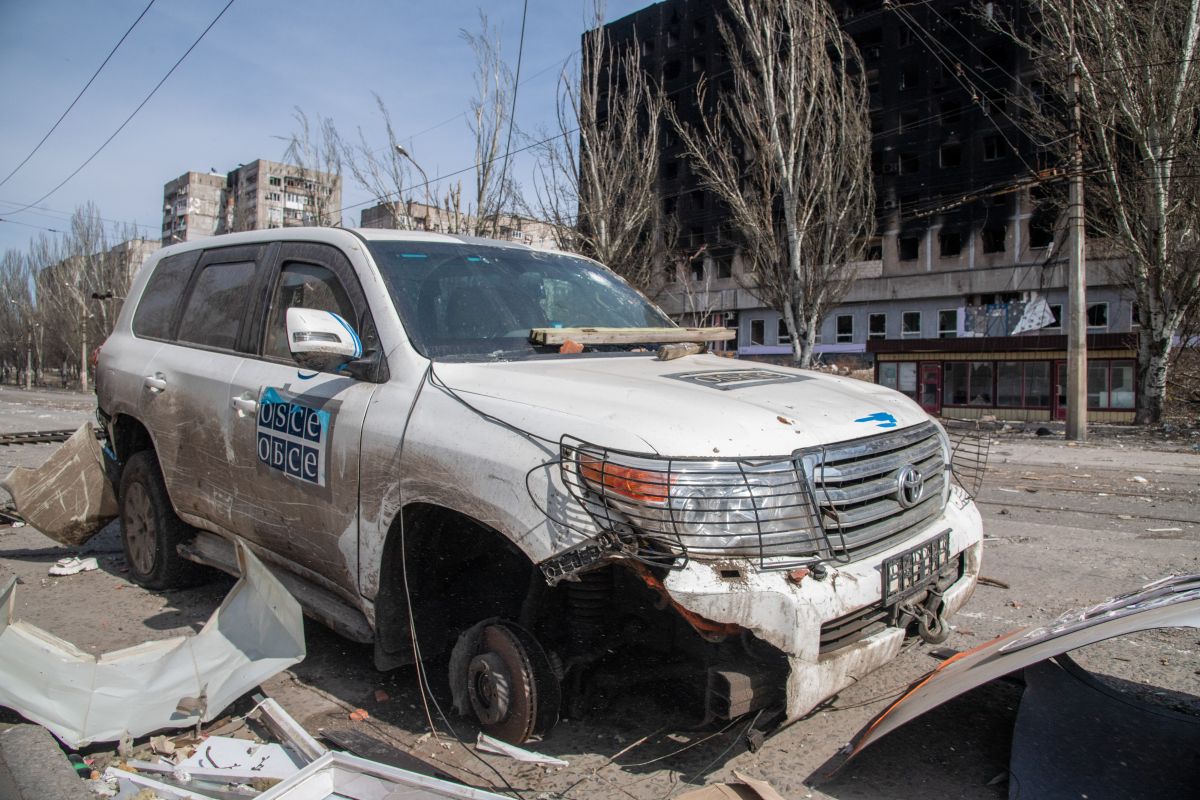
The crisis in the OSCE is the aftermath of the growing tensions between Russia and the organisation. With its aggression towards Ukraine, Russia is violating the fundamental principles of the OSCE, including the unlawful imprisonment of three of the organisation’s officers—members of the Special Monitoring Mission to Ukraine, which terminated its activities in 2022 due to a Russian veto of the prolongation of its mandate. In addition, since 3 July, it has suspended its participation in the OSCE Parliamentary Assembly (OSCE PA), accusing it of, among other things, Russophobia in connection with the denial of visas to its representatives by some countries hosting the OSCE PA’s meetings. It has also ceased paying its membership fees, which exacerbates the OSCE’s financial troubles (e.g., in the case of the OSCE PA, this is 6% of its budget, with current arrears exceeding €500,000).
What reactions did the presence of the Russian foreign minister at the meeting provoke?
The meeting marked the first visit to the EU by Russian Foreign Minister Sergey Lavrov since the start of the full-scale invasion of Ukraine. In 2022, Poland did not issue him a visa for the meeting in Łodz, while last year Macedonia acceded to his presence, prompting a boycott of the meeting by the ministers of Ukraine and the Baltic states, among other representatives. In the face of opposition from the latter, however, Malta revoked the visa of Russian Foreign Ministry spokeswoman Maria Zakharova and restricted Lavrov’s presence to just part of the event. Despite threats by some countries to downgrade their representations, U.S. Secretary of State Antony Blinken and Ukrainian Foreign Ministry chief Andriy Sybiha attended the meeting.
Unlike last year, Russia did not publicise the bilateral meetings arranged with Lavrov on the sidelines of the event (although he reportedly met with his Slovak counterpart). It also reportedly had to swap the order of speaking with Tajikistan, with the result that its representative spoke twentieth and Lavrov fourth, so he could leave the meeting earlier. The representatives of Ukraine, Poland, the Baltic States, and Czechia left the room while he was speaking.
What was agreed at the meeting?
Feridun Sinirlioğlu of Turkey was named Secretary General for the next three years, Maria Telalian of Greece is the head of the Office for Democratic Institutions and Human Rights (ODIHR), Cristophe Kamp of the Netherlands will be High Commissioner for Minorities, and Jan Braathu of Norway, the Representative for Freedom of the Media. Agreement on the “top 4”, although delayed, demonstrates there is still some ability to reach consensus within the OSCE, especially in the context of the unprecedented interaction between Greece and Turkey, who put forward combined candidacies and had to convince, among others, Cyprus and Armenia to this bid.
The countries also agreed to a Finnish proposal to move the next summit from Helsinki to Vienna. Officially, this is supposed to reduce the OSCE’s expenditure and carbon footprint, but the participation of the Russian delegation at the meeting in Austria will also be less controversial than in Finland. After all, for the purposes of participating in OSCE activities, Austria regularly issues visas to Russians (it explains this by its hosting of the organisation’s headquarters in Vienna), and it is not a NATO state.
What OSCE issues remain unresolved?
Participating states failed to agree on the chair for 2026. Switzerland, San Marino, Liechtenstein, and, less frequently, Central Asian states are mentioned as candidates. Turkey is also putting forward a bid and, in parallel, is promoting the proposal to hold an OSCE summit (a meeting of heads of state; the last one was held in Astana, Kazakhstan, in 2010). Finland, on the other hand, will hold the chair in 2025, but one can hardly expect good cooperation with Russia. While non-NATO member Malta was acceptable to it, the actions of Finland—which joined the Alliance citing the threat posed by Russia—are likely to be widely contested by the aggressor.
States also failed to adopt the organisation’s new budget (€158 million, instead of the previous €138 million). The reasons were vetoes by Russia, calling for a reduction in ODIHR funding as it considers the office to be biased, and by Azerbaijan, which seeks an end to funding for, among others, the Minsk Group set up to resolve the Nagorno-Karabakh conflict.
What are the prospects for the organisation going forward?
The functioning of the OSCE will be influenced by its management by Sinirlioğlu, an experienced diplomat and trusted associate of President Recep Tayyip Erdoğan. With the four key posts filled, however, the OSCE’s next most-pressing concern becomes the adoption of a budget, which, according to the Chairperson-in-Office, it is still possible before the end of this year.
Malta’s experience may encourage the smallest OSCE states, especially those outside NATO, to apply for the chairpersonship (Cyprus has already applied for the 2027 post, but, as with the 2026 process, Russia can be expected to delay the decision as long as possible to make it difficult for the selected states to prepare). Poland can support them with its experience from the 2022 chairpersonship.
Russia’s suspension of its participation in the IPC, although another sign of its negative attitude towards the OSCE, is unlikely to have any serious consequences. It remains a member of the organisation, so the Moscow mechanism can continue to be used against it to document human rights violations, and the OSCE PA will cease to be another forum for it to spread propaganda.