Lithuania Declares State of Emergency Due to Belarus' Actions
On 9 December, in response to the threat posed by the mass influx of Belarusian balloons, the Lithuanian authorities decided to declare a state of emergency to facilitate the fight against such devices. The response to the intensifying Belarusian hybrid operations against Lithuania will require coordination between the countries of NATO’s eastern flank and the introduction of additional sanctions on Belarus by the EU.
 Janis Laizans / Reuters / Forum
Why did Lithuania declare a state of emergency?
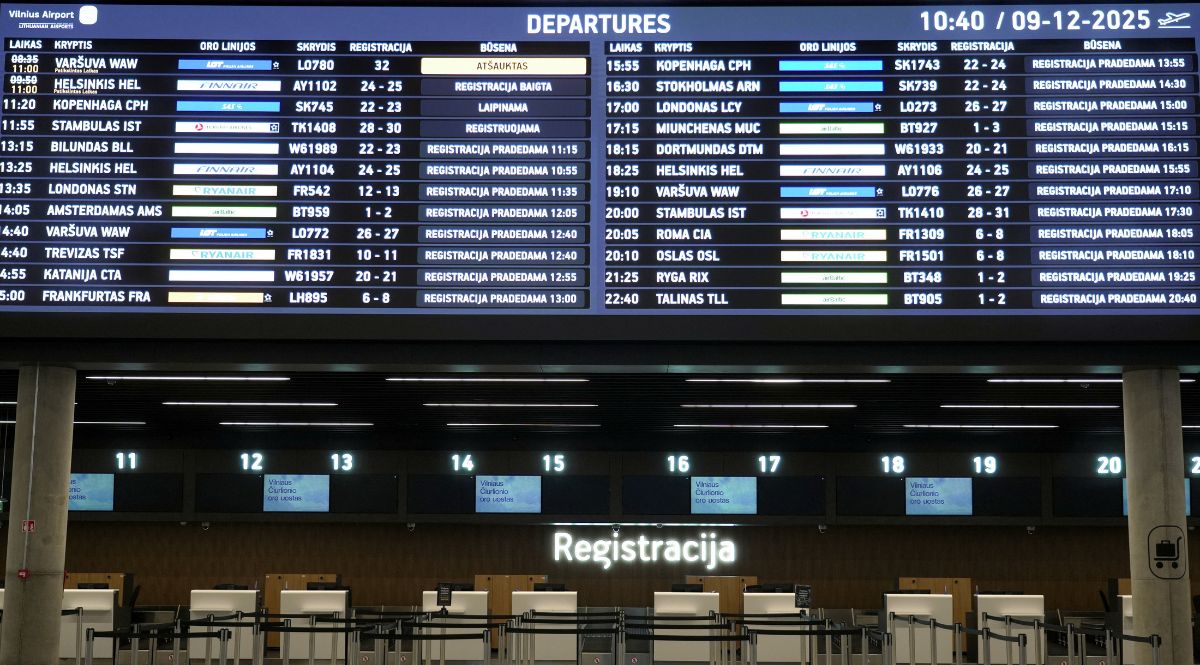
The Lithuanian government's action was a result of a sharp increase in incidents involving numerous smuggling balloons flying over Lithuanian territory, which, among other things, disrupted traffic at airports in Vilnius and Kaunas – both airports have had to suspend flights in recent weeks, resulting in significant losses. The Belarusian side is using balloons for its actions against Lithuania, which can carry loads of up to 40 kg, usually flying at an altitude of 3 to 5 kilometres and are impossible to detect by radar. Cigarettes are mainly smuggled into Lithuania and Poland, and smugglers do not use drones because private ownership of them is prohibited in Belarus. This year alone, Lithuania has identified more than 600 incidents related to the influx of balloons. The declaration of a state of emergency was Lithuania’s next step after the temporary closure of border crossings with Belarus, which has not been effective. It will allow for wider use of available measures to neutralise the threat posed by the balloons, and the Lithuanian border services will gain the support of the armed forces. It will also make it easier to detain people cooperating with Belarusian smugglers.
What other hybrid activities is Belarus engaged in?
Belarus continues to maintain migration pressure on the border with Poland and Lithuania. And although, as in previous years, the autumn and winter months have seen a fall in the number of attempts to cross the border illegally, Belarusian forces are still actively monitoring the situation at the border, using drones, among other things. The Belarusian security services also supported the construction of a tunnel under the border, which was detected in October by the Polish Border Guard, intended to be used by smugglers of people and goods. The involvement of the Belarusian State Security Committee (KGB) in activities targeting critical Polish infrastructure and cyberspace is also evident, and Belarusian citizens have been detained for attempts at sabotage and arson in Poland. The KGB is also actively supporting Russian services in conducting activities against countries on NATO’s eastern flank. On the international stage, Belarus is also involved in campaigns to discredit Poland, attempting to prove that Polish uniformed services committed crimes against migrants attempting to cross the border.
How might NATO and the EU respond?
On 1 December, European Commission President Ursula von der Leyen announced that the EU had begun work on a new package of sanctions against Belarus in connection with its hybrid activities targeting Lithuania. Support for Lithuania in its efforts to tighten restrictions will be an important signal of European solidarity and may help to secure the release of an estimated 185 Lithuanian lorries which Belarus has been holding since the beginning of November (on 3 November, the Belarusian authorities introduced a law banning Polish and Lithuanian lorries from entering the country until the end of 2027). Military support enabling Lithuania to, among other actions, shoot down balloons and other unmanned aerial vehicles and neutralise them using electronic warfare measures will also be important. The countries on NATO’s eastern flank must develop joint mechanisms to combat unmanned aerial vehicles and balloons as a priority. It will also be crucial to expand existing mechanisms for intelligence cooperation on migration flows and practices in the field of protection of military facilities and critical infrastructure within the range of Belarusian balloons and drones. Police and border guard cooperation to combat those who support smugglers in Poland and Lithuania will also be important.