
Iran after U.S., Israeli Strikes: Nuclear Programme Confronting Short-Term Dilemmas
Despite the Israeli and U.S. strikes weakening Iran’s infrastructure for uranium enrichment, renewal of these works on the previous scale is still possible in a year or two. Even if Iran continues to negotiate a new nuclear deal with the U.S., it still may conclude that a nuclear arsenal is its only guarantee of security. The European Union should in the coming weeks support renewed negotiations with Iran, while also pressuring it for the return of international inspectors and emphasising the possible restoration of European sanctions if it does not cooperate.
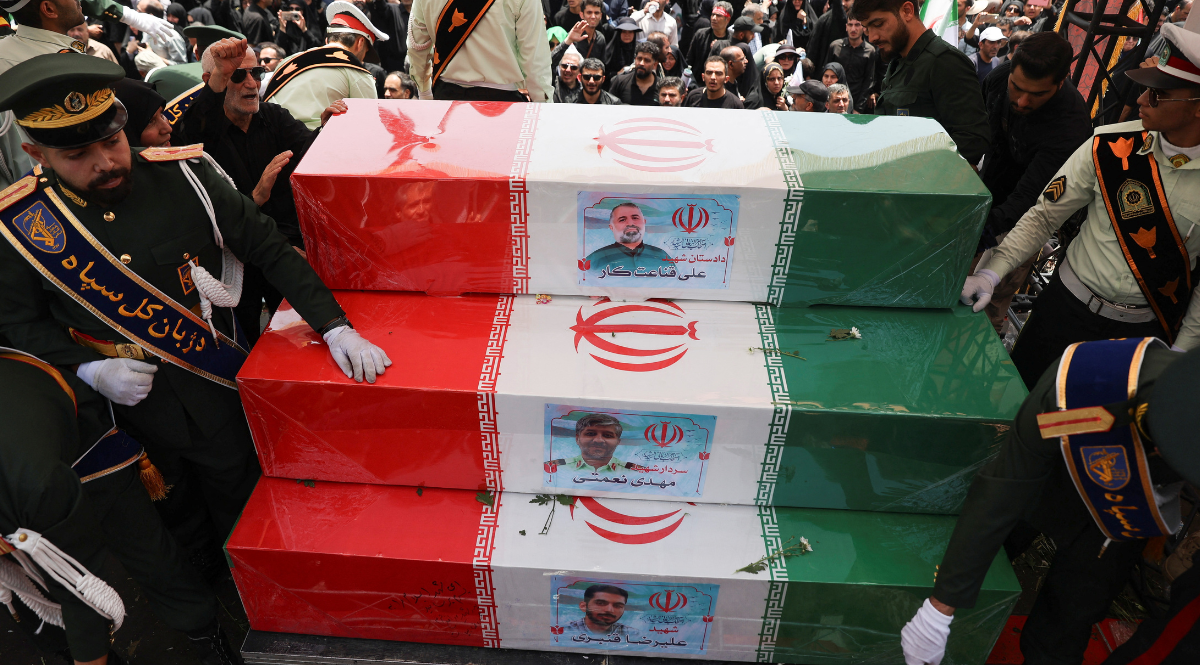 credit: Majid Asgaripour / Reuters / Forum
Since 2018 and the first Donald Trump administration’s termination of the nuclear deal with Iran (Joint Comprehensive Plan of Action, JCPOA), the Iranian regime systematically increased both the amounts and levels of enriched uranium necessary for nuclear warheads. It accumulated more than nine tonnes of uranium in different forms, including 408 kg of highly enriched uranium (60% level), which is equivalent to fissile material for 8-9 warheads that could be assembled within a few months of a decision to proceed. However, estimates by the U.S. intelligence community did not suggest that Iran had resumed its weaponisation process or the covert Amad Plan, which it halted in 2003. Before the Israeli and U.S. strikes, Iran has been maintaining its programme at the “nuclear threshold” status, that is, it was mastering technologies for the production of fissile materials and means of delivery but without weaponisation efforts. Moreover, Iran augmented its position with the threat of ending inspections by the International Atomic Energy Agency (IAEA) and withdrawal from the Non-proliferation treaty (NPT). Its nuclear programme, together with its influence over the governments of Syria (especially the Assad regime) and Iraq, as well as its sponsorship of Hezbollah, Hamas, and the Houthis in Yemen, had been for over a decade a main pillar of its national security strategy.
Rationale for the Strikes on Iran
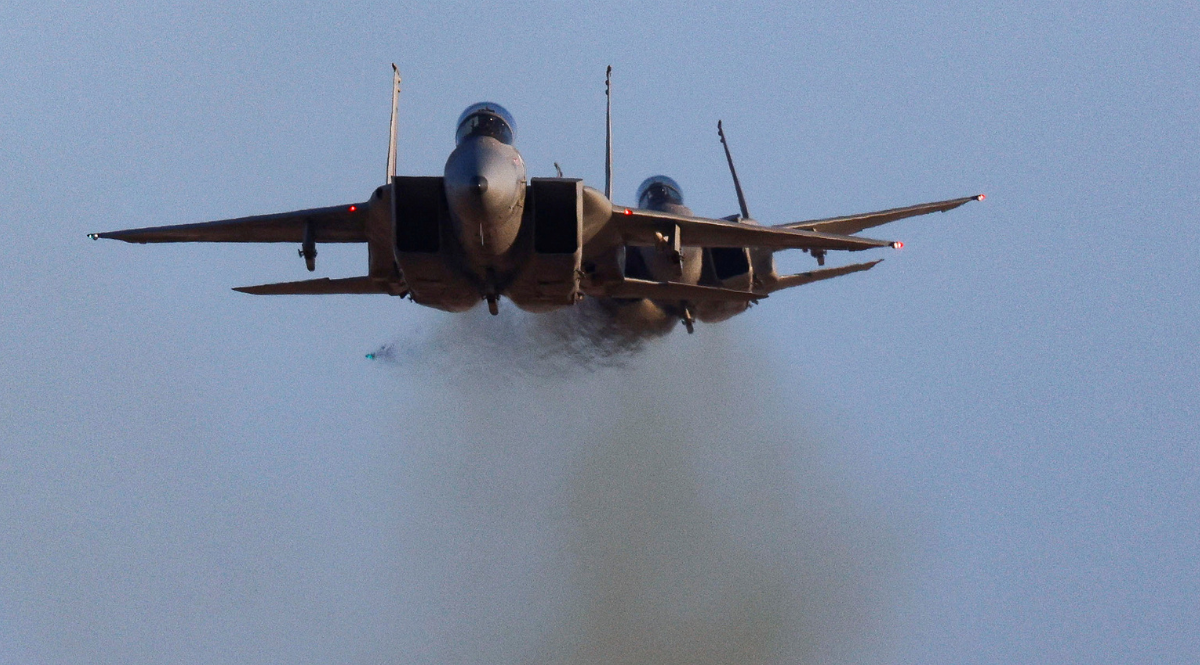
From Israel’s point of view, Iran’s status as a “threshold state” was increasingly contentious, while its accumulation of highly enriched uranium was growing and determined to be an unacceptable existential threat. If Iran decided to boost its stocks of uranium to the weapons-grade level (90%), that would shorten the timeframe for it to build an operational nuclear weapon and subsequent arsenal. Israel’s calculations were also influenced by its concern that the Trump administration would accommodate some of the Iranian demands too quickly just top declare success in the nuclear negotiations initiated in April 2025. Israel started its military campaign on 13 June and correctly assumed that Trump would join the strikes on selected Iranian nuclear centres.
In addition to Prime Minister Benjamin Netanyahu’s continuous focus on the Iranian issue for over two decades, he is guided by domestic and political considerations. Israel’s attacks on Iran have improved Netanyahu’s political position in the short term due to a broad acceptance among the public and the political and security establishment regarding the threats posed by Iran’s nuclear programme and its regional influence. He needed to strengthen his position to maintain Israel’s goals of eliminating Hamas, recovering the remaining hostages, and controlling the Gaza Strip ever since the terror attacks of 7 October 2023.
Main Consequences of the Military Operations
Although it is hard to estimate the results of the Israeli-American strikes on Iran, it can be assumed that the Iranians will try to rebuild their nuclear programme, especially as it already has the know-how and technologies to do it. Infrastructure for further enrichment of the nine tonnes of uranium at 60%, previously located at the Fordow and Natanz nuclear centres, could be reconstructed in a year or two, and if it still has this material it is sufficient for an arsenal of even 20-22 nuclear warheads that can be produced in six months after enrichment to 90%. The estimated 408 kg of highly enriched uranium still could be converted into weapons-grade uranium for 8-9 warheads in a less time, technically even in just month or two if Iran decided to do so. There is the high probability that this highly enriched uranium was secured before the Israeli and U.S. strikes in safe parts of the Fordow and Isfahan complexes. Moreover, the assassinations of dozen of Iranian nuclear scientists by Israeli intelligence has not been decisive in slowing or halting Iran’s nuclear programme. A few thousand scientists are engaged in nuclear research and development in Iran, and industrial production of fissile material is engaging thousands more Iranians. Full access of the IAEA into these facilities is now impossible after Iran banned of international inspections.
Israel’s targeting of Iranian scientists, military, and political leaders likely have increased the elites’ perception of the threats against them and Iran, but neither internal stability nor the survival of the regime is in question. The attacks reportedly reinforced earlier decisions regarding the succession protocols of the Supreme Leader of Iran, Ayatollah Ali Khamenei. The state security apparatus continues to control the Iranian society, with most of the anti-systemic part pacified after the wave of protests in 2022-2023. External or military-based regime change is also unlikely. Attempts to achieve regime change would most likely result in the consolidation of the society around the Iranian regime. Plus, any uncontrolled collapse of the authority structure could increase international concerns about control of the uranium reserves, strengthen pro-Iranian terrorist groups, and provoke regional destabilisation, as well as raise the prices of oil. Moreover, any collapse or change of the current regime in Tehran would not guarantee an alternative to the Islamic Republic that would totally reject Persian nationalism in Iran’s regional policy. Further Israeli and/or American strikes on Iran weakening its security could also prompt the current or future regime to decide to build an operational nuclear arsenal.
At the same time, despite the threat of escalation to both Israel and the U.S., Iran has lost some of its capability to deter further attacks on its territory—the strikes seriously degraded its air defences. Military operations by Israel have weakened the pro-Iranian Hezbollah and Hamas. The collapse of the Assad regime in Syria and the U.S. operations against the Yemeni Houthis has also reduced Iran’s ability to deter its enemies. Its weakness was also confirmed by the limited missile strikes on U.S. bases in Qatar, which were calibrated to be more of a face-saving gesture towards Iranian society than intent to harm the American military. Iran also did not escalate with supposed terrorist cells in the U.S. and EU or, as it threatened, to block the Straits of Hormuz, which is the main artery for oil exports from the Persian Gulf. Again, given the experience of Libya, Syria, Iraq, and Ukraine, and Israel’s recent campaign in Iran, the regime in Tehran, regardless of ideology, may conclude that only a relatively large and well-protected nuclear arsenal can form the basis for future effective deterrence of attacks on its territory.
Conclusions
The difficult situation in which the Iranian regime finds itself may prompt it to resume nuclear negotiations with the U.S. to avoid further American or Israeli attacks. However, Iran will play for time to consolidate internally, make a complete assessment of the losses to its nuclear facilities, and determine options for rebuilding them. It will also obstruct and delay the return of IAEA inspectors, continuing to accuse them of espionage.
The weakening of the regime in Tehran creates an opportunity to persuade it to accept restrictions on its nuclear programme and missile arsenal (an issue omitted from the JCPOA). At the diplomatic level, Israel will most likely insist on the “Libyan model”, which is the dismantling of nuclear infrastructure and the transfer of enriched uranium to a third country, such as the U.S. or Russia. At the same time, Israel may press the U.S. for the broadest possible agreement with Iran, one that includes limiting its influence in the region.
Although Iran’s negotiating position has weakened, the regime can still use the threat of withdrawing from the NPT. Paradoxically, its situation may be improved by President Trump’s changing approach to the negotiations, for whom it seems quick success is more important, even if only apparent and at the expense of essential conditions. Iran may assume that regardless of the shape of the new nuclear agreement, it will still be able to undertake secret work on a smaller scale, bypassing IAEA and U.S. controls. Such an approach will not satisfy Israel and may lead to the resumption of military action against Iran. If Iran does undertake secret work on nuclear weapons, the facilities serving this purpose will likely be more dispersed, better hidden, and better protected. The commanders and units of the Islamic Revolutionary Guard Corps and their missile arsenal will then remain targets for Israel.
Iran will maintain various forms of support for affiliated armed groups in the region that may continue to fight Israel. In the long term, it may inspire and sponsor attacks on Israeli diplomatic missions and Jewish community centres around the world, especially if Israel strikes Iran again. Settling scores over the extent of Israeli intelligence infiltration in Iran may lead to the consolidation of the regime and the neutralisation of potential opposition.
The EU and Poland can support de-escalating tensions in the region and negotiating with Iran. EU diplomatic efforts in the coming months (until the annual UN General Assembly in September) could be backed up by the threat of reinstating all the tough sanctions the EU put on Iran over its nuclear programme, most of which were lifted under the JCPOA. In Poland’s contact with Iran, it should emphasise that clarification with the IAEA of the fate of highly enriched uranium will be seen as a test of Iran’s real intentions. At the same time, EU countries should emphasise the benefits to Iran of remaining unsanctioned.




(1).jpg)
.png)
.png)
.png)