U.S. Strikes Selected Nuclear Centres in Iran
U.S. air and missile strikes on Iran on 22 June targeted three main nuclear centres, including Fordow, which was not previously hit by Israeli airstrikes. The scale of the damage and Iran’s responses will determine the success or failure of the U.S. operation and result from its calculus about the threat posed by Israel, room for possible concessions to the U.S., and the necessity to preserve and stabilise the regime in Tehran.
.png) credit: U.S. Air Force / Zuma Press / Forum
credit: U.S. Air Force / Zuma Press / Forum
What were the targets of the U.S. air and missile strikes in Iran?
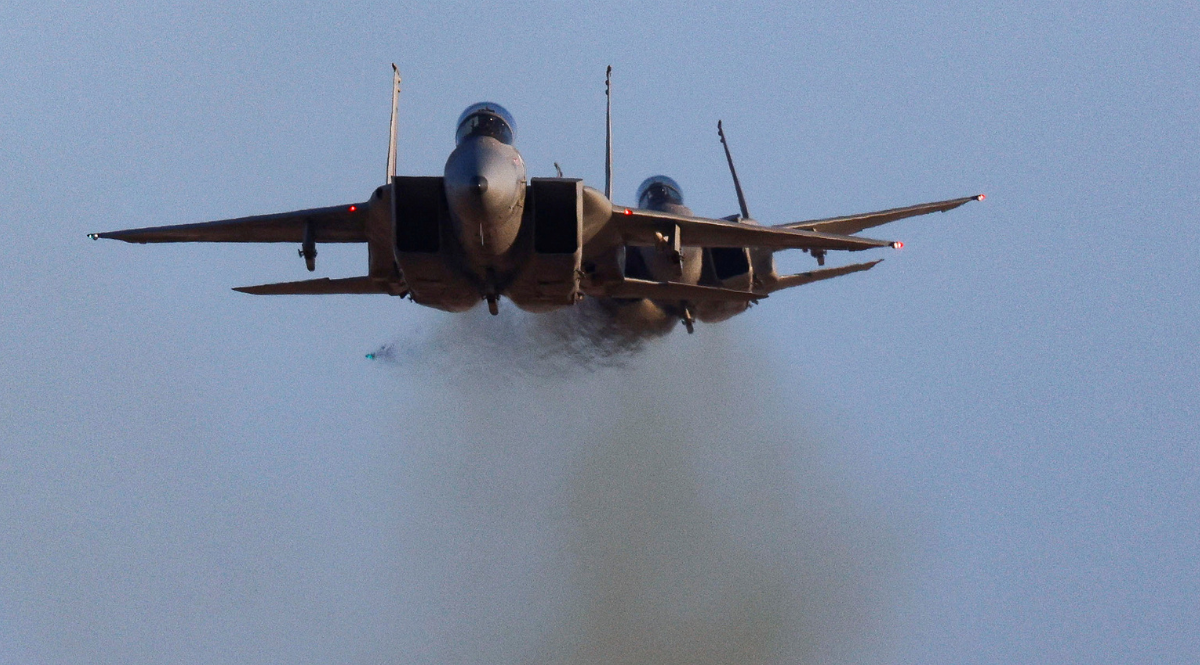
Operation Midnight Hammer focused on the nuclear centres in Isfahan, Natanz, and Fordow. After the strikes the U.S. president stressed that the goal of the operation was to degrade Iran’s capabilities to build a nuclear arsenal and to compel it to limit its whole nuclear programme. The uranium conversion facility in Isfahan and the uranium enrichment centre in Natanz were bombed by Israel on 13 June. The main target of the U.S. strikes was the well-protected, massive uranium enrichment centre beneath a mountain in Fordow. During the operation 30 Tomahawk sea-launched cruise missiles were used against Isfahan and Natanz, while a several B-2 strategic bombers with special deep penetration bombs (GBU-57, each weighing 13 tonnes) were dropped on Natanz and Fordow. Despite the declarations of President Donald Trump that the U.S. had “completely and totally obliterated” the Fordow facility, the chairman of the Joint Chiefs of Staff was cautious and awaiting a final damage assessment. Initial satellite imagery suggest that six GBU-57 bombs had exploded inside ventilation openings at Fordow, and their explosions could have destroyed or damaged tunnels and a hall with centrifuge cascades for uranium enrichment. It is still unclear what happened to the approximately 408 kg of highly-enriched uranium (60%), which after further enrichment to the 90% level (weapons-grade uranium) could be used in the cores of 9-10 simple nuclear warheads. The scale of real damage to the two uranium-enrichment facilities will be one of main measures of the success or failure of the Israeli and U.S. military operations against Iran. Just as after the earlier strikes by Israel, the International Atomic Energy Agency (IAEA) did not detect any radioactive pollution, but there is a risk of local contamination by chemical agents used at different stages of uranium processing.
Is there a threat of asymmetric retaliation by Iran?
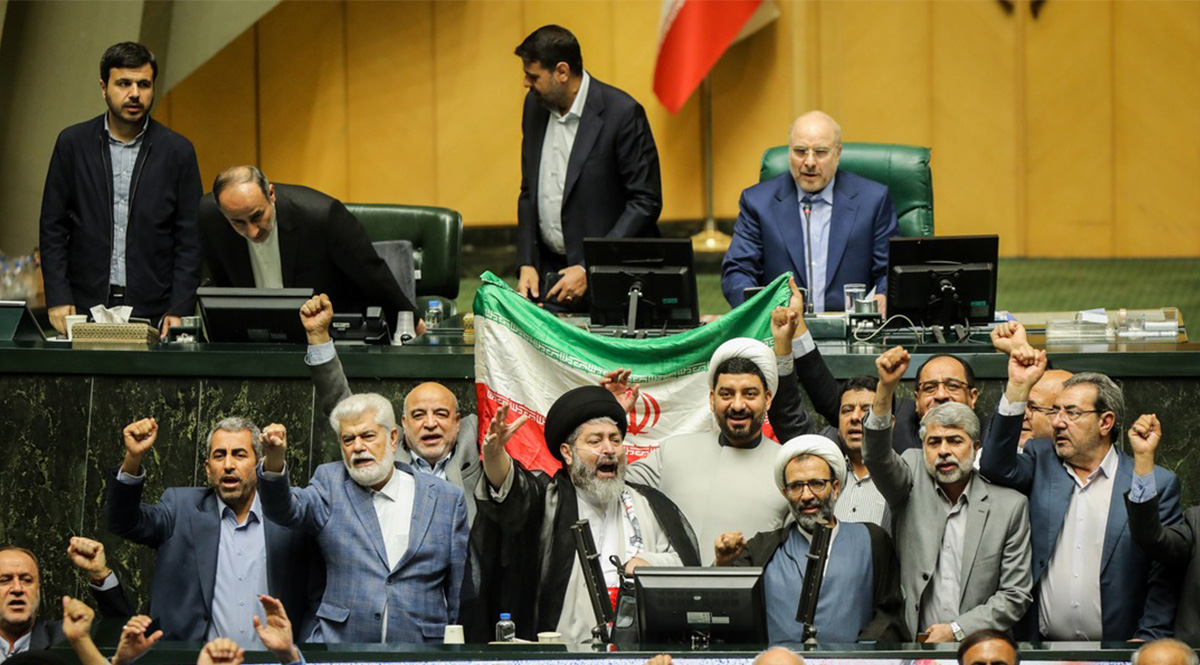
Iranian media downplayed the effectiveness of the U.S. operation, although there were also messages with threats of decisive retaliation. Iran is struggling with an unprecedented weakening of regional influence, limitations of conventional military potential, and many internal issues, the accumulation of which threaten the stability and continuity of the theocratic regime in Tehran. The ongoing airstrikes by Israel on civilian and military officials are also complicating Iran’s reaction, and in the context of this specific regime, some of the more belligerent declarations or resolutions by its parliament should be treated with caution. Due to the U.S. forces already present in the region, it is likely that the options of retaliation with missiles or a blockade of the Hormuz Strait will be too risky for Iran for now. Iran may pursue other tactics, such as GPS-signal jamming to try to misguide tankers or harassing smaller U.S. troop bases in case of further strikes by the Americans. The most likely response seems to be a continuation of the Iranian attacks with long-range missiles and drones on Israel, up to the exhaustion of Iran’s arsenal. Historical patterns of the Revolutionary Guards and Lebanese Hezbollah suggest that Iran’s use of terrorism against U.S. troops or citizens might be delayed to avoid conventional confrontation now.
How military operations could influence U.S.-Iran nuclear negotiations?
Prospects for further and massive U.S. strikes threatening the survival of the regime might force Iran into some concessions or even to accept the majority of the U.S. demands. The initial emphasis by President Trump and the head of the Pentagon that the focus is on nuclear issues and not on regime change in Tehran could leave room for continued diplomacy. Direct talks between Iran and Israel seems to be unrealistic, even if this is the solution suggested by Trump. Iran also will try to use mediation and support from France, Germany, and the UK to negotiate with the U.S., even if it may result in more restrictions of its nuclear programme than expected in talks initiated in April this year. Iran’s flexibility on nuclear issues could also meet some of Israel’s main goals regarding diminishing the Iranian nuclear potential. The main obstacle for Iran are the potential and visible withdrawal under military pressure and damage to the reputation and prestige of the regime. Nevertheless, real threats to Iran posed by its two main rivals may force it to accept concessions. The U.S. ultimatum also has a short timeline, so there is pressure on Supreme Leader Ali Khamenei to make strategic decisions quickly. Some of the concessions might also be tactical steps to reduce the risk of open military confrontation with the U.S. because Iran possesses enough know-how, experience, and a scientific and industrial base to renew covert works on a nuclear arsenal.
Is there any role for crisis-management by other states?
Since the start of the Israeli operations against Iran on 13 June there has been heightened interest among Middle Eastern and other states to decrease the risk of a military conflict between Iran and Israel and the U.S. The majority of these states are critical of Israel’s policy on the whole, but avoid a public expression of this stance. At the same time, these states are concerned by the prospect of a total regime collapse in Iran and the subsequent likely refugee situation, as well as the risk of a too-powerful Israel in the region. At the moment, only France and the UK are deploying troops to the Middle East, and some of their capabilities are to assist with the security of Israel. The majority of EU states declare a commitment to prevent Iran’s nuclear arsenal, stopping Iranian military assistance to Russia, and containing new waves of Middle Eastern international terrorism or refugees. Iran for now cannot count on open military assistance from Russia, China, or North Korea, even if the four share a common revisionist interest in limiting the global and regional position of the U.S. Iran also cannot count on more than strictly symbolic and diplomatic actions by Russia and China within the UN Security Council. Such difficulties for Iran may persist in the context of China’s concerns about global oil prices and destabilisation in the Persian Gulf, through which it receives 40-50% of its oil.


.jpg)