From a Surrender Plan to Peace Plans - Negotiating an End to the War
The 19th November disclosure by the American news website Axios of a 28-point "Peace plan for Ukraine" initiated the next phase of talks on ending the war. In response to the plan discussed in the media, which was essentially a list of Russia's demands, European countries presented their own, which takes into account the Ukrainian perspective. However, Ukraine's military and domestic situation will make it difficult to reach any compromise with the US and Russia.
 Lian Yi / Xinhua News Agency / Forum
What are the circumstances of the initiation of the current peace talks?
The return to talks on ending the war in Ukraine directly stems from the media appearance of the 28-point plan. Its text allegedly reflected the content of a document presented by the US to Ukraine as a proposal from President Donald Trump. However, numerous analyses of the document's content indicate that it is perhaps more a list of Russian demands, adopted in full by the US. Therefore, the unexpected media release of the plan can be considered an attempt by Russia to exploit Ukraine's weaknesses.
The recent and still unfolding corruption scandal has significantly undermined trust in President Zelensky and his circle among both foreign partners and the Ukrainian public. Problems on the frontline (Russian advances near Pokrovsk and in the Zaporizhzhia Oblast) and difficulties in the energy sector resulting from successful Russian attacks on Ukraine's infrastructure are making the country's situation very difficult, both militarily and socially.
What are the implications and what is the current position of the US authorities?
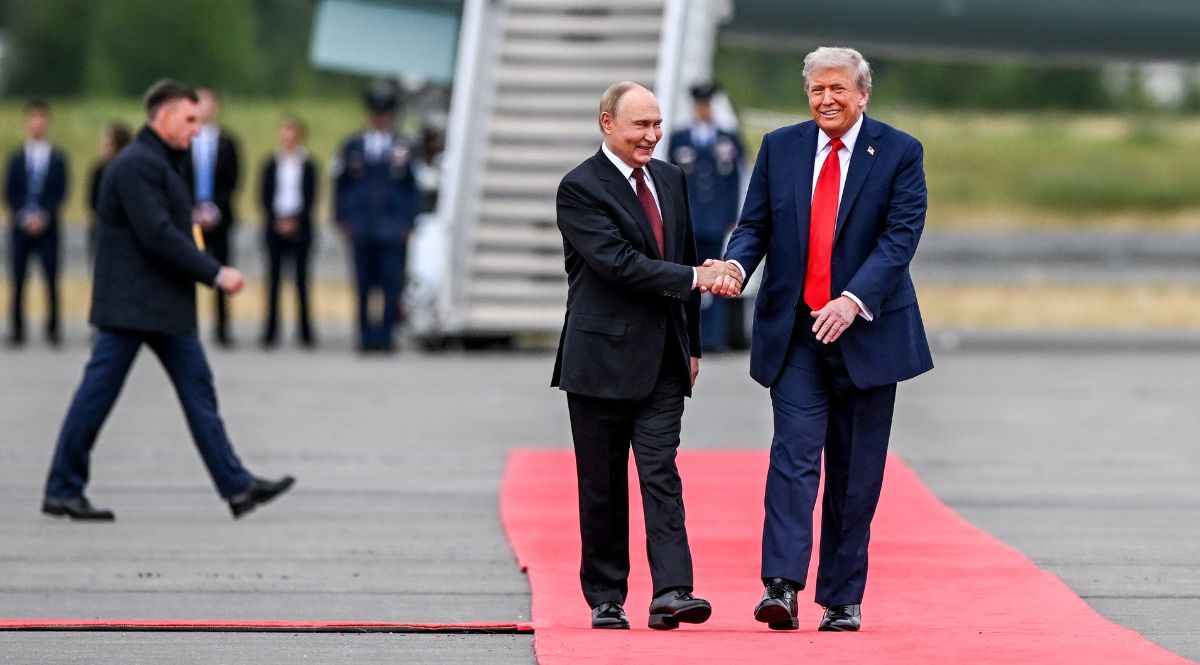
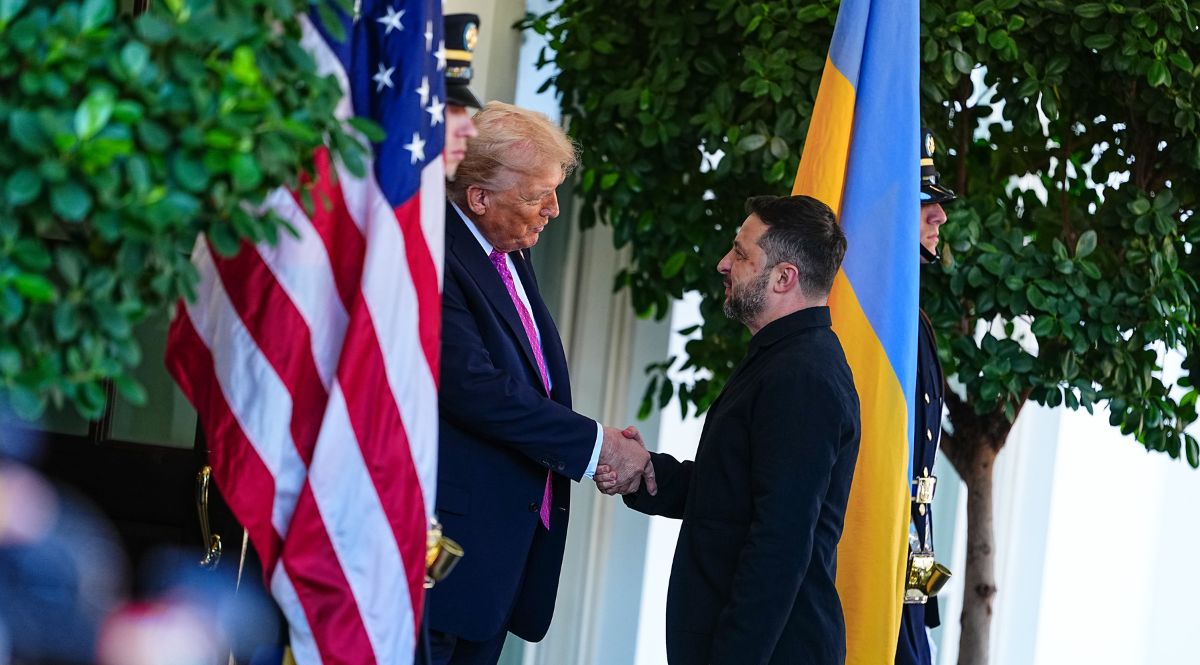
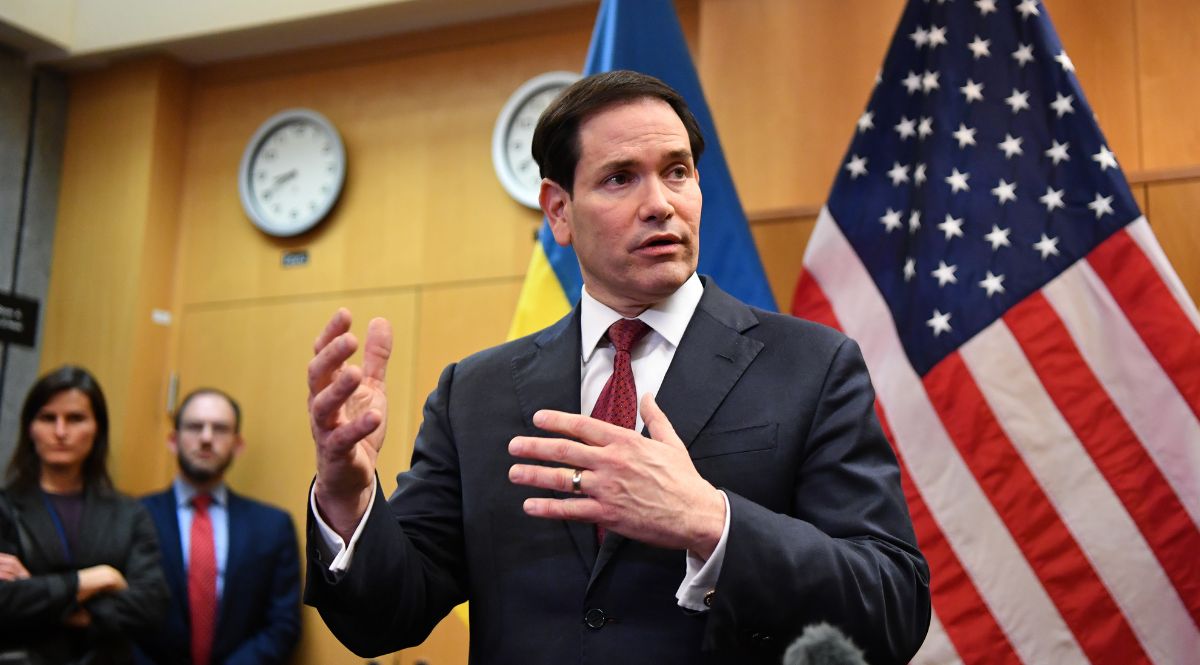
On the US side, the return to peace talks is motivated by progress in implementing the Gaza peace plan, including the adoption of the UN Security Council resolution on the creation of an international stabilisation force, as well as Trump's declining ratings among the American public following the record-length government shutdown and the president's resistance to making the ‘Epstein files’ public. Once again, the administration's approach to the negotiations was two-pronged. Individual points of the plan were likely worked out in direct, informal contact between Special Envoy Steve Witkoff and Kirill Dmitriev, head of the Russian Direct Investment Fund, following their October meeting in Florida. According to US senators, after their conversation with Secretary of State Marco Rubio, the State Department and the National Security Council were bypassed. The dispatch of Dan Driscoll, Secretary of the Army at the Department of War, to Ukraine to present the plan to Zelensky (20 November) may indicate an attempt to focus the talks with Ukraine on the difficult situation on the front as an argument for a quick agreement. The involvement of Driscoll, appointed as the new envoy for Ukraine to replace Keith Kellogg, may also stem from his close acquaintance with Vice President J.D. Vance, who discussed the plan by phone with the Ukrainian president on 21 November. During the consultations in Geneva on 23 November, Rubio, in turn, was focused on taking Ukraine's position and interests into account. This resulted in the development of a new agreement, which Driscoll presented to Russia on 24 November in Abu Dhabi. Talks between the US, Ukrainian, and Russian delegations are also set to continue there. A visit by Zelensky to Washington is also possible, which would signal to Trump Ukraine's political readiness for an agreement.
How does the peace plan respond to Russia's demands?
The document incorporates a very large portion of Russia's demands from the beginning of the war, primarily the formal recognition of occupied territories as Russian, Ukraine's withdrawal from NATO accession, the reduction of its army, and a limitation of its armaments. At the same time, Russian authorities are leaving room for further negotiations, treating this document as having been established informally and therefore "without consultation with Russia." Therefore, it is likely that further demands will be made on Ukraine, such as the removal of Zelensky from office or the deletion of clauses unfavourable to Russia, such as the provision of $100 billion of frozen Russian assets for the reconstruction of Ukraine. Russia will also use any attempt to renegotiate the plan to blame Ukraine and its international partners for sabotaging peace talks and pushing for war, while simultaneously intensifying the offensive to gradually shift the front line and increase the scale of destruction of Ukrainian infrastructure. At the same time, it remains doubtful that Russia will accept unilateral security guarantees for Ukraine, modelled on those the US provides to, for example, Japan or South Korea. From the Russian perspective, its massive military commitment and human losses constitute a sacrifice by the Russian nation to ensure that Ukraine does not join Western military blocs and alliances in any form. Therefore, the plan, though echoing many Russian demands, will not be acceptable to Russia. However, the very discussion of it will serve as a tool to further engage the US in dialogue on the conditions for resuming political and economic cooperation.
What is the response of Ukraine and its European partners?
Ukraine cannot agree to the vast majority of the plan's points, as they undermine the country's sovereignty and its ability to defend itself against Russia. Although Ukraine's current position is already very flexible, red lines include the prevention of further and unfettered strengthening of its military potential, and the lack of control over parts of Donbas, where heavily fortified defence lines exist, preventing Russia from launching a potential offensive deep into the country.
For Ukraine's European partners, the plan is seen as undermining their efforts to support the country and enabling Russia to renegotiate the security architecture in Europe. On the one hand, this would entail enormous political costs, and on the other, generate new security threats from Russia. Therefore, almost immediately after discussions on the "peace" plan began, many European countries expressed concern about its content. On 22 November, 13 heads of government or state, joined by the prime ministers of Japan and Canada (at the G20 meeting in South Africa), issued a joint statement highlighting the plan's dangerous elements from the Ukrainian (and European) perspective. One day later, security advisors from the United Kingdom, France, Germany (the E3 countries), and Ukraine met in Geneva. As a result, a European "response" to the peace plan appeared in the media, taking Ukraine's position into account to a much greater extent.



.jpg)