Energy Derussification of Poland's Visegrad Partners
While Czechia has moved away from importing Russian energy resources, Hungary and Slovakia remain the most dependent EU countries. As a result of EU and US sanctions against Russia, both countries will have to make efforts to reduce this dependence. This prospect represents an opportunity for Poland to deepen cooperation in its role as a provider of energy security.
 Stoyan Nenov / Reuters / Forum
Following Russia's full-scale invasion of Ukraine, the EU is reducing its dependence on Russian energy resources through sanctions packages and restrictions imposed by Western countries (e.g. oil price cap). The aim of these measures is to increase the EU's own energy security and reduce Russian budget revenues, of which oil and gas earnings account for around 25% of income and help finance the war. As part of 19 sanction packages, the EU has banned imports of, among other things, coal from August 2022, oil and oil products from February 2023 (excluding Slovakia and Hungary, and Czechia until June 2025), as well as liquefied natural gas (LNG) from January 2027. In 2022, Russia cut off gas supplies via pipelines to most EU countries as part of unilateral measures (excluding Slovakia and Hungary, and Austria until November 2024). The EU restrictions included a number of exemptions and transition periods for Central European countries, justified by the need for time to expand infrastructure and avoid additional costs of early contract termination.
Pressure for Diversification
At a meeting of energy ministers on 20 October, the EU Council adopted a draft regulation on the gradual phasing out of Russian gas imports by the EU. The document provides for a total ban on imports of this raw material from 2028. The law will also require Member States to submit national plans for diversifying oil and gas supplies by 1 March 2026, indicating planned actions and challenges. Due to the veto of Hungary and Slovakia, the EU is proceeding with the regulation as a trade measure (which doesn’t require unanimity, unlike sanctions policy), and it therefore still has to be approved by the European Parliament.
The pressure is also being increased by the US, which on 22 October imposed sanctions on Lukoil and Rosneft, the main oil suppliers to Hungary and Slovakia. These restrictions were supposed to significantly reduce the flow of Russian oil through the Druzhba pipeline from 21 November. However, during his visit to Washington on 7 November, Prime Minister Viktor Orbán obtained a one-year permit to import oil from sanctioned entities.
Ukraine's actions also cast doubt on the stability of supplies from Russia. At the beginning of this year, it did not extend its gas transit agreement, which caused a decline in the year-on-year volume of pipeline gas exports from Russia to the EU by almost half. Currently, Hungary and Slovakia receive Russian gas exclusively through Turkstream (the result of diversifying routes, not sources of supply).
In addition, Ukraine temporarily disrupted oil supplies, despite a transit contract with Russia that remains in force until the end of 2029. The imposition of Ukrainian sanctions on Lukoil last summer halted some supplies and forced the Hungarian oil company MOL to formally receive supplies at the Ukrainian-Belarusian border, increasing costs and operational risks for Hungary. In August this year, Ukrainian drone attacks on the Druzhba pipeline pumping stations in Russia interrupted oil shipments for 10 days.
Czechia as a Point of Reference
Thanks to political will, the expiry of energy contracts, infrastructure investments and increased imports from alternative sources, Czechia has moved away from Russian gas (from 2023) and oil (from 2025) supplies. Due to its historical dependence on Russian oil and the technical adaptation of the Litvinov refinery to process it, Czechia was exempt from the EU embargo on Russian oil. Supplies ended with the expiry of Orlen's contract with Rosneft for oil supplies to the Czech refineries of the concern in June this year. It was possible to meet domestic demand for oil thanks to an increase in the capacity of the TAL oil pipeline running from Trieste (the TAL-PLUS project) and modernisation work carried out at refineries.
Although Czechia, like Slovakia and Hungary, is a landlocked country, it has moved away from Russian supplies thanks to the ports of countries with access to the sea. The oil terminal in Trieste plays a key role in oil procurement for Czechia, while the Dutch LNG terminal in Eemshaven plays a key role in gas imports. In addition, the state-owned energy supplier ČEZ has reserved capacity in the LNG terminal in Stade, Germany, which is scheduled to start operating in 2027.
Hungary's Stubborn Refusal to Break Its Dependence
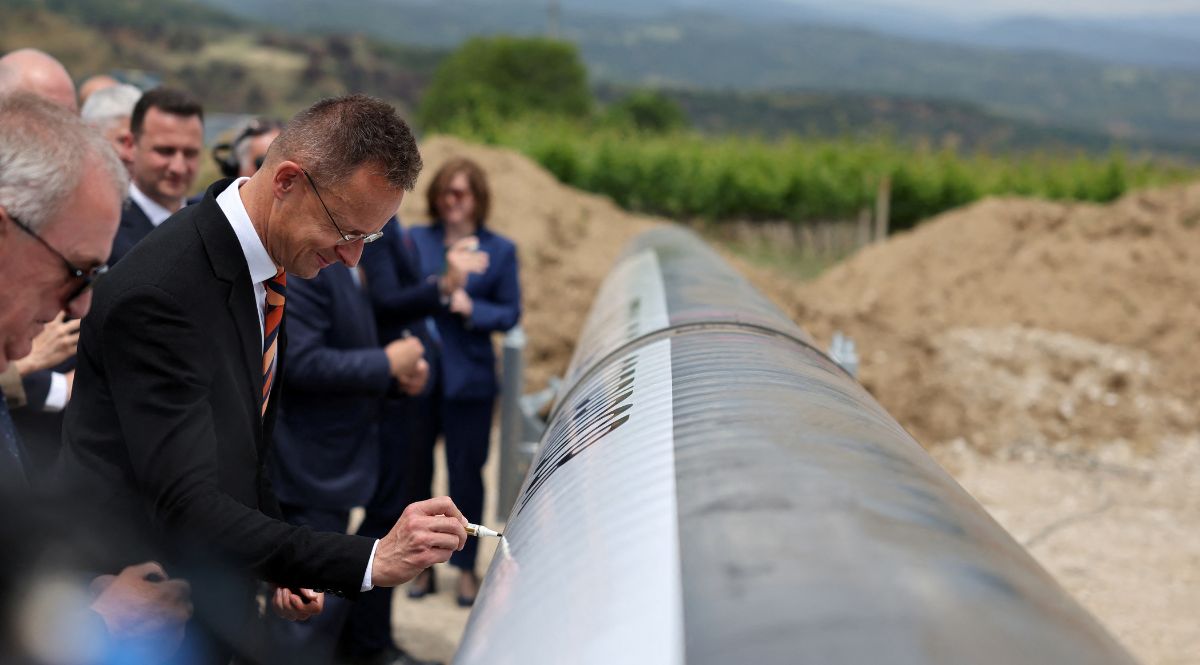
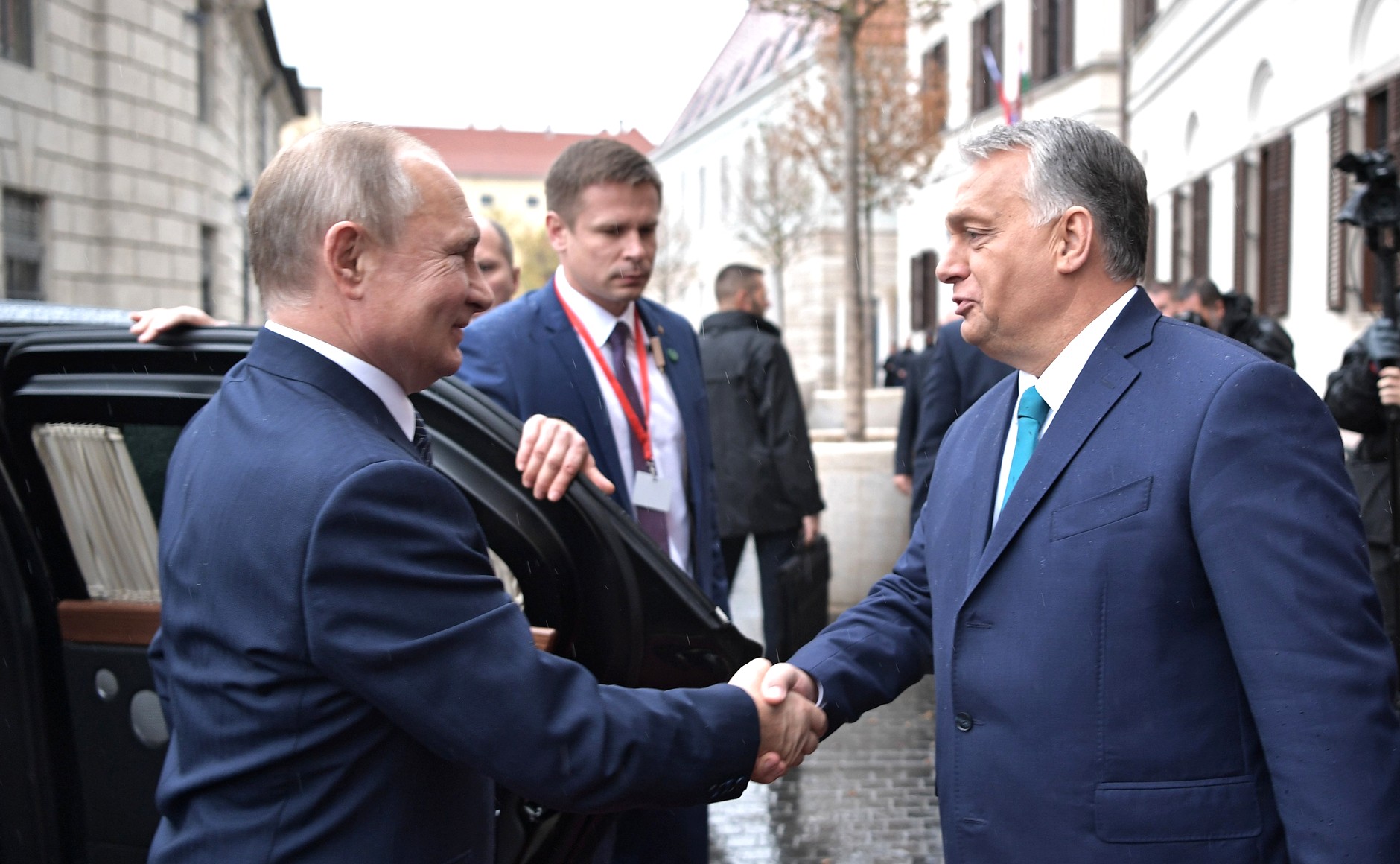
In contrast to EU policy, the Hungarian authorities are seeking to continue importing oil and gas from Russia, as evidenced by Prime Minister Orbán's visit to Moscow at the end of November this year. They point out that their landlocked location makes it impossible for them to move away from supplies from this direction. This argument, combined with the good relations between the US and Hungarian leaders, led to President Donald Trump's decision to grant Hungary an exemption from the latest US sanctions. Nevertheless, the agreements reached at their November meeting may contribute to the diversification of gas import sources. Prime Minister Orbán has committed to purchasing $600 million worth of American LNG over five years (the value of monthly imports from Russia is approximately $200 million). The EU's goal of moving away from gas imports from Russia may also be served by the contract concluded in September this year between Hungary and the British company Shell for the supply of 2 billion m3 of this raw material in 2026-2036. An alternative to Russian oil is supplies from the Croatian terminal in Omišalj via the Adria pipeline, whose transmission capacity is sufficient to meet Hungary's demand, as confirmed by tests carried out in September this year.
The Hungarian authorities present the prospect of moving away from Russian hydrocarbons as a threat to households, which would be affected by price increases. However, this is contradicted by lower petrol prices in all V4 countries, even after moving away from Russian supplies (see charts). In reality, the benefits of importing cheaper oil are captured by the state budget and business entities linked to the government (e.g. Normeston Trading). Meanwhile, maintaining energy prices by avoiding supply shocks resulting from the need to end imports from Russia is particularly important for the government ahead of the parliamentary elections scheduled for spring 2026.
Slovakia Forcing Concessions
The Slovak authorities also point to the difficulty of their landlocked location and see Russia as a stable partner. The exemption of Hungary from US sanctions also covered the Slovnaft refinery in Bratislava (owned by Hungary's MOL), which obtains oil mainly through the Druzhba pipeline. In Slovnaft's opinion, the alternative Adria pipeline is characterised by high transit fees and the need to rely on short-term contracts. In turn, the ongoing change in gas supply routes (still mainly Russian) has undermined Slovakia's transit role.
The energy dependence on Russia influences the EU-related policy of Robert Fico's government, which has criticised EU restrictions. Resistance to the 18th and 19th sanctions packages was fuelled by an attempt to force the European Council summits to produce results favourable to Slovakia in terms of energy policy. These concerned support for Slovakia in arbitration proceedings in connection with the possible termination of contracts for the supply of raw materials from Russia and guarantees to protect consumers from energy price increases. Nonetheless, Fico's government is considering challenging the decision to suspend Russian gas supplies to the EU from 2028.
Conclusions and Prospects
The diversification of hydrocarbon imports by Hungary and Slovakia is primarily due to the sanctions imposed on Russia by the EU and the US in recent months. Their search for further exemptions from the effects of these sanctions in order to continue cooperation with Russia contrasts with Czechia’s policy, which has ended hydrocarbon supplies from that direction, thus questioning the argument that a Central European landlocked country has no alternative but to import them from the east. At the same time, the energy policy of the V4 countries shows that the indications at the last summit of foreign ministers (in Prague in March 2024) on the possibilities of cooperation in the energy sector, as well as the mention of energy in the programme of the current Hungarian presidency of the V4, remain untapped potential.
Changes in the energy market in Central Europe and Poland's investment in developing alternative sources and directions of supply to Russia present it with an opportunity to play a greater role than before in the regional oil and gas market. Its transit potential, which is important in the process of diversifying supplies by V4 partners, stems, among other things, from the north-south gas corridor (the last element of which – the interconnector with Slovakia – was completed in 2022). Further expansion of energy infrastructure, including the completion of two floating gas terminals (in Gdańsk and Świnoujście), the expansion of gas storage facilities and the modernisation of the oil port in Gdańsk, would contribute to consolidating its position as a regional energy hub. This would also be facilitated by institutional changes (e.g. extending the working hours of the Polish Power Exchange) and regulatory changes (concerning the rules for trading in transmission and storage capacities), to develop a competitive and efficient domestic gas market.


.png)
.png)