Countries React to Invitations to Join the Board of Peace
Initiated by Donald Trump, the Board of Peace became an instrument of US foreign policy even before it began. It creates a new form of integration centred around a strong leader and transcends the regional settings and existing alliances. The countries invited to join it are adopting various response strategies. Only a few expect to benefit from joining the Board, while most weigh this against the risk of disrupting the existing international order or, in the case of refusal to participate, the threat of a negative reaction from Trump and a deterioration in relations with the US.
 Denis Balibouse / Reuters / Forum
Last autumn, the US administration proposed the creation of a Board of Peace (BoP) as part of Trump’s 20-point plan for the Gaza Strip, which was approved by the UN Security Council (UNSC) in November. In January, the Israeli media published the text of the Peace Board Charter, the document on which the BoP is to base its activities. Criticism of existing international organisations and general announcements of efforts to stabilise and ensure peace in areas affected or threatened by conflict therein, without reference to Gaza Strip in its text, suggest that the BoP, under Trump’s leadership, will seek to expand its activities (e.g. to include the dispute over Kashmir between India and Pakistan, or the Grand Renaissance Dam between Egypt and Ethiopia). The proposed operating method for the BoP—de facto relying on Trump as chairman—is also a cause for concern.
Participation in the Board of Peace
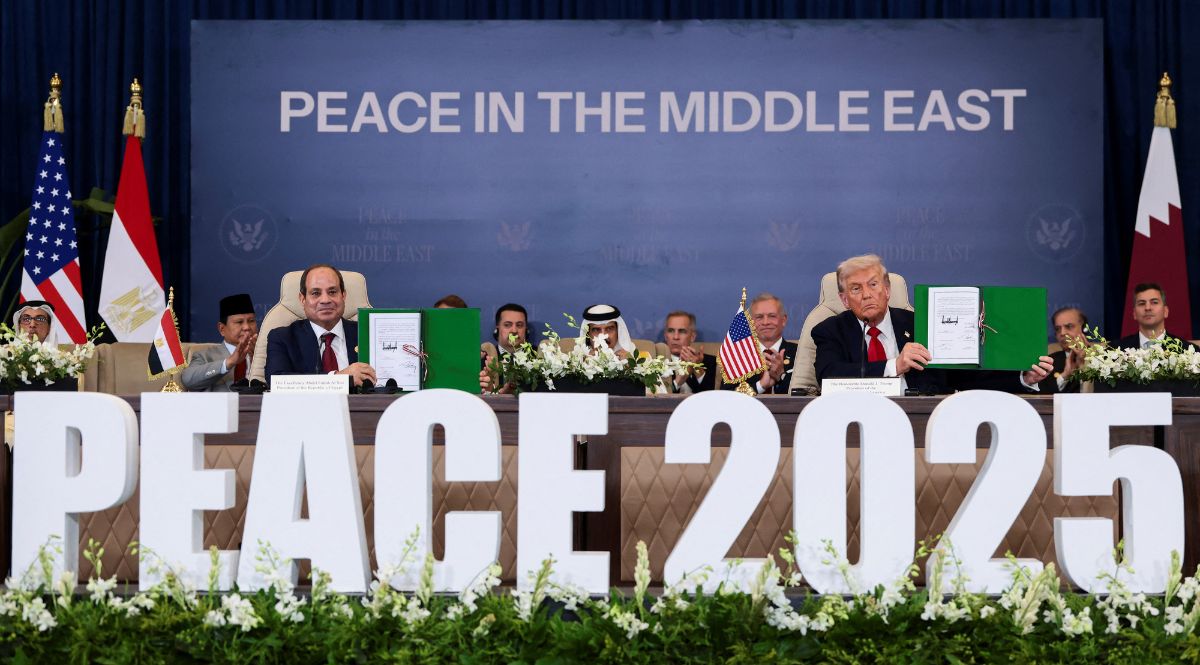
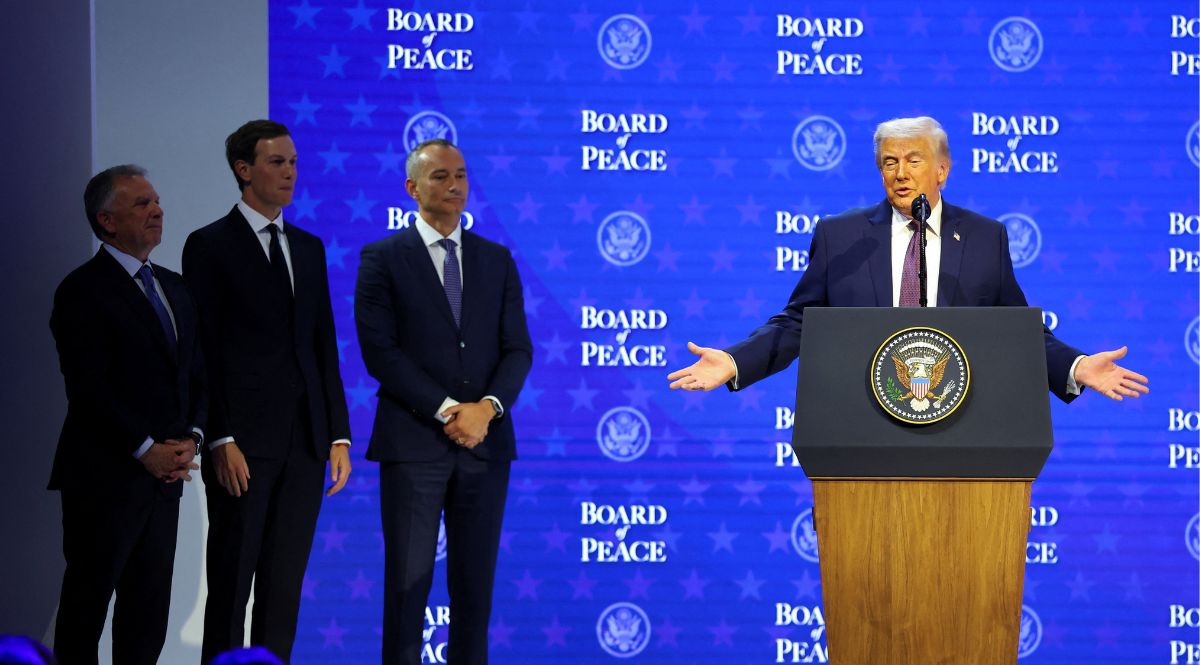
On 22 January, on the sidelines of the World Economic Forum in Davos, 19 countries signed the BoP Charter. This is roughly one-third of those initially invited to participate by President Trump (see table below), but the list of members (countries, regional organisations) may be further amended. The Charter does not indicate the criteria for their selection, and Trump himself described the composition of the BoP as “the most important leaders of the most important nations.” Receiving an invitation to the Board of Peace is thus seen as a sign of importance in the eyes of the US (e.g. for Albania, Azerbaijan, Kazakhstan, Paraguay, Uzbekistan and India, which are still hesitant about membership). Similarly, the withdrawal of an invitation (Canada) or, in some cases, the lack of one (Denmark was one of the few EU countries not to receive an invitation) is taken as evidence of tense bilateral relations or of the country’s low importance to the US administration.
In accepting the invitation to the BoP, countries are mainly guided by a desire to build good relations with the Trump administration (e.g. Vietnam), confirm existing strong cooperation with the US (e.g. Kosovo) or by fears of aid being reduced in the event of a negative response (e.g. Pakistan). Representatives have also pointed out that it is better to participate in the talks than to be excluded from them. For some of them, participation in the Board is part of a multi-vector foreign policy and an attempt to reduce regional dependencies, including on Russia and China (e.g. Kazakhstan, Mongolia, Uzbekistan), a way out of international isolation (e.g. Belarus, and in the case of accession, also Russia). Others see the BoP as an opportunity to increase their security by resolving conflicts (e.g. Uzbekistan). Those countries that, in confirming their membership, put forward arguments related to establishing lasting peace in the Gaza Strip and its reconstruction are countries already involved in the peace process or supporting the Palestinians, including Saudi Arabia, Egypt, Qatar, Turkey, as well as Indonesia or Pakistan.
Obtaining permanent membership (over 3 years) requires a payment of $1 billion. The funds collected in this way would be allocated to the reconstruction of the Gaza Strip, but some media outlets have already questioned this, pointing out that the Charter refers to a broader purpose for financing BoP activities. Furthermore, Russia has already attempted to exploit the payment requirement politically, pointing out that in its case, this cost could be covered by frozen assets which are located in the US.
A Cautious Approach
In most cases, the invitation to join the BoP met with hesitation. Those countries that have explicitly refused to join the BoP have mainly justified their decision by pointing to the incompatibility of the BoP Charter with Security Council resolution (e.g. Greece), concerns about undermining the role of the UN (e.g. France), and disrupting the international order (e.g. Spain, Slovenia). Some countries, such as Germany and New Zealand, have also signalled that their participation would not bring any additional benefits to the BoP. These reservations are also echoed by countries that have not yet given Trump a clear answer. For example, China has emphasised its commitment to UN-based multilateralism, while South Korea is considering its possible contribution to the BoP.
For some countries, delays in communicating an official decision are primarily justified by the need for a thorough analysis of the proposal (e.g. India, Japan, Vatican). Others have announced consultations with the US to clarify doubts (e.g. Australia, Russia, Switzerland) or a review of their international commitments, including those arising from membership of the UN, NATO and the EU (e.g. Romania). In addition, reservations about Trump’s dominant role in the BoP have been more or less directly articulated (e.g. Belgium, Cyprus).
Some countries are delaying their final response due to national procedures, although practice in this regard is inconsistent. For many countries (e.g. Poland), joining an international organisation is subject to parliamentary approval, but some have signed the BoP Charter without obtaining it, e.g. Argentina, Bulgaria and Hungary. Thailand postponed its decision until after the parliamentary elections, whereas the outgoing Bulgarian government accepted the invitation. Italy, whose prime minister expressed openness to Trump’s proposal, and Germany, which has already refused to participate, have cited “constitutional issues.”
Countries also have different attitudes towards sitting on the same committee as their adversaries. Scepticism about the membership of Qatar, Pakistan and Türkiye in the BoP did not prevent Israel from joining, but for Ireland and the United Kingdom, the potential participation of Russia was one of their arguments against accession. Ukraine has stated that only after the war ends will it be possible for it to be part of the same organisation as both Russia, as its aggressor, and Belarus, which supports it, (the lack of an explicit refusal is said to be due to fears of antagonising relations with the US).
Some, such as Portugal, and Kaja Kallas and Antonio Costa who spoke on behalf of the EU, have indicated a willingness to cooperate with or join the BoP if the activities were limited to the mandate set out in the Security Council resolution. The President of Brazil called for Trump to focus the Board of Peace on the Gaza Strip and reforming the UN rather than replacing it, while also pointing out that Palestine should also have a seat on the BoP (a point which was also raised by Spain).
Conclusions and Prospects
Trump’s arbitrary decisions on the composition of the Board of Peace and who is invited to join it are creating further divisions in the world from the perspective of the US administration. Given the overall response of countries to the invitations, the Trump administration has so far achieved moderate success. It has managed to gather a broad group of interested parties, sufficient to inaugurate the BoP, but has failed to convince most of its Western allies or any of the other permanent members of the Security Council to support the project.
The group invited to participate in the BoP is so diverse that the same arguments that persuade some to join the Board may be cited by others as reasons not to join. The arguments from countries refusing to participate in the BoP and those hesitating are more consistent, ranging from concerns about disrupting the existing international order and marginalising the role of the UN, reservations about Trump’s dominant role, to more neutral references to national procedures or their potentially limited contributions to BoP activities.
The position of each of the countries invited to join the BoP will most likely be interpreted by the US administration as a vote in a plebiscite in which they express their support or disapproval of its foreign policy, or even of Trump himself. Therefore, decisions around joining the BoP are primarily assessed in terms of building good relations with the US president or the possible negative consequences (political, economic, etc.) of refusing to join the Board of Peace. This requires countries to take a broader view of their foreign policy priorities, as joining the BoP in order to strengthen relations with Trump may come at the cost of having to revise existing policies in other areas, such as abandoning policies of isolation against their adversaries. Poland has not yet made a final decision on membership of the BoP, so taking these conditions into account, as well as the US reaction to the decisions of individual countries and coordination with EU partners, will be important.