China Trying to Strengthen Dialogue with India
China sees India as its main rival in Asia. However, the Chinese authorities are maintaining a dialogue with the Indian government, recently even signalling a conciliatory attitude. In this way, they want to prevent an escalation in bilateral relations and try to influence India’s relations with the U.S. and the European Union in a way that is beneficial to China. Although China’s attempts to strengthen dialogue with India are tactical in nature, even a short-term improvement in bilateral relations poses a challenge for the EU. Attempts to reduce Europe’s dependence on China, in which India is to play an important role, are now in question.
 POOL / Reuters / Forum
The Basic Goals and Assumptions of China’s Policy Towards India
For China, the most important goal of its policy towards India is to limit that country’s potential in Asia. From China’s point of view, India’s policy is not in line with Chinese interests. This mainly concerns India’s cooperation with the U.S. (e.g., in the Quad), but also its developing contacts with the EU, Japan, Australia, and the Philippines. An important element of China’s approach to India is also the protection of interests resulting from China’s cooperation with Pakistan, with which India remains in a long-standing border conflict over Kashmir (in April this year, armed clashes took place). Another objective is to resolve the border dispute with India in a manner favourable to China. China claims rights to the entire Indian state of Arunachal Pradesh. In addition, an important goal of China is to limit the influence of the Tibetan government-in-exile and the 14th Dalai Lama, who are based in the Indian city of Dharamsala. India’s support for the Tibetan government’s demands for Tibet’s autonomy is seen by China as a threat to its territorial integrity. In China’s policy, India is also an important economic partner, primarily in the context of investment and the participation of companies from the advanced technology sector, but also as an important market for Chinese goods.
Tactical Policy Adjustments
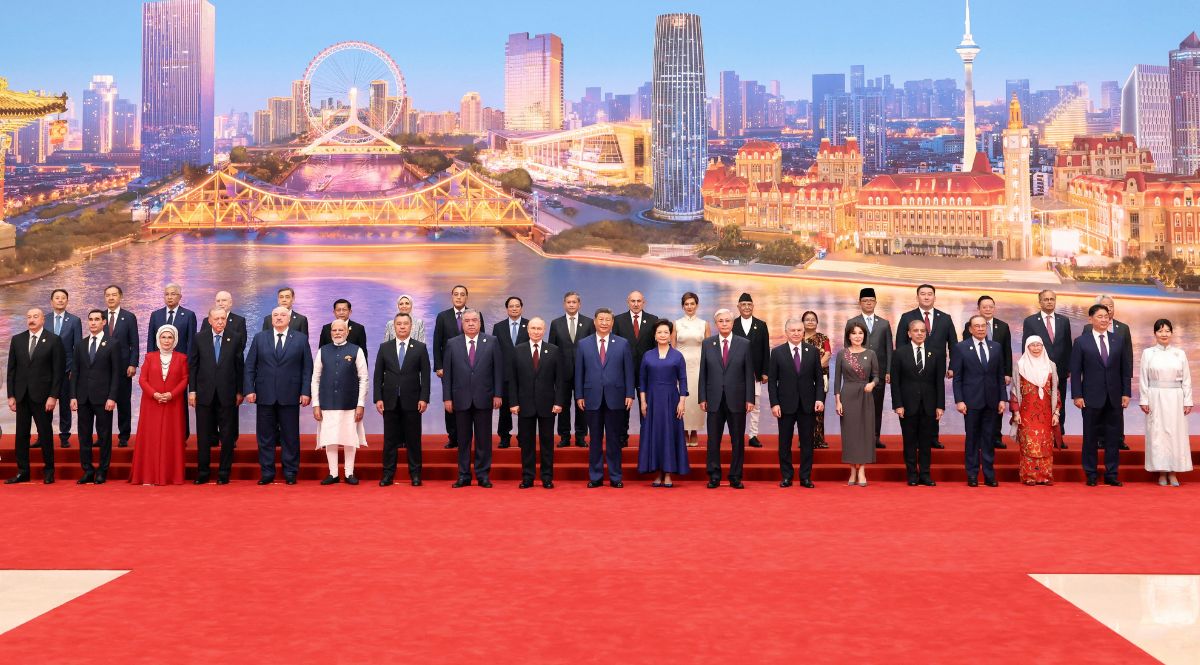
Despite perceiving India as its main rival in Asia, over the past year China has been increasingly signalling its readiness for political talks with this country, expecting a normalisation of relations, to which India has generally responded positively. Even before the BRICS summit in Kazan in October 2024, India and China concluded an agreement regulating patrols on the disputed border, which eased tensions. As a result, in June this year, the foreign ministers of India and China met for the first time in five years. And in September this year, Prime Minister Modi visited China for the first time in seven years to attend the SCO summit in Tianjin.
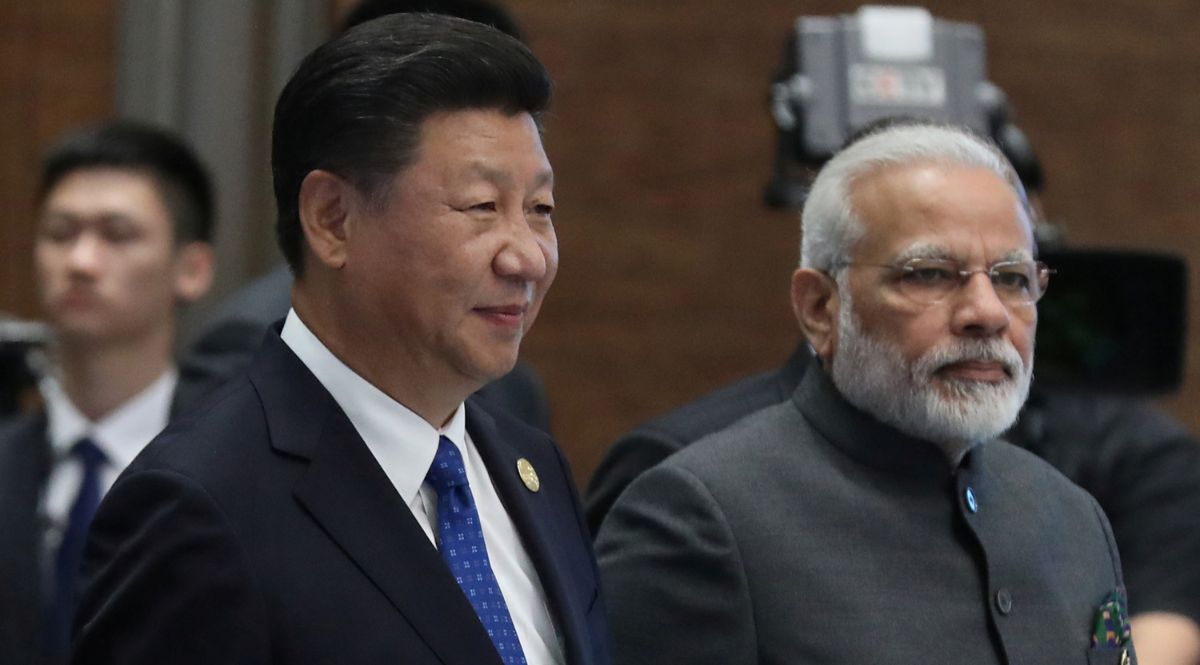
The improvement in China-India relations coincides with a deterioration in Indian-American relations. In China’s assessment, it was precisely this change in relations (the imposition of high tariffs by the U.S.) that convinced Prime Minister Modi to attend the SCO summit. It also strengthened his conciliatory stance both during multilateral talks and direct talks with Xi and Vladimir Putin. China, wanting to take advantage of Modi’s difficult situation in his relations with Trump, is clearly signalling its readiness for a limited compromise. It wants to draw India away from the West by exploiting Indian-Russian cooperation. This was the purpose of organizing the Xi-Modi-Trump meeting in Tianjin. Another positive signal from China was its agreement to include compromise wording on the fight against terrorism in the final communiqué after the September SCO meeting, in line with India’s demands. Back in June this year, at the SCO’s defence ministers’ meeting, there were no such passages in the final document, and the Indian representative refused to sign it.
The tactical nature of China’s conciliatory policy towards India is evidenced, for example, by the content of the statement following the Xi-Modi meeting in Tianjin, in which the Chinese authorities declare, in very general terms, bilateral global cooperation, but do not mention cooperation in Asia, as the Indians do. Full normalisation is also hindered by China’s sale of weapons to Pakistan, which were used in April this year during its confrontation with India. China has also not withdrawn its troops from the border areas, as stipulated in the 2024 agreement. It also rejects the 14th Dalai Lama’s suggestions regarding his reincarnation (the designation of his successor) outside China, which India has accepted. Agreeing to this demand would deprive China of control over the process of selecting the spiritual leader of the Tibetans, which could strengthen the autonomous tendencies of this minority.
Not Just Tactical Economic Adjustments
The changes also affect China’s approach to economic cooperation with India. In order to demonstrate their willingness to cooperate, the Chinese authorities are suggesting reducing restrictions on exports to India, for example, of rare earth metals and fertilisers. This was announced, among others, by Chinese Foreign Minister Wang Yi during his visit to India in August this year. It was also agreed at that time to resume direct flights, which is to take place this month.
The actual importance of the Indian market for China is evidenced by bilateral trade turnover. In the 2024-2025 fiscal year, China became India’s largest trading partner, while India was China’s 12th-largest trading partner. Trade relations are highly asymmetrical, with Chinese exports amounting to over $110 billion while imports from India amounted to $14.25 billion. India’s trade deficit thus amounted to almost $100 billion. However, there are restrictions on the operation of Chinese companies introduced by the Indian government, symbolised by the ban on TikTok and other Chinese applications. According to experts from China, India is interested in further developing trade relations with China, not only because of the tariffs imposed by the U.S. but also because of unemployment (7.2% in June this year) and potential price increases (although inflation in India is currently falling, at 2.66% year on year in June). Due to its size and the potential of its middle class, the Indian market could become a more important destination for Chinese exports in a situation of increasing restrictions on access to the EU market for goods from China and uncertainty regarding trade negotiations with the U.S. India’s plans to develop the manufacturing sector as key to the economy are also expected to benefit China. This will require Indian entities to cooperate with China, which has an advantage, for example, in the environmental protection and critical raw materials processing sectors, including rare earth metals. Depending on the content of the negotiated EU-India free trade agreement, the location of Chinese factories in India could also make it easier for China to introduce products subject to tariffs, such as electric cars, to the EU market.
The tactical nature of these declarations and the persistence of strategic differences, even in the context of economic cooperation, is confirmed by China’s continuation of strategic infrastructure projects such as the construction of a dam on the Yarlung Zangbo River related to water management, but which threaten to reduce access to water in India.
Conclusions and Prospects
The basic assumptions of China’s policy towards India remain unchanged and China’s conciliatory signals are a tactical attempt to improve relations. This is due to favourable international circumstances (including the deterioration of relations between the U.S. and India) and China’s need to stabilise relations with its neighbour. However, the Chinese authorities are aware that U.S.-India relations may soon improve in the face of concerns about China’s growing influence, and that Indian foreign policy will remain focused on limiting it. Hence the caution in relations with India and the continuation of controversial projects, including the dam and support for Pakistan. In China’s view, there is also no need for excessive gestures of compromise towards India, for example, regarding the border dispute.
The lack of prospects for a real breakthrough in Sino-Indian relations reduces the long-term significance of this process for the EU’s interests. Détente in relations with China, even if only for image purposes, will be used by India as a negotiating argument in its relations with the EU or cooperation with the U.S. The EU, aware of India’s negotiating tactics, should continue to cooperate with this country, even in the face of Indian support for the Russian war economy and Prime Minister Modi’s political gestures towards China and Russia. It is worth considering, for example, regular EU-India consultations on China and Russia. This is particularly important in relation to common threats arising from China’s policy towards India and Russia’s actions towards the EU. The continuing political problems in relations with China, as well as India’s focus on multilateral diplomacy, suggest that it may be ready to cooperate with the EU. This is important in view of the threat to India from China, and also as a means of reducing both partners’ dependence on China. Cooperation could involve, for example, EU-Indian projects in the field of economic security and modern technologies, which is important in the process of reducing the EU’s dependence on China. A challenge in the event of the EU concluding a free trade agreement with India may be the opening of an additional channel for goods from China subject to, for example, EU tariffs to enter the EU single market. Restrictions in this area, as well as reducing India’s purchases of Russian energy resources, should be one of the elements of the EU’s dialogue with India.


.png)
.png)