China, Japan, and South Korea Resume Trilateral Dialogue
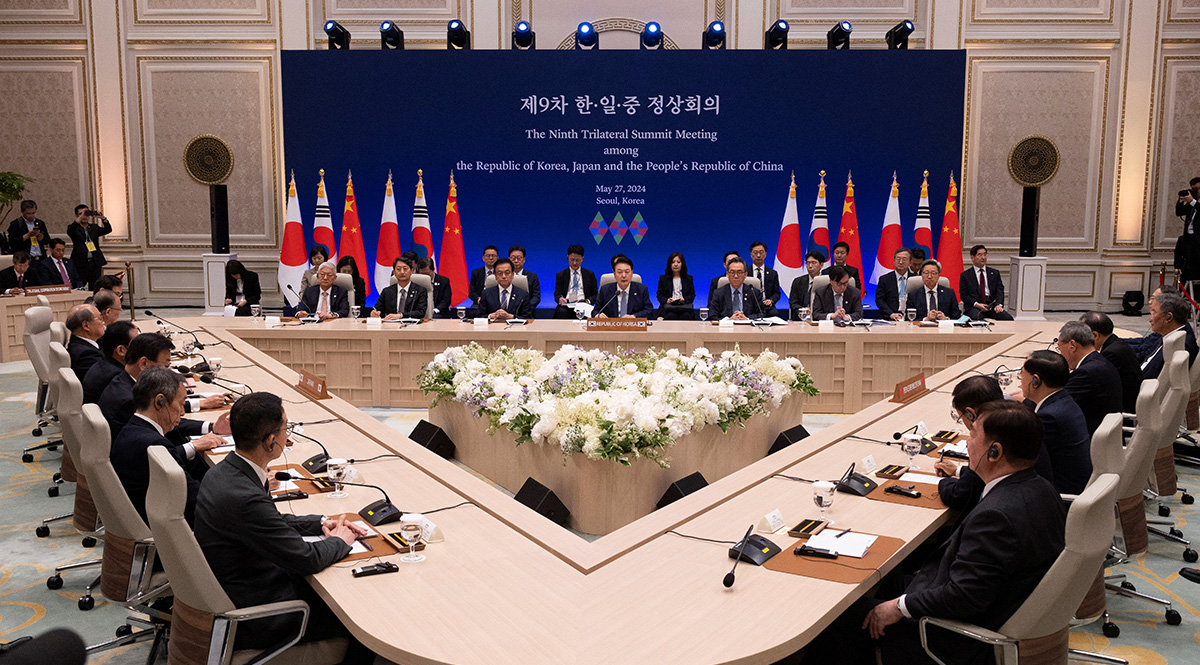
The first summit in almost five years between the prime ministers of China and Japan and the president of South Korea (CJK), held in Seoul on 26-27 May, was primarily devoted to enhancing economic cooperation. The return to this format was made possible by the easing of tensions between the three countries. The apparent divergence of positions on regional and global security between China on one side and Japan and South Korea on the other remains the most serious obstacle to their trilateral cooperation. However, the two U.S. allies recognise that dialogue with China can serve their economic interests and de-escalate tensions.
 JEON HEON-KYUN/POOL / Reuters / Forum
The Nature of Cooperation between China, Japan, and South Korea to Date
The CJK dialogue was launched in 2008 to help reinvigorate economic collaboration between the three countries after the global financial crisis. The format involved annual meetings between the prime ministers of China and Japan and the president of South Korea and talks between ministers of selected ministries. Numerous disputes interrupted the cyclical trilateral dialogue between leaders and foreign ministers (sectoral meetings were held more regularly). The hiatus since the last summit in Chengdu in 2019 was due to Japan’s historical and trade disputes with South Korea, the deepening U.S.-China rivalry and the COVID-19 pandemic. Previously, in 2013-2014 and 2016-2017, CJK leaders’ meetings did not take place, in part because of Chinese and South Korean opposition to Japanese Prime Minister Abe Shinzo’s visits to the Yasukuni Shrine, which commemorates, among others, Japanese war criminals. Meetings were also interrupted by the escalation of the Sino-Japanese territorial dispute over the Senkaku/Diaoyu Islands in the East China Sea and tensions between China and South Korea over deploying the American THAAD anti-missile system on its territory.
The resumption of the CJK talks was made possible by Japan’s improved relations with South Korea after 2022. Despite initial scepticism, China agreed to return to the format in response to the U.S. deepening cooperation with its Asian allies. Thanks to South Korea’s advocacy, a meeting of CJK foreign ministers was held in Busan last November. This was followed by the 9th summit in Seoul, attended by Chinese Premier Li Qiang, Japanese Prime Minister Kishida Fumio, and South Korean President Yoon Suk-yeol.
Economic Issues
The priority given to economic cooperation under the CJK format is due to the global importance of the three countries, which account for 25% of world GDP and 20% of world trade, and the scale of their mutual trade in goods. China is the largest trading partner of Japan and South Korea, and companies from the three countries are closely linked in global value chains. In the joint declaration, CJK leaders emphasised cooperation in economy and trade, sustainable development, including climate change response, public health, science and technology, natural-disaster relief, and people-to-people contacts. They announced the resumption of negotiations on a trilateral free trade agreement (FTA), which has been under negotiation since 2012, and the implementation of the Regional Comprehensive Economic Partnership (RCEP). China and South Korea said they would return to talks on expanding their bilateral FTA to include services and resume the work of the investment cooperation committee. They also announced a decision to launch a dialogue on the security of the supply of materials and components from China to South Korean industry.
Nevertheless, economic cooperation may face obstacles. For Japan and South Korea, China’s non-tariff barriers, unfair competition from Chinese companies at home and abroad, and intellectual property theft are the most significant problems. Despite Japan’s efforts, China refuses to lift a ban on seafood imports imposed in response to the release of radioactive water into the sea from Japan’s Fukushima nuclear power plant last year. In addition, Japan and South Korea are partly bowing to U.S. pressure to limit economic contact with China. This includes shifting high-tech investment from China to the U.S. and building a coalition to limit China’s ability to produce the most advanced chips.
Security Issues
The trilateral declaration of the CJK leaders deals with security issues in general terms. This reflects the apparent divergence of positions in this area between China on the one side and Japan and South Korea on the other. The declaration did not directly reference the situation in the Taiwan Strait and the South and East China Seas. There was also no reference to the development of the North Korean nuclear and missile capabilities as a source of instability in the region and no commitment by the CJK leaders to work towards the denuclearisation of the Korean Peninsula, as had been included in previous summit declarations. Instead, the parties reaffirmed their positions on peace and stability (China’s priority), denuclearisation (South Korea’s priority), and Japanese citizens abducted by North Korea in the 1970s and 1980s (Japan’s priority). The document also made no mention of the war in Ukraine due to the parties’ different approaches to the conflict, with Japan and South Korea supporting Ukraine and China backing Russia.
Contentious issues in China’s relations with Japan and South Korea echoed through the bilateral meetings. During talks with Li, Kishida expressed concern about China’s destabilising activities in the South and East China Seas and its repression in Hong Kong and Xinjiang. He also criticised China’s military cooperation with Russia in Japan’s neighbourhood. Kishida stressed the importance of stability in the Taiwan Strait for international security, suggesting that Chinese military exercises around Taiwan did not serve this purpose. For his part, Yoon urged the Chinese Premier to put more pressure on North Korea to slow down the development of its nuclear and missile programmes and to limit North Korean cooperation with Russia. South Korea is also concerned about China’s repatriation of the North Korean defectors. Li, in turn, denounced China’s opposition to the policy of ‘bloc formation’, echoing criticism of cooperation between Japan, South Korea, and the U.S.
The bilateral meetings also served to ease China’s tensions with Japan and South Korea. Establishing a mechanism for regular consultations between representatives of the foreign and defence ministries, announced during Yoon’s meeting with Li, is expected to improve dialogue on regional security issues. The Chinese and Japanese prime ministers said they would maintain communication channels at all levels to build a “stable and constructive” bilateral relationship.
Conclusions and Perspectives
The resumption of the China-Japan-South Korea summit dialogue demonstrates the parties’ orientation towards cooperation, which is expected to bring economic benefits and reduce the risk of serious disputes arising from strong mutual divergences. However, the potential for aggravating tensions between the countries remains significant, which could disrupt the continuity of meetings in the CJK format. Difficulties could arise in South Korea’s relations with Japan and China and between Japan and South Korea – Yoon’s conciliatory policy towards Japan has been criticised by the opposition, which has been strengthened after the parliamentary election in South Korea.
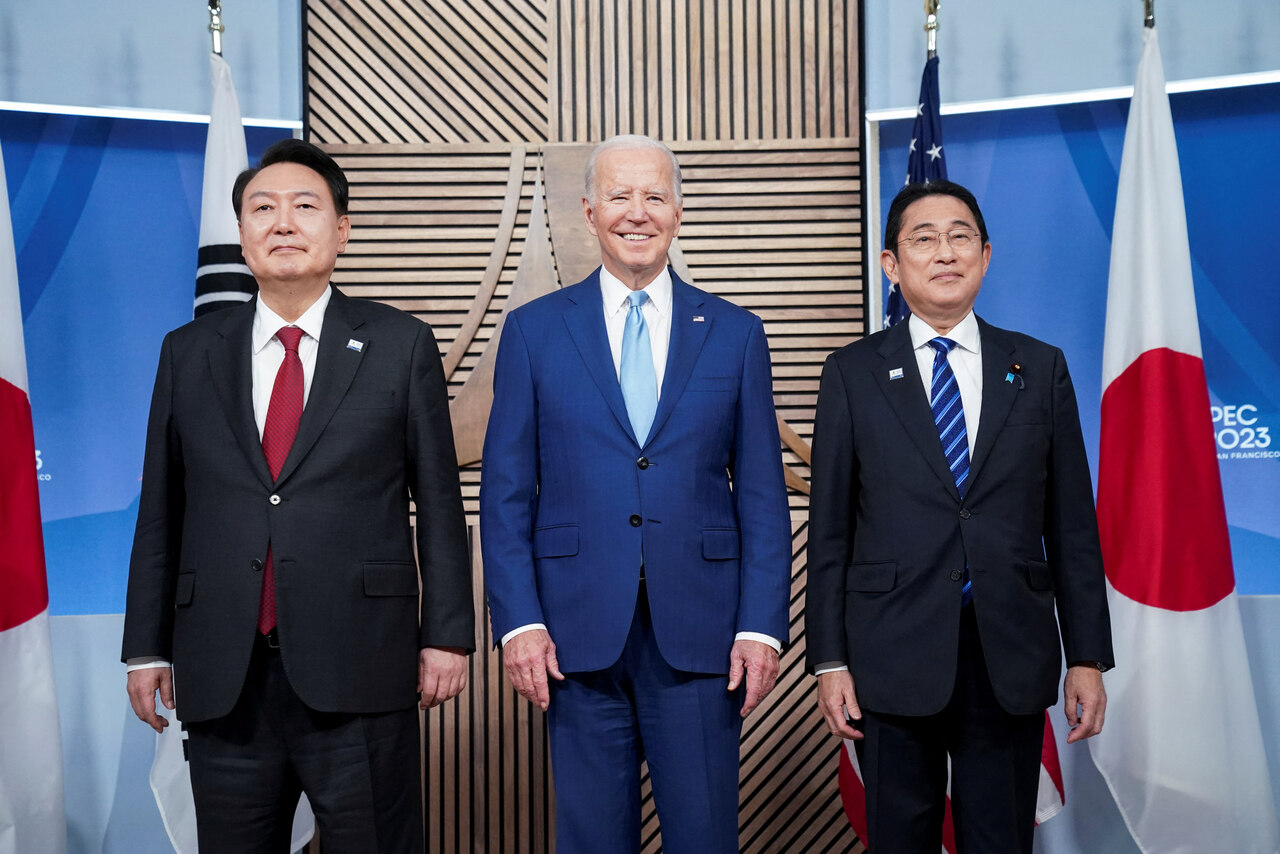
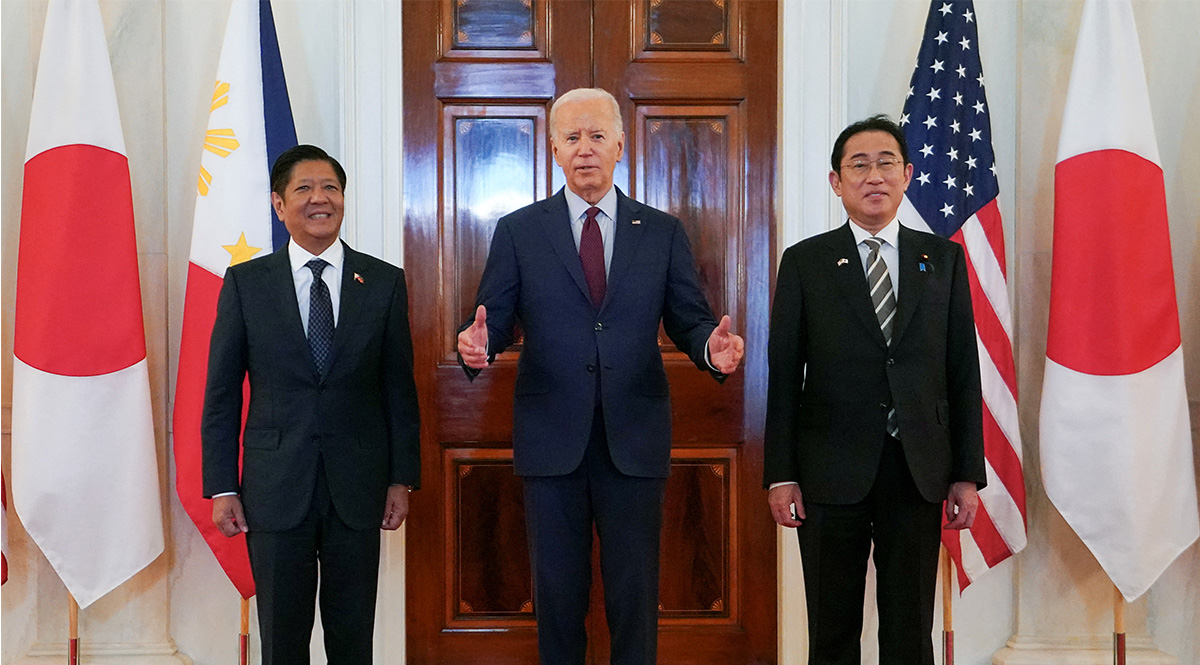
In addition to maintaining economic cooperation, especially in the high-tech sector, China is keen to undermine Japan’s and South Korea’s cooperation with the U.S. By offering its neighbours the prospect of economic benefits, China is responding to U.S. attempts to limit Chinese influence in the region through a network of agreements (U.S.-Japan-South Korea, U.S.-Japan-Philippines, and AUKUS).
Japan and South Korea, like France and Germany, may wish to maintain regular dialogue with China in the face of uncertainty over this year’s U.S. presidential election. If Donald Trump returns to the White House, it could mean that the new administration will impose tariffs on trade not only with China but also with allies to reduce the U.S. trade deficit. This could prompt Japan and South Korea to step up efforts to strengthen economic ties with China, including a trilateral FTA.
In the security dimension, the divergence between China on the one hand and Japan and South Korea on the other is likely to widen. A few days after the summit, representatives of Japan, South Korea, and the U.S. announced that they would conduct the new Freedom Edge drills this summer and establish an institution to coordinate cooperation between the three countries by the end of the year. Antagonisms within the CJK will also be exacerbated by the strengthening of Sino-Russian relations and China’s acquiescence to North Korea’s continued military development.