
China Cautious about Participation in UN Peacekeeping, also in Ukraine
The Chinese contingent in UN peacekeeping operations is the largest among the permanent members of the Security Council. The deaths of Chinese soldiers on these missions, as well as the low effectiveness of some of the operations, have made China cautious about its involvement in further ventures and seeking to change their operational rules. Together with the general distrust of China by the Ukrainian authorities and European states because of its support for Russia, the experience with peacekeeping will significantly affect the Chinese calculations regarding the potential deployment of Chinese troops to Ukraine after a possible ceasefire.
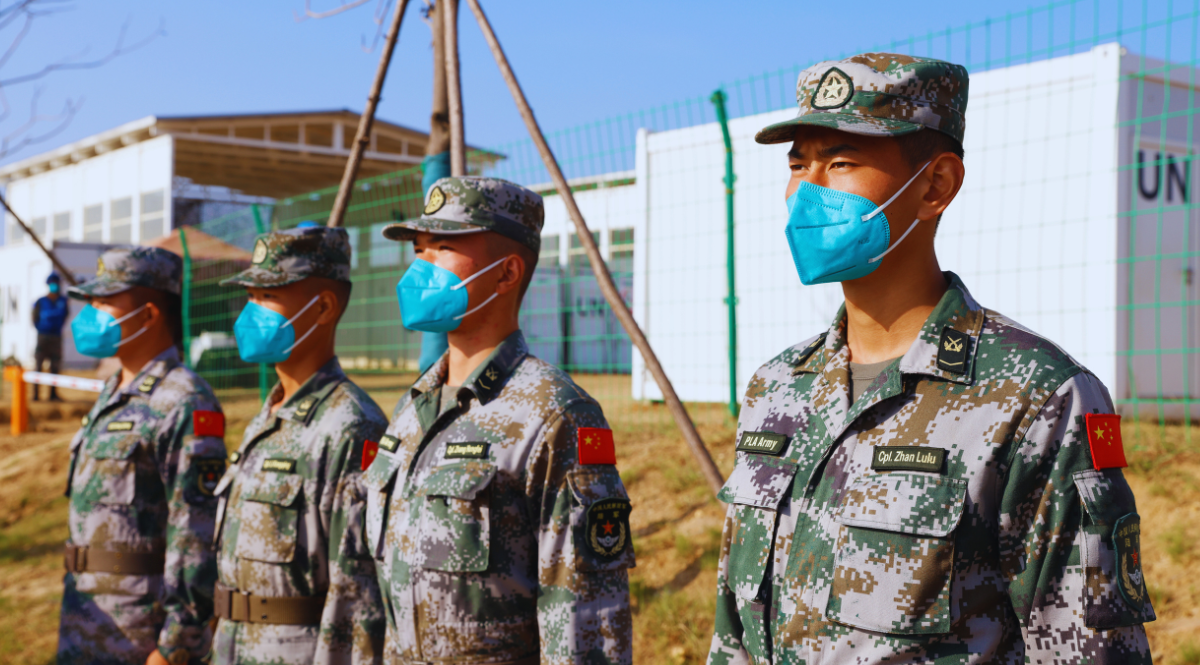 CARLOS GARCIA RAWLINS / Reuters / Forum
UN peacekeeping operations aim to stabilise conflict regions around the world, geared towards improving security and protecting civilians, among other things. They are conducted with military, police, and civilian forces on the basis of a Security Council (UNSC) mandate. Although the UN currently has 11 missions, mainly in Africa and Asia and one in Europe (Kosovo), members are increasingly sceptical of such missions. On the occasion of the 2025 U.S.-Russia-Ukraine talks and the Russian-Ukrainian negotiations, the concept of the participation of the armed forces of third countries as a guarantee of compliance in the event of a ceasefire in Ukraine has emerged between U.S. diplomats, among others. From the possible participants, both U.S. and EU representatives were said to point to Chinese troops.
China on Missions
China’s position towards UN peacekeeping operations has changed over time. After its admission to the UN in 1971 (in place of the Republic of China), China denied the relevance of the missions. Over time, though, its approach became neutral, and in 1990 China sent observers to Egypt and Syria for the first time. A key change came in 2004 when a 600-strong Chinese contingent was sent to Liberia. These were mainly police and logistics units. China did not field its first combat unit until 2012. In 2015, China’s Chairman Xi Jinping pledged at a UN summit to form a detachment within the Chinese army to operate in the organisation’s missions. In 2018, the formation was established, consisting of, among others, six infantry battalions, three engineering companies, two logistics companies, three rapid response companies, and one drone unit, totalling of around 8,000 troops.
Participation in UN missions is the most important component of the Chinese army’s involvement abroad. It is part of the development of the competences of the armed and police forces, also in cooperation with other countries and organisations. Some of the main reasons for China’s involvement in such activities include the desire to gain experience in operating conditions abroad, testing of equipment and logistical support, as well as political empowerment and reaffirmation of the narrative of peace-making, which is mainly aimed at the countries of the Global South. China has not only become the second-largest donor (after the U.S.) to peacekeeping missions—contributing more than $1 billion, more than 18% of the funds, to its 2024-2025 budget—but has also provided the most participants among the permanent members of the UNSC (second on the list, France has sent 631 representatives to missions). In the last 35 years, more than 50,000 Chinese participants have taken part in more than 20 missions, including in South Sudan, Lebanon, and the Democratic Republic of Congo (DRC). Currently, more than 1,700 Chinese are participating in eight UN missions—South Sudan, Sudan, Lebanon, DRC, Western Sahara, Central African Republic, and Cyprus and the Middle East (Jerusalem-based operation).
China uses its presence in UNSC-mandated missions as an argument against military interventions by the U.S. and NATO, such as in Serbia in the 1990s or in Iraq in 2003. They point to their involvement as an expression of a desire to stabilise the international order, in which China stops wars rather than instigates them. The missions also serve to expand military cooperation with other countries, which is expected to translate into the implementation of China’s Global Security Initiative. As part of this, China has already conducted joint exercises with more than 90 countries.
So far, 16 Chinese soldiers have been killed in UN missions: three of the deaths occurred in 2016, two in South Sudan and one in the Central African Republic, and were classified as the result of a clash with the enemy. The deaths on the mission in South Sudan were particularly notable. At the time, Chinese soldiers supposedly abandoned their posts, leaving their equipment behind and did not respond to the rape of civilians. Since then, the Chinese authorities have adopted a more restrained attitude towards participation in missions and now advocate for a more precise formulation of their mandates, especially the responsibilities of the host state. China wants to train its troops more often to participate in operations and provide them with better equipment. At the same time, they seek a reduction by the UN of such mission responsibilities that, in their view, may engage participants against the authority of the countries in which they operate. They regard such assignments as excessive involvement in their internal affairs.
Context of the War in Ukraine
One potential solution to ensure the sustainability of a possible ceasefire between Russia and Ukraine is the supervision of its observance by troops from other countries. The Russian Federation’s rejection of the participation of Western states in the absence of a U.S. willingness to support a mission with a coalition of the willing of such states means that one option for an international military presence in Ukraine could be the participation of Chinese forces. The idea is supported by Russia, suggesting that only the participation of “neutral” states, as it views China, would be possible. Unofficial information from February this year suggested that such a possibility (joint participation of China and Brazil) was being probed by, among others, U.S. diplomats, who regarded the possible participation of only European troops as ineffective, especially with the opposition of the Russians and the lack of willingness of the U.S. to engage in such an operation. The UK and France, most heavily involved in planning a potential European coalition of the willing, are unlikely to treat the possibility of Chinese participation as viable. For Ukraine, Chinese participation in such a mission could be difficult to accept, given revelations by the Ukrainian authorities about China’s growing military support for Russia. In this context, Ukraine would perhaps only be prepared to agree to China’s participation on the condition that in such a contingent the other countries would be among those supporting it. However, the lack of guarantees of U.S. support for France and the UK makes their decision to engage increasingly unrealistic, which would create new circumstances with regard to China’s participation.
The Chinese authorities have reacted with restraint to suggestions of participation in a possible peacekeeping mission. In March this year, the Chinese Foreign Ministry (including Foreign Minister Wang Yi and representative for European Affairs Lu Shaye) did not negate such an idea, but stressed the need for a UN mandate. Dong Jun, Chinese defence minister, during a visit to Germany and France in May this year, expressed his readiness to cooperate on European security, but did not publicly mention a possible Chinese contingent in Ukraine. In Germany, Dong attended a meeting of UN peacekeeping ministers, where he reaffirmed China’s willingness to further engage in these operations. China’s authorities’ restraint may be related, among other things, to the difficulties arising from personnel changes in the leadership of the Chinese military and the perception of the difficulties involved in participating in such operations.
Conclusions and Outlook
In the short term, due not only to China’s complicated position vis-à-vis the West, Russia, and Ukraine itself, but above all due to the lack of readiness of the Chinese armed forces (including adequate training of units, a developed logistical support system, communications and also the ability to plan operations far beyond the country’s borders), only marginal Chinese participation in a possible peacekeeping mission is not excluded, and only if established by the UN (e.g., a dozen or so soldiers). The probability of such an operation being established by a UNSC decision should be considered extremely low at present, but it is not out of the question that China could officially propose the establishment of such a mission and perhaps even gain the support of Russia and a certain group of countries of the Global South in this regard. The rejection of such a proposal by the other UNSC states would give China a reason to hold the West responsible for continuing the conflict and undermining international peace and security. China’s involvement in a potential multinational mission in Ukraine in a different format and scale, as well as the UN, would be extremely risky for China and should therefore be assessed as highly unlikely. Indeed, the Chinese authorities are not really interested in taking responsibility for upholding a potential truce.
From the point of view of Western interests and the future of the security architecture in Europe, China’s participation would be a clear move in favour of Russia and against transatlantic cooperation. Poland, in its relations with EU countries and the U.S., should approach with caution any proposal by China for an international military presence in Ukraine.


.jpg)
.jpg)