Belarus in Turkey's Foreign Policy
Turkey’s actions towards Belarus show that the country plays a greater role in Turkish foreign policy than bilateral relations might suggest. It would be beneficial for Turkey’s Western allies, including Poland, to take this factor into account in the dialogue with their Turkish partner on the political use of the migration through the Belarusian-Polish border by Alexander Lukashenka’s regime and on the political situation in Belarus.
 Fot. Sergei Bobylev/TASS/Forum
Turkey-Belarus Bilateral Relations
Although trade between Turkey and Belarus has been growing almost continuously for a decade, it is still low and not even a billion dollars ( in the case of Poland and Turkey, trade is expected to reach $8 billion this year). It also does not include products that could deepen the interdependence between the countries, the Belarusian market is still of little importance to Turkish investors. Last year, they invested around $60 million in this country, and 130 Belarusian companies can claim they have shares of Turkish capital, which suggests a large dispersion of investments. This is also demonstrated by the general balance of the involvement of Turkish construction companies, seen by the Turks as the economy’s driving force, in Belarus since 1991. Since then, they have implemented 46 projects with a total value of $918 million.
At the same time, in recent years there has been a visible improvement in political relations. This was a result of Belarus’ support of Turkey after the failed coup in 2016. According to Turkish politicians, it provided valuable information about the activities of supporters of the so-called Gülen Movement, accused by Turkish authorities of staging the coup. The intensification of political relations was reflected in high-level visits. In November 2016, Recep Tayyip Erdoğan travelled to Minsk, becoming the first Turkish president to visit Belarus. Alexander Lukashenka visited Belarus in April 2019, the first at this level in 23 years. During both presidential visits, a number of agreements were signed to deepen Turkish-Belarusian relations, including cooperation between their defence industries. However, the economic sphere remained the priority for both sides. The goal set by the leaders of the countries to increase trade to $1.5 billion has not been achieved to date. Thus, the relations between Turkey and Belarus are still mainly based on the political ties. For the Belarusian side, this is especially valuable now because Erdoğan was one of the few foreign leaders to congratulate Lukashenka on his “victory” in the rigged presidential elections of August 2020.
Belarus in Turkey’s Policy
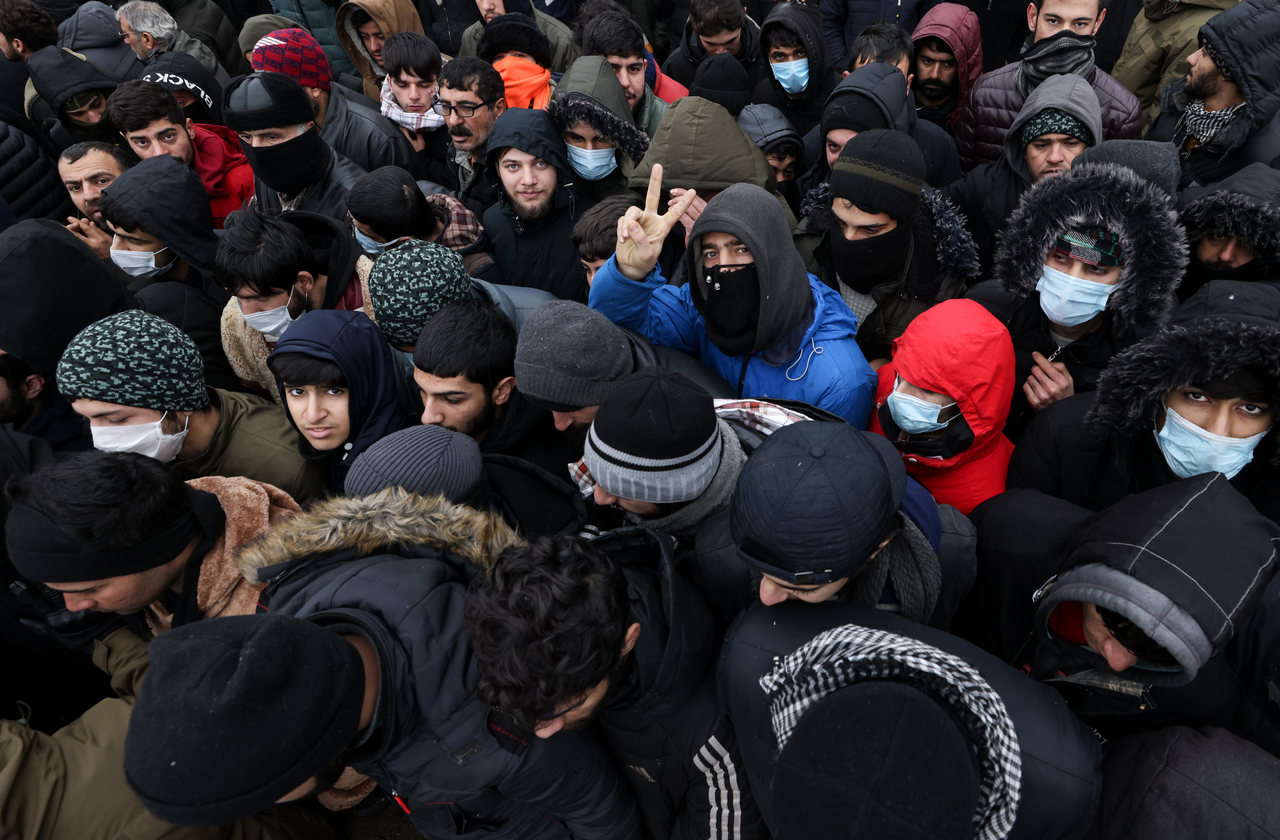
Turkey’s actions towards Belarus are in line with its efforts to maintain a balance in foreign policy between its Western partners and Russia. The clearest manifestation of this were the events of May this year. On the one hand, Turkey decided to sell drones to Poland and soon after sent fighters to Malbork to strengthen NATO’s enhanced Air Policing mission. Both actions contributed to increasing security on the Eastern Flank of the North Atlantic Alliance. On the other hand, Turkey reportedly made NATO allies soften a statement critical of the Belarusian authorities for forcing down a Ryanair plane and arresting opposition Belarusian journalist Raman Pratasevich. Although Turkey’s motives have not been officially commented on by the Alliance, they were most likely related to the country’s desire not to provoke Russia, which was already expressing concern over the strengthening of Turkish-Polish defence ties (especially since at the same time Turkey’s defence cooperation with Ukraine was also developing). Attempts to maintain a balance between its Western partners and Russia may also partially explain—apart from, for example, legal doubts or not seeing the problem as a challenge for Poland’s security—Turkey’s long inaction in limiting the Lukashenka regime’s ability to use the Istanbul-Minsk air connection to fuel the crisis on the Polish-Belarusian border (Istanbul was one of the main transfer hubs for migrants heading to Belarus). It is very likely that Turkish politicians have come to the conclusion that in the absence of excessive political pressure from the allies, it is in Turkey’s interests not to take any action for as long as possible. Ultimately, Turkey decided to temporarily ban the sale of tickets to citizens of Syria, Iraq, and Yemen for flights to Minsk. Yet, it did so only at the beginning of November, after a clear escalation of the situation on the Polish-Belarusian border and under the threat of European sanctions on Turkish airlines.
Turkey’s approach to Belarus is also conditioned by President Erdoğan’s increasingly authoritarian vision of power which assumes that the political side that wins an election wields power, regardless of whether the process can be considered valid by democratic standards (e.g. due to the lack of press freedom, an uneven playing field for candidates, or practices that make voting difficult in districts that traditionally support the opposition). This vision is similar to the approach of the Belarusian or Russian authorities and is based on their shared fear that Western states will stoke internal resistance to the authorities by their criticism of election processes that are not free and fair. That is why the Turkish leader, for example, during his visit to Minsk in 2016, criticised Western partners for their approach to the Lukashenka regime by calling him a dictator. Erdoğan also praised the political system of Belarus, especially its de facto presidential system. In this context, accepting Lukashenka’s victory in last year’s elections was simply a logical consequence of Erdoğan’s approach to power.
This vision is also important for Turkey’s foreign policy. It fits in with Erdoğan’s postulates regarding the need to build a more “just” international order, which, according to the Turkish president, should be less Western-centric, also in the ideological dimension. Belarus is fully aware of Turkey’s global aspirations and is trying to fuel them. For example, during Erdoğan’s visit to Minsk in 2016, the two presidents opened a mosque partly financed by Turkey, thanks to which the Turkish president gained another argument to support his global ambition for Turkey to lead the Muslim world.
Conclusions
Turkey’s actions with respect of Belarus allow it to pursue broader foreign policy goals. Thanks to this, the Turks can show the Russians that they still respect their interests, which is particularly important in the era of growing Turkish-Russian tensions due to the development of military cooperation between Turkey, Poland, and Ukraine, or the situation in the South Caucasus. The policy towards Belarus also gives credence to the Turkish government’s political message that it is necessary to respect its model of governance outside of democracy as seen in the West. On the one hand, this serves domestic political purposes in connection with the growing authoritarianism in Turkey and, on the other, supports its claims that the international order needs to be reconstructed in such a way that it would be less subordinated to the interests and legal standards of Western states. These factors make Turkey reluctant to act against the current Belarusian authorities. It is unlikely that this will change in the near future, especially when it comes to undermining Lukashenka’s legitimacy.
This does not mean, however, that Western allies, including Poland, will not be able to count on Turkey’s help when Belarus poses a security threat to them. Yet, the crisis on the Polish-Belarusian border shows that this requires an intensification of the political dialogue, during which the allies should clearly present to Turkey the threats resulting from the actions of the Belarusian regime and the measures they can take to counter them. It would also be beneficial for EU-Turkish relations for the EU to signal the benefits Turkey can expect from cooperation and the costs of not doing so (e.g., sanctions on Turkish Airlines if the EU deems it to be participating in human trafficking to Belarus). At the same time, it would be beneficial if this dialogue includes discussions about one of the most likely scenarios, which is that Lukashenka will escalate the conflict on the Belarusian-EU borders next spring by using refugees and migrants from Afghanistan fleeing the deteriorating economic and humanitarian situation in that country.