
Bayrou Government Collapses Following a Vote of Confidence
As anticipated, French Prime Minister François Bayrou was unable to secure a vote of confidence in the National Assembly, resulting in the collapse of his government. The political crisis that has emerged since the early parliamentary elections in 2024 highlights the French political system’s struggle to operate amid increasing fragmentation among political parties. This situation exacerbates social discontent, and the government’s downfall further empowers far-right groups. It also delays the timely adoption of the budget and undermines France’s influence in EU policymaking.
 Benoit Tessier / Reuters / Forum
What was the reason for the vote, and what were the results?
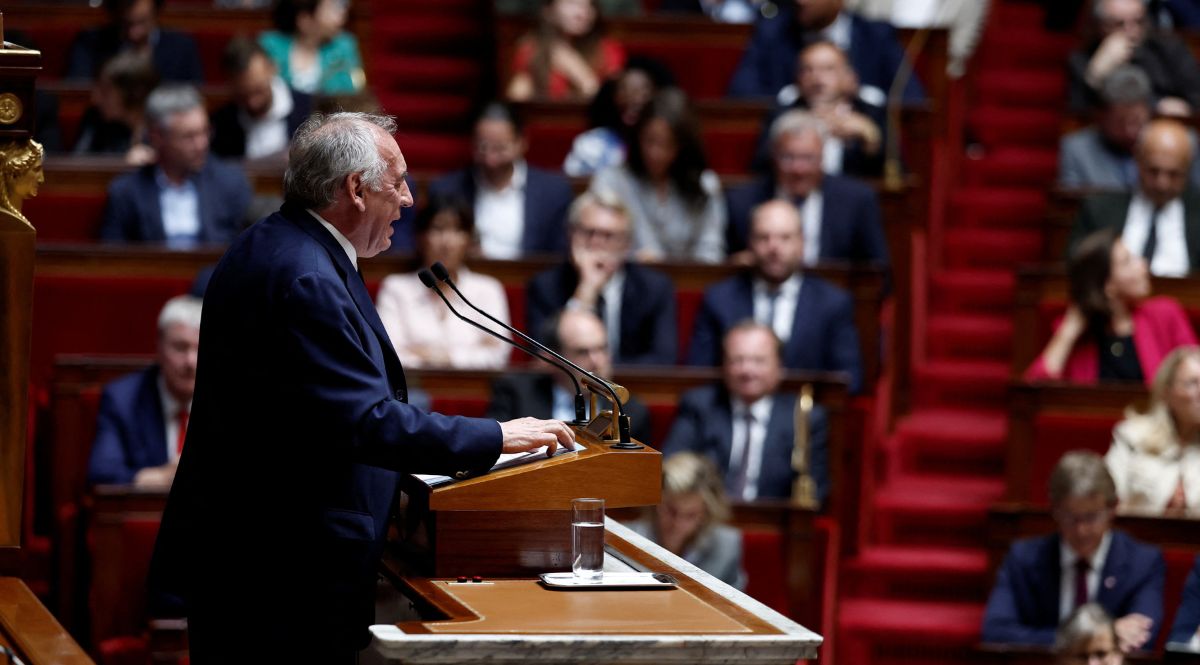
The vote of confidence was called by the prime minister himself on 25 August. He sought to compel the opposition to take a stance on the debt crisis within the context of ongoing work on the 2026 budget draft. Bayrou seems to have believed that the lack of widespread support for his assessment of France’s economic situation and the fundamental assumptions of the budget would hinder further negotiations on specific solutions. Through this vote, he sought legitimacy to continue governing or to compel the opposition to take responsibility for a potential political crisis. The vote resulted in a significant defeat for the prime minister. He garnered support from only 194 of the 558 voters, primarily from the parties that had formed a minority government since the 2024 parliamentary elections: the presidential Renaissance party (90 votes), the centrist MoDem (36 votes), Horizons (34 votes), and the right-wing Republicans (27 votes). Bayrou was unable to maintain unity even within his own camp: 13 Republican MPs voted against him, and 9 abstained. In total, 364 deputies voted to bring down the government, including all members of the far-right National Rally (123 votes), the far-left France Unbowed (71 votes), the Socialist Party (66 votes), and the Greens (38 votes).
What was the prime minister criticised for?
The strongest criticism concerned the budget assumptions, in particular the savings of €43.8 billion, which were intended to reduce the deficit from 5.8% to 4.6% of GDP in 2026. Controversy was sparked by proposals to abolish two public holidays, freeze most public spending (except for the defence budget) and social benefits, reduce public sector employment and introduce a solidarity tax for the wealthiest. The opposition accused Bayrou of a lack of effective communication, flexibility, and dialogue, which deepened the government’s isolation. There was also criticism of the pretence of negotiations—both with the left (e.g., on the reversal of the reform raising the retirement age) and with the far-right (e.g., in the context of the consideration of introducing proportional representation). The austerity plan was also met with a negative public reaction and announcements of mass protests and blockades in September, which further increased pressure on the government. Even the parties forming the cabinet expressed doubts about Bayrou’s actions, accusing the prime minister of sluggishness and avoiding difficult decisions. The criticism was exacerbated by the manner in which the decision to submit a motion of confidence was taken—ministers were only informed of it shortly before the press conference, and some of the government’s MPs considered this move to be downright bizarre.
What are the consequences for France’s domestic and foreign policy?
The resignation of Bayrou’s government—the third in a year—deepens the political crisis in France and makes effective governance impossible. It highlights the inadequacy of the current political system in the face of the ongoing fragmentation of the party scene, which further fuels public debate on the need for its reform. Bayrou’s defeat increases pressure to call new elections, which is particularly demanded by extremist groups. The budget crisis and announced social cuts are deepening public discontent, and the lack of a stable government continues to undermine confidence in the political elite. This could lead to prolonged protests, which would favour growing support for populist groups. The National Rally is already exploiting the situation, presenting itself as the only alternative to the “chaos” of President Emmanuel Macron’s government. Bayrou’s downfall reinforces their narrative about the need for change in power, and polls indicate a possible victory for the party (around 33% support). The participation of the far-right in power would be a historic breakthrough. The political crisis is also hindering the timely adoption of the 2026 budget—it does not prevent it entirely, but if instability continues, France may again be forced to operate based on the previous year’s budget. This would limit the scope for investment and reform, exacerbating economic problems. A credit rating downgrade is also possible, which would increase the cost of servicing the national debt.
The prolonged government crisis in France limits its influence on EU policy and undermines its credibility among its EU partners. It may weaken France’s position in key areas such as trade policy, industrial policy, competitiveness, technological transformation, and climate change. Political instability may hinder the implementation of commitments, including investments in renewable energy sources, energy efficiency and the transformation of transport and construction. However, France’s foreign policy is primarily the responsibility of the president, who remains in office until 2027, which may partially stabilise its international position. The rise in support for populist parties accompanying the crisis further reinforces the anti-EU narrative.
What are the possible scenarios?
Following the collapse of the government, the initiative lies with the president. A new prime minister from the centrist camp may be appointed quickly, who will attempt to negotiate an agreement with the socialists on the budget. Potential candidates include Macron loyalists Sébastien Lecornu (Minister of the Armed Forces), Gérald Darmanin (Minister of Justice) and Catherine Vautrin (Minister of Labour and Health). Such a move would maintain the cohesion of the ruling camp and introduce budgetary adjustments acceptable to part of the opposition. However, the left is demanding its own candidate, which would open the way to a broader coalition with the centre, but would meet with resistance from the Republicans, who are opposed to a left-wing prime minister. The alternative is a technocratic government focused on crisis management and pushing through the budget. Although it could rebuild public confidence, it would lack a strong political mandate to implement reforms. If these attempts fail, Macron may dissolve the National Assembly and call early elections. However, this carries the risk of further fragmentation of the political scene. Even a decisive victory for the National Rally does not guarantee the creation of a stable majority or the breaking of the parliamentary deadlock due to the majority voting system and weak coalition-building capacity.


.png)
.png)
(2).png)