Avoiding a Long War - Objectives and Conditions for the US Attack on Iran
The American operation in Iran may be prolonged, lasting several months instead of the planned few weeks. The low public support of Americans for intervention and the economic effects of rising oil prices are unlikely to change the US administration’s stance. Difficulties in completely eliminating the threats posed by Iran may prompt Donald Trump to increase military involvement, including the use of special forces or the launch of a ground invasion.
 Scott Serio / Zuma Press / Forum
Operational assumptions and development of involvement
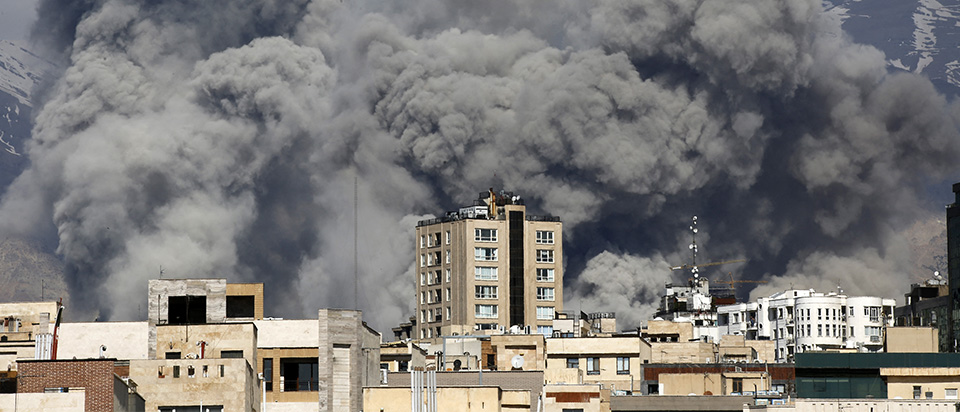
The United States declared that the military objectives of Operation Epic Fury, launched on 28 February in cooperation with Israel, are to weaken the military capabilities of the Ayatollah regime to destabilise security in the Middle East. The US is continuing the actions it began in June last year, and despite declarations of the “complete destruction” of Iran’s nuclear programme at that time, facilities related to it are currently the target of further strikes. At the same time, Donald Trump’s administration has declared its intention to deprive Iran of enriched uranium resources, a goal which it is unlikely to deliver through air strikes alone. The US is destroying Iran’s missile capabilities, including launchers and facilities where missiles are stored and constructed. The destruction of Iranian naval units is intended to increase the security of shipping in the Persian and Omani Gulfs and prevent them protecting Iran’s oil and gas terminals. The US and Israel have also succeeded in depriving the Iranian armed forces and paramilitary structures of some of their top commanders. The broader operational objectives also include weakening Iranian-backed terrorist groups, such as Hezbollah in Lebanon, the Houthis in Yemen and militias affiliated with the Popular Mobilisation Forces in Iraq. Achieving these goals, along with gradually eliminating the regime, for which the US is cooperating with Israel, is intended to enable a change of power in Iran. This is Israel’s ultimate political goal, and the Trump administration wants to actively participate in this process.
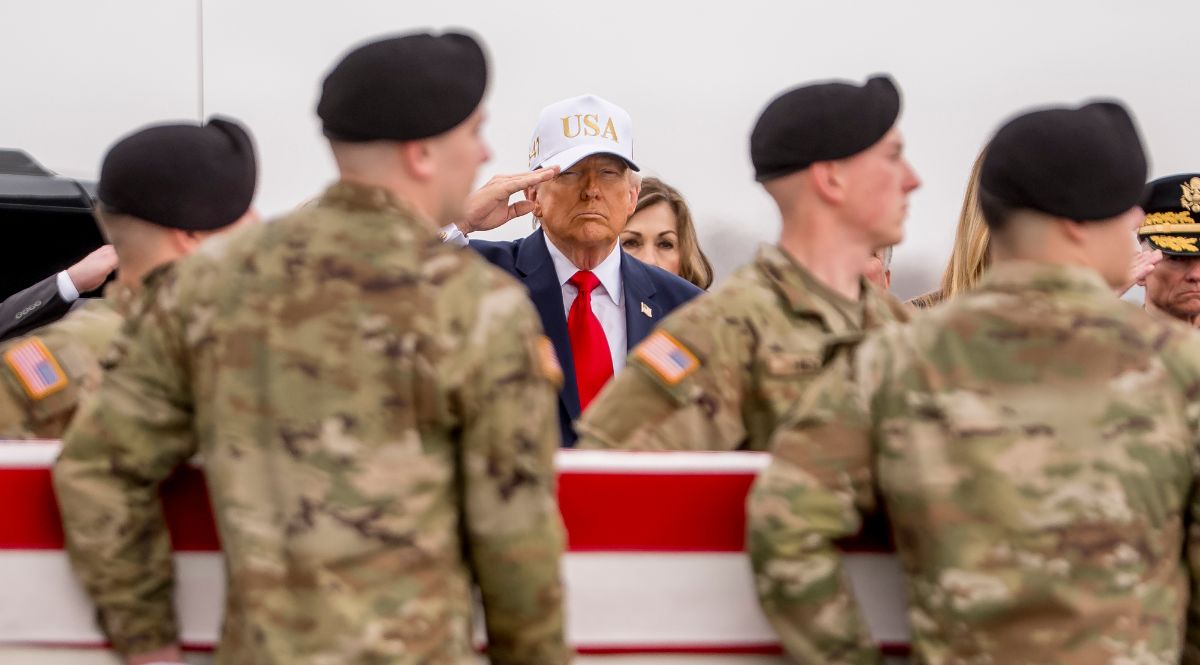
The US has stated that it intends to conduct a campaign of air strikes, lasting several weeks at least. Central Command (CENTCOM), responsible for the Middle East theatre of operations, confirms the involvement of 50,000 American soldiers in the operation to attack Iran (seven US soldiers have been killed so far). Since the start of the operation, the number of US fighter jets, bombers and air tankers sent to the region has increased. There are numerous naval units in the Middle East, including two aircraft carrier strike groups, with a third being prepared for deployment. The US seeks to ensure the safety of tanker traffic through the Strait of Hormuz by deploying naval vessels, which would guarantee the continuity of oil supplies and counteract sudden price increases. At the current level of engagement, this is operationally impossible, which may lead to strengthening the naval presence in the region.
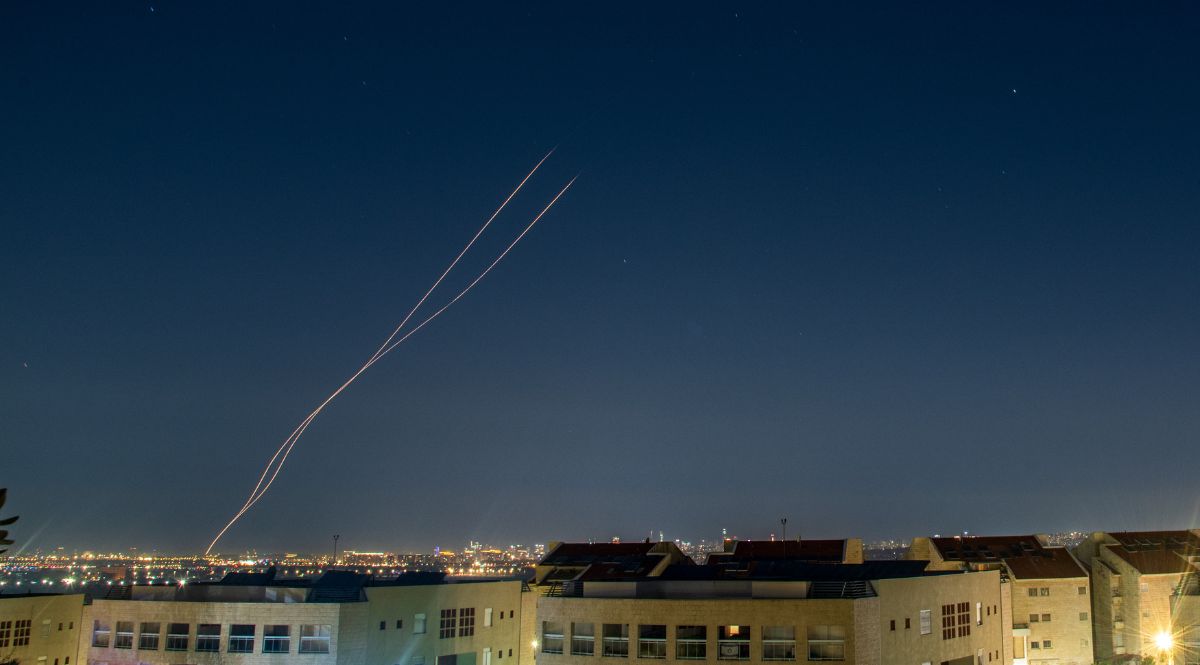
One of the most serious limitations for the US is the decreasing stockpile of missiles at its disposal, which are used both in offensive actions and for defensive purposes. The US is intercepting Iranian missiles and drones targeted not only at American military infrastructure in the region, but also at civilian targets in neighbouring countries. With Iran’s new regime leadership maintaining control and continuing their counterattacks, even though on a limited scale, along with the US’s diminishing ability to conduct intensive air strikes, this may prompt the administration to also use special forces or carry out airborne and ground operations. This will be considered primarily when there is a prospect of accelerating the implementation of operational plans, particularly those related to the nuclear programme (seizure of enriched uranium resources), or the possibility of exerting additional pressure on the regime, e.g. by seizing the oil terminal on Kharg Island. However, such a scenario could prolong the military action by several months.
Congress’s position
On the initiative of the Democrats and in response to the build-up of military capabilities in the Middle East in January and February, Congress planned a vote on restricting the president’s powers under the War Powers Resolution of 1973 even before the invasion began. These powers allow the president to initiate military action without a formal declaration of war by Congress if it is justified by an immediate threat to US security. The bill, put to a vote in both chambers on 4 and 5 March, failed to gain a majority due to party divisions – Democrats were in favour of the restriction, Republicans were against it. The resolution allows the president to conduct military operations for only 60 days, after which Congress’s consent is required for an extension. In addition, Trump will soon need additional funds to continue the operation (the current preliminary expenditure estimate is nearly $2 billion per day for the first six days of the operation and $1 billion per day thereafter) and to replenish the weapons used, either through a special package or through the reconciliation process. For this reason, the issue of congressional support for the operation in Iran will resurface.
Consequences for the internal situation in the US
In a US public opinion poll (Reuters/Ipsos) conducted on 1 March, shortly after the attacks began, only 27% of respondents expressed support for the operation, while 43% were against it. Among Republican voters, support for the intervention reached 55%. Some Trump supporters and Republicans from the MAGA (Make America Great Again) movement agree with the opinion that the president is more interested in international politics and escalating tensions than in solving domestic problems – contrary to the slogan “America First,” he is pursuing a policy of “America Last.”
Significant involvement by US armed forces may lead to an increase in threats to the United States from dormant terrorist cells. The shooting in Texas on the night of 28 February to 1 March, in which three people were killed and 14 wounded, has already been considered in this context, as well as two incidents that took place on 12 March – a shooting at the university in Virginia which left 1 dead and 2 wounded and an attack on a synagogue in Michigan with 1 person wounded. The FBI and police services in major cities, including New York, Los Angeles and Washington, D.C., including the Secret Service and Capitol Police, have begun to prepare for an increase in threats. In recent years, several individuals with ties to Iran have been charged in the US with conspiring to assassinate Americans, including Trump (which may have motivated the US president’s decision) and John Bolton, his national security adviser from 2018 to 2019. This was claimed to be in retaliation for the killing of General Qasem Soleimani by the US in 2020.
The operation in Iran has already led to a drastic increase in the prices of Brent and WTI crude oil and consumer fuels. During the two weeks of the operation, the average price of a gallon of petrol rose from $3 to $3.63, and this trend is set to continue – the price could reach as high as $4 (the last time such values were recorded was in August 2022, at the peak of inflation in the US). A further increase in fuel prices will translate into higher costs for food products, among other things, which will lead to a further weakening of Trump’s economic policy ratings linked to the cost of living. The potential rise in inflation will be a burden for Republicans in the midterm elections to Congress in November 2026, and potentially even for the Republican presidential candidate in the 2028 elections. The Trump administration, wanting to release more raw materials onto the market and meet demand, has decided to issue a temporary licence allowing India to purchase Russian oil. To more effectively prevent price increases, the US will have to tap into its strategic oil reserves and release approximately 100-200 million barrels of the 415 million it has in reserve.
Conclusions
In order to achieve all of its military objectives, US engagement in attacks against Iran may continue for several months. Iran’s response, focused on increasing the costs of the war, including through attacks on civilian and military targets in countries in the region, will force the Americans to maintain a deep involvement in the security of the Persian Gulf. It cannot be ruled out that Republican support in Congress will be maintained as the operation continues, which would ensure that it can continue beyond the initial legally permitted 60 days. The US may also expand the scope of its operations and intensify its attacks on pro-Iranian groups in other countries in the region. This will lead to an even greater depletion of US weapons stocks, which may prompt the Trump administration to use other capabilities to carry out further strikes, particularly special forces, or to conduct ground assaults on key installations. This will further strain US resources and require further military and political commitments in the Middle East.
Further casualties among American soldiers, whose numbers may increase as military operations continue, as well as a decision to invade with ground forces, would only further discourage the public from supporting this operation. For Trump and the Republicans, this would result in a further decline in American confidence and could even lead to a deepening of ideological divisions within the party, weakening it ahead of the 2026 midterm elections and opening up the possibility of significant divergence among candidates in the 2028 Republican primaries. The political and social consequences of the intervention, together with its economic impact on American consumers, could result in a loss of confidence among part of the working middle-class electorate, a mainstay of support for Trump and the Republicans in recent years, and this could affect the political landscape for several years to come.