 Photo: EVELYN HOCKSTEIN/Reuters/Forum
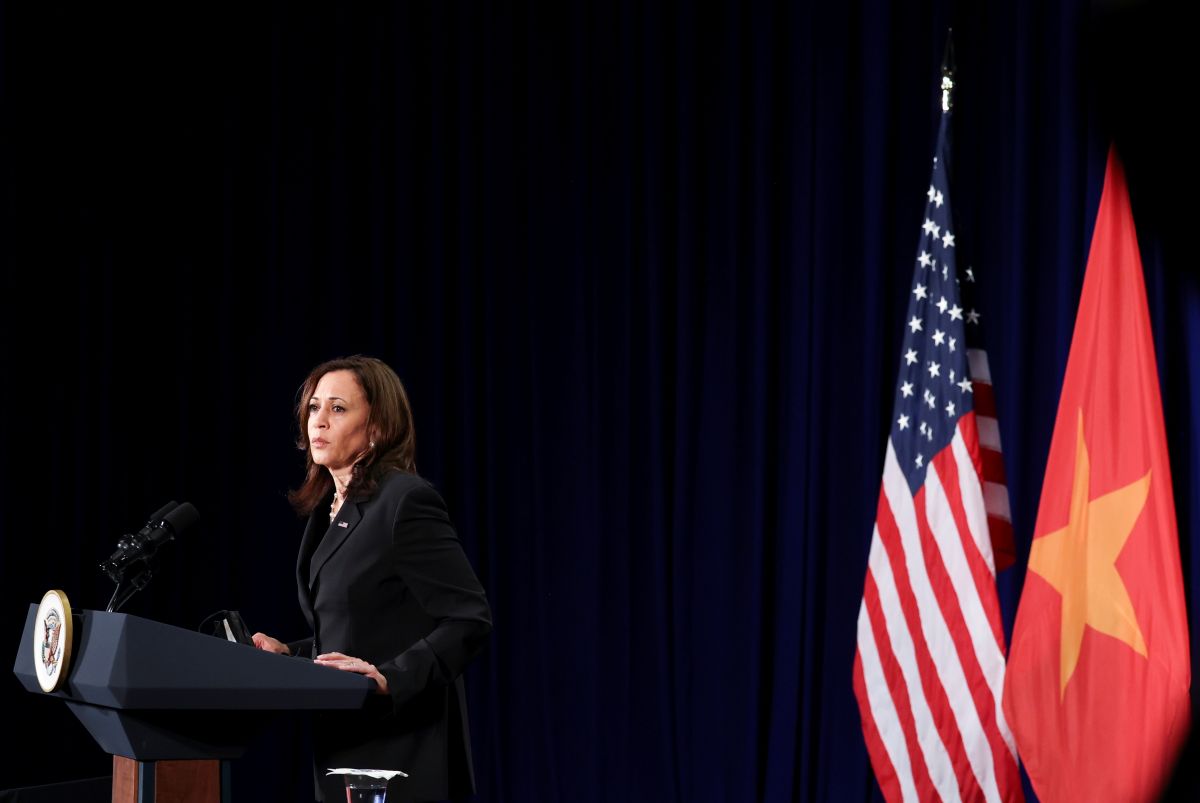
Since the middle of this year, the U.S. has been increasingly developing relations with ASEAN members, including Brunei, Cambodia, Indonesia, Laos, Malaysia, Myanmar, the Philippines, Singapore, Thailand, and Vietnam. In July, Secretary of Defense Lloyd Austin was in the Philippines, Singapore, and Vietnam, and in August, Vice President Kamala Harris travelled to Singapore and Vietnam. In August and September, Secretary of State Antony Blinken held a series of virtual meetings with the ministers of foreign affairs of the region’s states. It culminated in the annual U.S.-ASEAN Summit on 26 October, the first with the participation of a U.S. president in four years.
U.S. Policy Foundations
The Biden administration’s activity involving ASEAN is in line with its policy of multilateralism, strengthening alliances, and tightening relations with Indo-Pacific countries, a key area for U.S. security and the economy.
This approach is different from the policy of the previous Trump government, which preferred unilateral action and showed little interest in ASEAN—the president attended only one U.S.-ASEAN summit, in 2017. That same year, the U.S. withdrew from the Trans-Pacific Agreement (TPP) involving several ASEAN countries.
The Biden administration is signalling that it will not put pressure on ASEAN members to clearly support the U.S. in its rivalry with China (indicated by, among others, Vice President Harris in Singapore). It is a response to the expectations of the countries of the region that they can benefit from relations with both powers.
Areas of Cooperation
The administration’s involvement in relations with ASEAN may create favourable conditions to expand security cooperation and in other areas. The U.S. is seen in the region as a counterbalancing force to China’s actions in this area. Two ASEAN members—the Philippines and Thailand—have been U.S. treaty allies since the 1950s. During the July visit of Secretary Austin to the Philippines, a treaty suspended in 2020 by President Rodrigo Duterte on the presence of U.S. troops in the country, was renewed. The U.S. has also pledged to apply the defence pact if China attacks Filipino troops in the South China Sea. Four ASEAN countries (besides the Philippines, also Vietnam, Malaysia, and Brunei) are involved in territorial disputes there with China, which claims almost the entire basin and does not recognise the 2016 ruling of the arbitration tribunal at The Hague that dismisses those claims. The U.S. also rejects China’s claims, conducting “freedom of navigation” operations in the South China Sea. It criticises China’s actions, such as the construction and militarisation of artificial islands, which Vice President Harris called “intimidation” and “undermining the law-based order”. The U.S. also cooperates with the Vietnamese and Philippine coast guard by, for example, providing them with equipment, and conducts military exercises with the Philippines, Thailand, and others. It also continues to cooperate with ASEAN countries in the fight against terrorism and on cybersecurity, a developing area of cooperation.
Economic relations are also improving. ASEAN is the fourth-largest trade partner of the U.S., and the U.S. is the second-largest partner for the organisation (after China). In 2020, their mutual trade in goods amounted to over $300 billion. American companies, such as Apple and Microsoft, are moving parts of their production chains to the region, some of it from China. In 2015-2020, the U.S. was the leader in investments in ASEAN at $111 billion. It is also probing the possibility of concluding a digital trade agreement involving countries of the organisation. This would be important as the U.S. remains outside the CPTPP agreement (the revamped TPP). At the U.S.-ASEAN summit, Biden announced the allocation of more than $100 million to the development of bilateral initiatives, for example, in innovation, climate change, and health. The U.S. has already provided ASEAN members with more than 40 million doses of COVID-19 vaccines free of charge and opened a branch of the Centers for Disease Control and Prevention in Hanoi, the capital of Vietnam (one of only four such centres outside the U.S.).
Challenges
The scope and effectiveness of the U.S.-ASEAN cooperation are limited by the strong ties of the organisation’s members with China, which are mainly economic. In 2020, the value of ASEAN trade with China amounted to about $730 billion, which is almost two and a half times more than with the U.S. Last year, ASEAN was China’s largest trade partner, which in turn means its members each have significant trade with that country. China is also one of the key donors of development aid to the region. However, it has a weaker position in investment, with more capital invested by the EU, U.S., and Japan. Although infrastructure projects through the Belt and Road Initiative have a mixed reception among ASEAN states’ authorities, the works often contribute to increasing China’s influence, with about three in four people in ASEAN states perceiving it as the main force in the region. The economic ties between ASEAN and China may strengthen after the entry into force of the RCEP agreement in January 2022, creating the world’s largest free trade zone—the U.S. is not a party to it. In September, China also announced its intention to join the CPTPP.
ASEAN members are divided over U.S. policy, including the American defence agreement with the UK and Australia (AUKUS) signed in September. Some of them, such as Malaysia and Indonesia, fear an intensification of the arms race and, consequently, the destabilisation of the region. The Philippines, on the other hand, sees AUKUS as an important instrument to counterbalance China’s growing military presence in the region. ASEAN members are also suspicious of activities within the Quad format, which, according to the countries of the region, may marginalise their role and exacerbate the U.S.-China rivalry. The violation of human rights and the principles of democracy in the countries of the region may also limit U.S. relations with ASEAN. Related to this, ASEAN’s efforts in this area include the lack of an invitation to the leader of the ruling junta in Myanmar to the organisation’s October summit and meeting with the U.S. However, only three ASEAN member states—Indonesia, Malaysia, and the Philippines—were invited to the Summit for Democracy organised by the U.S. and to be held in December.
Conclusions and Perspectives
ASEAN will play an increasingly important role in U.S. foreign policy, given their central location in the Indo-Pacific. The activity of the Biden administration to date and the resources it allocates to this relationship (including financial ones) are, however, insufficient to create a real counterbalance to China’s presence in the region. To increase this weight, ASEAN must believe in the deep and long-term U.S. commitment to the region. This is especially important in view of the damage to U.S. credibility by the exit from the TPP and the chaotic withdrawal from Afghanistan. It will be important to maintain military cooperation combined with active diplomacy, for example, with regard to the role of the Quad or AUKUS, as well as to make an attractive economic offer, which the countries of the region are particularly counting on in the face of the consequences of the COVID-19 pandemic. Economic cooperation may include infrastructure development, trade agreements (e.g., in the field of new technologies), or support for the relocation of supply chains to Southeast Asia. ASEAN members are open to cooperation with the U.S. as long as it does not deteriorate their relations with China. Therefore, they will try to maintain a balance between the two powers and use their rivalry to support their own development projects and in other areas.
Both the U.S. and the EU recognise ASEAN’s vital importance to the stability of the Indo-Pacific. However, they are in competition with each other in the commercial sphere, and the conclusion of AUKUS has strained the EU’s confidence in U.S. policy towards its allies. Nevertheless, the EU and the U.S. can cooperate in many areas of mutual interest, counterbalancing China’s activity. This applies, for instance, to ensuring the stability of sea trade routes, financial and technical support in the development of connectivity, including infrastructure in ASEAN (e.g., transport or digital), combating the pandemic and the effects of climate change, or promoting common technological standards.