Another crisis in US-Ukraine relations
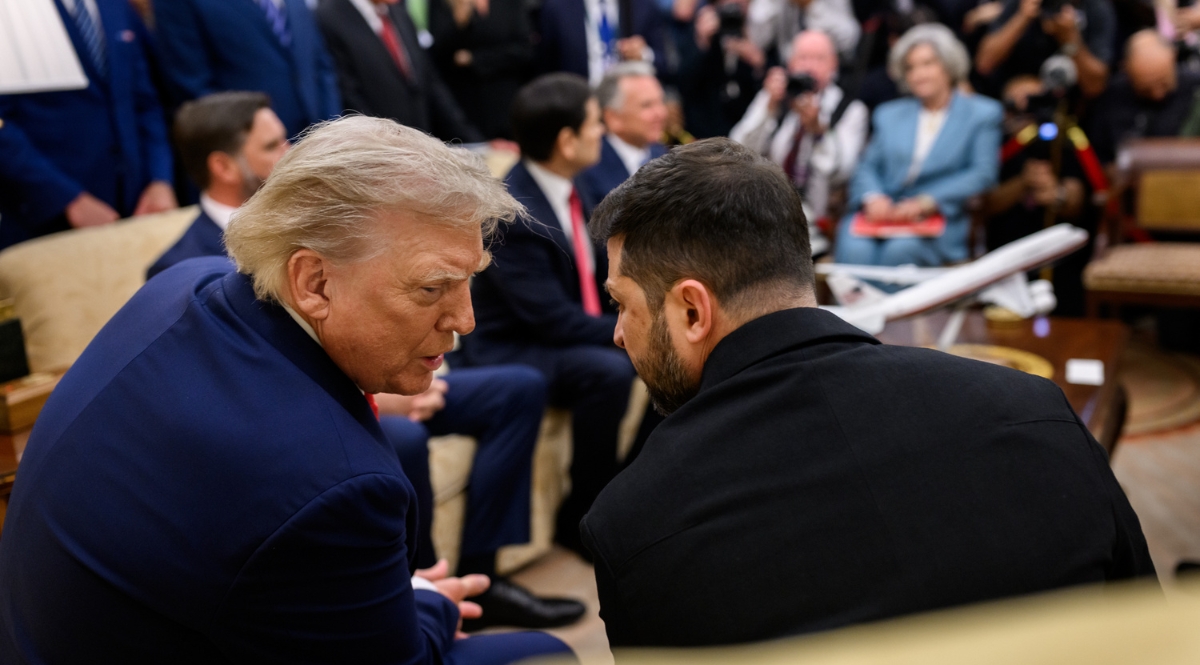
Talks launched on October 9 in Miami between representatives of the US, Ukraine, the United Kingdom, Germany, France, the EU, and NATO were intended to establish the terms of a compromise between Ukraine and Russia. In parallel, however, an agreement was reached between Donald Trump and Vladimir Putin, prompting the US administration to issue a license easing restrictions on trade in Russian diesel fuel. Under this license, Russia is to supply approximately 4.8 million metric tons of diesel fuel to the US and global markets in several tranches, including 300,000 metric tons immediately. Trump also intensified his criticism of Volodymyr Zelenskyy, calling for the election of a new Ukrainian president and for Ukraine to suspend its attacks on Russian refineries.
 White House / Zuma Press / Forum
What were the goals and outcomes of the US-Ukraine talks in Miami?
The talks were aimed at developing—and then presenting to Russia—a joint proposal to end the war in Ukraine. The parties also discussed the possibility of mutually limiting attacks on energy infrastructure and grain shipments, security guarantees for Ukraine, and a plan for the country’s reconstruction after the war ends. The Ukrainian side hoped that the restrictions imposed under the Graham Sanctions Act and a possible shift in the balance of power in the US Congress following the midterm elections would prompt Russia to make concessions. Although the first part of the talks did not yield a breakthrough, the intention was to continue them. However, after the agreement between Trump and Putin was revealed, the Ukrainian delegation cut short its stay in Miami and withdrew from the second day of negotiations.
What are the reasons behind the Trump administration’s decision to ease sanctions on Russian diesel fuel exports?
The main motive is the desire to curb rising fuel prices in the US. Increased fuel costs are causing Trump’s approval ratings to drop ahead of the midterm congressional elections and, as a result, reducing the Republicans’ chances of maintaining their majority in both chambers. Trump is also trying to distance himself politically from the consequences of war with Iran and the blockade of the Strait of Hormuz—through which approximately 25% of global oil trade passes. The US president has argued that high oil prices are the result of Zelenskyy’s policies and Ukrainian attacks on Russian refineries. According to analysts, however, lifting the ban on Russian diesel exports will not significantly lower fuel prices, primarily due to the limited scale of supplies and damage to Russian refineries caused by Ukrainian attacks. Trump’s decision has met with bipartisan opposition in Congress and the announcement of a bill to block the easing of sanctions against Russia, sponsored by Republican Congressman Brian Fitzpatrick.
What are the goals of the White House’s increased pressure on Ukraine?
A public call for a change in the Ukrainian presidency increases political pressure on Zelenskyy and is intended to force him to make concessions and to conclude peace with Russia more quickly, at the expense of Ukrainian interests. The suspension of attacks on energy infrastructure, announced on 11 October, appears designed to portray Trump as an effective mediator. Yet, Ukraine was not consulted on this decision, and Russia has neither confirmed its acceptance of this plan nor stopped its attacks. A key element of Trump’s strategy is the asymmetry of the pressure exerted on the parties to the conflict. The US expects Ukraine to limit effective strikes against the Russian oil sector, while Russia receives relief from economic restrictions—despite the lack of any credible declarations regarding its readiness to make concessions and willingness to end the conflict.
What will be the long-term consequences of US actions for the war in Ukraine and transatlantic relations?
Without a simultaneous de-escalation of the conflict by Russia, it is unlikely that the US actions will lead to a suspension of Ukrainian attacks on Russian energy infrastructure. However, US actions will weaken Ukraine’s negotiating position and reinforce Putin’s belief that prolonging the conflict and feigning a willingness to negotiate will allow Russia to gain further advantages. The Americans have also threatened to suspend the exchange of intelligence and arms deliveries to Ukraine if attacks on Russian energy infrastructure continue. The implementation of these restrictions could force the Ukrainian side to make concessions due to a decline in military capabilities and the threat of significant losses, including among the civilian population. If Ukraine were to agree to a ceasefire on unfavourable terms, the US would face international criticism for effectively taking Russia’s side in the conflict with Ukraine.
Easing sanctions may bring Russia minor financial benefits, but will not significantly increase its military capabilities. Trump’s decision contradicts the Graham Sanctions Act, passed on September 18 of this year. This legislation, supporting the Ukrainians and imposing new sanctions on Russia, also authorises the US president to impose 100 per cent tariffs on goods from countries that are the largest buyers of Russian oil. These unilateral US actions also risk further weakening allied policy coordination toward Russia, signalling another chapter in the crisis in transatlantic relations.