Alleged Violation of Nuclear Tests Moratorium by China
On 6 February 2026, during the meeting of the UN Conference on Disarmament, the US Undersecretary of State accused China of conducting a covert nuclear test of very low yield in the summer of 2020. Though this allegation has not been confirmed by other governments or intelligence services, it fits earlier speculations by non-governmental experts. China’s progress in developing new and miniaturised warheads increases the risk that the US and Russia will also decide to resume nuclear testing.
 Tingshu Wang / Reuters / Forum
What are the US accusations against China?
US Undersecretary of State Thomas G. DiNanno stated that on 22 June 2020, China conducted a nuclear explosion concealed by the “decoupling” method. This technique involves placing the nuclear device in a special containment vessel within an underground cavity designed to limit seismic waves from its explosion. It significantly reduces the reliability of detection and measurement by sensors of the Comprehensive Nuclear-Test-Ban Treaty Organization (CTBTO). DiNanno also emphasised that according to the US estimates, China is preparing for further tests with yields below one kiloton (1 kt is equal to the explosion of one thousand tons of TNT; the Hiroshima bomb had a yield of 15 kt). These are the most far-reaching US accusations against China since 1996, when both states signed the Comprehensive Nuclear-Test Ban Treaty (CTBT) and, despite a lack of ratification, declared their adherence to the ban on nuclear explosions. DiNanno’s remarks might be linked to earlier and more vague US intelligence statements. In 2019, the director of Defense Intelligence Agency (DIA) publicly stated that there were ongoing preparations for a low-yield nuclear test at the Lop Nor test site (Xinjiang province). Moreover, the unclassified 2020 annual report by the Department of State noted the Chinese practice of blocking CTBTO’s access to their seismic sensors, and referred authorised readers to highly-classified intelligence reports.
Could China be able to conduct an undetected nuclear test?
The technical capabilities of the CTBTO and US intelligence limit the chances of undetected nuclear explosions (details in Table). The head of the organisation stated that its sensors had detected no signs of an underground nuclear test in 2020. China, in turn, described DiNanno’s accusations as baseless and a pretext for the US plans to resume its own nuclear testing. Doubts about the alleged test were raised by non-governmental experts, who recalled the 1997 error when the CIA initially and mistakenly identified an earthquake as a Russian test. Without fully declassified US intelligence reports, it is impossible to completely rule out a misreading of collected or incomplete data in this case as well. A mistake is also possible if a powerful conventional explosives detonation happened at Lop Nor, or one of several subcritical experiment and testing methods was interpreted as a nuclear explosion. These methods do not involve chain reactions and nuclear explosions and are therefore permitted under the CTBT. Since intelligence assessments dating from the Biden administration have not been disputed by authorised members of the US Congress, this suggests that the conclusions were made with high confidence in the sources and data. Nevertheless, the passage of time since 2020 and the lack of on-site CTBTO inspections make it hard to objectively resolve the dispute in favour of either the US or Chinese governments.
What new nuclear warheads might be needed by China?
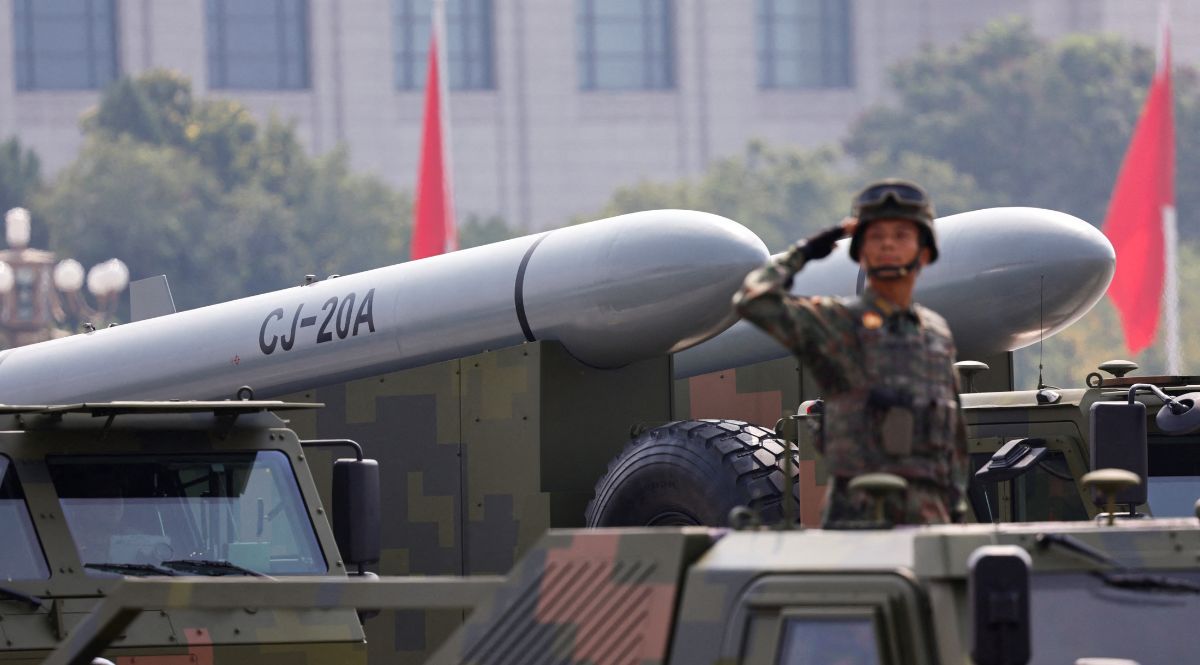
The recent Pentagon report on China highlights its intentions and capabilities to expand its strategic arsenal from the current level of some 600 to 1,000 warheads by 2030. In recent years, the DIA has also flagged other Chinese projects, though without directly linking these to the alleged 2020 test. Moreover, the expansion of China’s strategic arsenal does not necessarily require additional nuclear explosions. Among its 45 successful nuclear tests, as many as 11 (the 1990-1996 period) were part of the research and development of 150-300 kt warheads for the JL-2, DF-21 and DF-31 ballistic missiles. This was made easier thanks to Chinese espionage, which obtained documentation for the US Trident and Minuteman missile advanced warheads. China also possesses supercomputers capable of simulating and calculating the behaviour of complex warheads and thermonuclear explosions. However, given its potential needs in Asia (targeting of the many US bases and forces, and/or Japan), China may be interested in diversifying its arsenal with low-yield warheads in the 1-10 kt range for new regional- and tactical-level systems. These warheads might be delivered by missiles such as the DF-26D and CJ-20, which have been developed for precision strikes against ground targets and surface ships. China’s new hypersonic weapon systems might also require significantly more miniaturised warhead model designs.
What is the risk of a renewed and global nuclear arms race?
The alleged Chinese test illustrates broader negative trends in the nuclear arms landscape. Perhaps the US accusations were intended to deter and prevent further testing by China, which could undermine the control regimes of the CTBTO and IAEA. It should be noted that, aside from China, equally intense construction activities are also visible at test sites in Russia and the US. Alleged actions by China and Russia in this area could strongly motivate the US to abandon the moratorium and resume nuclear testing—such steps have already been suggested by Donald Trump. The three main nuclear powers seem to be prepared for such a scenario, although legal and technical issues would prolong the time necessary for the US to ready itself. To date, computer simulations, subcritical experiments, and the advanced state of US, French and British warheads allowed them to maintain readiness and to modernise their arsenals without nuclear explosions. However, the calculations of all five recognised powers (P-5) could also change due to the lack of US-Russia strategic arms control agreements and the slim prospects of any similar arrangement with China. In the longer term, these factors could also encourage further nuclear tests by North Korea and proliferation by Iran, or even states that traditionally rely on the extended US nuclear deterrence—such as several NATO members, South Korea, and Japan.


(1).jpg)