Veterans Are Changing Ukraine
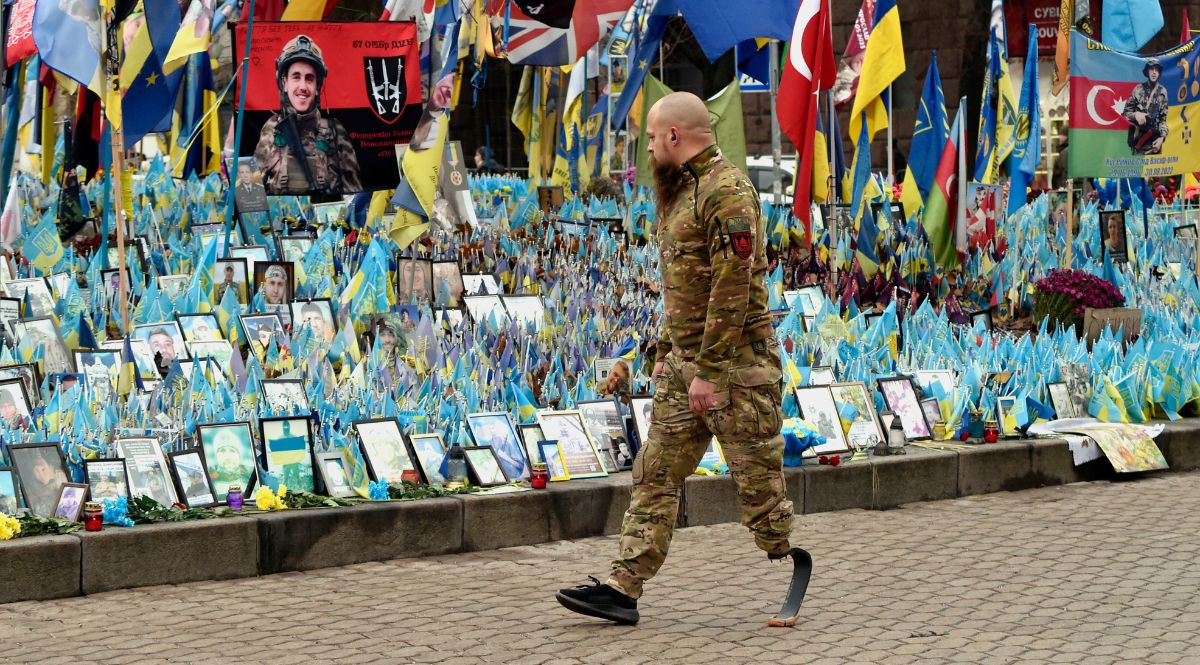
As the war continues, the number of veterans in Ukraine is growing. They have a significant influence on political and social life, and with a potential reduction in hostilities or a ceasefire, their role will increase. On the one hand, they will shape Ukrainian politics, but on the other, they will challenge social cohesion and burden the social and healthcare systems.
 Serhii Chuzavkov / - / Forum
Currently, there are approximately 1.5 million veterans in Ukraine. Combat participant status is automatically granted to all military personnel after their first combat mission, as well as civilians who, independently or as part of volunteer formations, joined the defence of Ukraine in the first month of the full-scale invasion. At least 130,000 of these are veterans with war-related disabilities, often amputees. According to Prime Minister Yulia Svyrydenko, after the end of military operations, there could be around five to six million veterans and family members (who are also covered by state support), or 15-20% of the total population. They also include people involved in the defence of Ukraine since 2014, veterans of Ukrainian peacekeeping and stabilisation missions abroad, fighters of the Ukrainian Insurgent Army and other underground armed formations taking part in the armed struggle for Ukraine’s independence in the 20th century, and participants in military operations conducted by the USSR (e.g. during World War II or in Afghanistan).
The functioning of veterans in society
Regardless of the war scenario, the growing number of veterans will be a burden, both financially and institutionally, on the social assistance and healthcare systems, due to the specific needs of veterans and war-disabled individuals, including amputations, trauma, and prolonged stress. Among the most important challenges for individuals with frontline experience will be social reintegration, due to their trauma, disabilities, and difficulties in finding their place in civilian life. Ukraine is already trying to support veterans, especially people with disabilities. The Ministry of Veterans Affairs has been in operation since 2018 and gained broad powers after 2022. Its budget is being systematically increased – in 2026, approximately 18.9 billion UAH (€380 million) was allocated to its operations, in comparison to 12,6 billion UAH (€250 million) in 2025. However, the support system is not consistent across regions, and the scale of needs exceeds the state’s capabilities, especially in terms of psychological support. Veterans themselves complain about the chaotic way support is offered and the lack of transparent information. However, they assess the rehabilitation and prosthetics programmes positively.
The other challenge will be reintegrating this group into the labour market. This process will require extensive retraining programs and employers adapting to the specific needs of those returning from the front. Companies in Ukraine are primarily concerned about veterans’ health issues. 62% of employers have identified a lack of expertise in supporting people with post-traumatic stress disorder (PTSD), and 55% indicate difficulties adapting workplaces to disabilities (European Business Association survey, November 2025).
Maintaining social cohesion will be a significant problem for post-war society. This will particularly concern veterans and men of draft age who went abroad, or draft evaders—those who avoided military service. Veterans themselves will also not be a cohesive group, and frustration may arise due to the current differences in terms of service and financial rewards for joining, (regarding differences between mobilised, professionals, and those under 25 who enjoy special privileges, including the possibility of signing a one-year contract), which can impact the type of support after service. Such differences in experience will deepen the sense of injustice and mutual distance, especially among those with front-line experience. This could lead to the radicalisation of veterans, and ultimately, to the acceptance of violence or extremist activities. Although Ukraine has had positive experiences with limiting the radicalisation of volunteer units operating in the first phase of the war with Russia since 2014, including their integration into state structures, the social marginalisation of the far right, and the redirection of social energy towards national defence, the current challenge will be both the scale and level of militarisation of society as a whole.
The role of veterans in politics
The Armed Forces (ZSU) enjoy exceptionally high public trust, which has remained above 90% since the full-scale invasion began in 2022 (according to research by the Kyiv International Institute of Sociology, KIIS, approval currently stands at 94%). Such strong military authority will translate into a growing presence of veterans in traditional political parties. Former military personnel will be used to build political capital, especially given the public’s fatigue with the current elites. Although only around twenty current deputies serve or have served in the Armed Forces of Ukraine, they may dominate the electoral lists in future elections.
The political potential of the community directly involved in defence issues – veterans, military personnel, and other uniformed services – also poses a challenge for President Volodymyr Zelensky. In public opinion polls, General Valery Zaluzhny, former commander-in-chief of the Armed Forces of Ukraine, and Kyrylo Budanov, former head of military intelligence, enjoy higher levels of trust than the incumbent president (72% and 70%, respectively, compared to 62% for Zelensky, according to the KIIS survey). Both, if they ran, would defeat him in the second round. Although neither has expressed such ambition, Zaluzhny’s resignation and subsequent appointment as ambassador to the United Kingdom, and Budanov’s appointment as head of the Presidential Office are attempts to undermine their strengthening position. At the same time, Zelensky’s circle is attempting to leverage the high authority of these military officers by involving them in the administration’s work. Other military commanders also enjoy considerable trust, such as General Oleksandr Syrsky, the current commander-in-chief of the ZSU, and General Andriy Biletsky, the first commander of the Azov Battalion, currently commanding the 3rd Army Corps. Biletsky, who already has parliamentary experience, also has a relatively large social base organised around the Azov movement and can create a significant political force.
Perspectives for Ukraine
The future political and social functioning of veterans will depend on the content of the agreement which ends hostilities. Ukraine’s negotiating position includes maintaining a high army size – a minimum of 800,000 personnel. This means that the number of veterans will grow, despite the planned shift from the current mobilisation system to a highly skilled contract army with an active reserve and strengthened civil defence. In a prolonged conflict scenario, continued uncertainty could further translate into increased desertion from the army. Such individuals, along with so-called “evaders,” are particularly at risk of social exclusion and falling into the shadow economy.
Another challenge will be the easy availability of firearms, which, in the absence of adequate psychological support, may translate into an increase in crime, including organised crime. In addition to direct assistance, programs to combat addiction and domestic violence will be essential. The state could also utilise the potential of veterans. Drone operators could conduct civilian and military training for domestic and foreign markets. Individuals with front-line experience can be integrated into civilian security structures, such as volunteer rescue services or crisis response units. This type of integration can reduce social tensions and strengthen the country’s long-term resilience. The presence of veterans, individuals committed to national defence, will also be important in strengthening a sense of national belonging, which will consolidate Ukraine regardless of the possible political scenarios.
Implications for Poland
The prospects for post-war migration from Ukraine will be a key social and political challenge for Poland as well. In a ceasefire or gradual normalisation scenario, some Ukrainian families will seek reunification, which could mean an influx of more men, including veterans. This could create tensions related to the adaptation of individuals burdened with front-line experience, and many of the problems present in Ukraine will be visible in Poland. The presence of veterans could influence Polish public debate, amplifying current disputes over the influx of people from Ukraine. It will become a fertile ground for Russian disinformation and hybrid activities, which could exploit incidents involving former soldiers to fuel resentment towards Ukrainians and weaken social solidarity. This situation requires both institutional preparation and a conscious communication policy on Poland’s part. Poland can also work to strengthen support instruments for Ukrainian veterans, including the NATO Comprehensive Assistance Package program (a program launched after 2014 and significantly expanded after 2022, which, in addition to providing personal equipment to Ukrainian soldiers, also supports veterans). It may also be important to give greater consideration to social cohesion, strengthening the healthcare system, and reintegrating veterans into the labour market in Ukraine’s reconstruction plans.


.png)