Türkiye Eyes Influence and Economic Gains from Engagement with Iraq
Turkish-Iraqi relations have improved, with the impetus for it being the recognition by the Iraqi National Security Council in March of this year of the Kurdistan Workers’ Party (PKK) as a “banned organisation,” making joint military operations between the two countries against the designated terrorist group more likely. That decision, along with the project “Path of Development” to enhance economic cooperation between Türkiye, Iraq, Qatar, and the United Arab Emirates (UAE), could boost regional economic integration. U.S. and EU support for the project could help balance the influence of Iran and China in the region.
 Azad Lashkari / Reuters / Forum
Dynamism of Turkish-Iraqi Relations
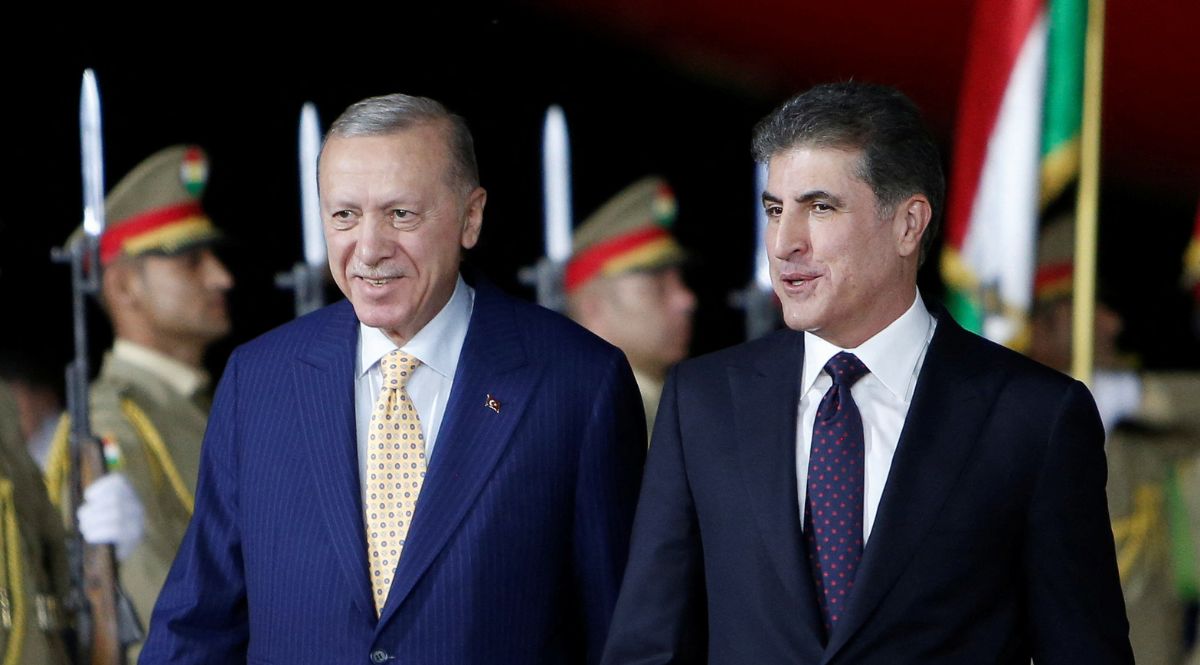
The past few months have seen a marked intensification of Turkish-Iraqi relations. One of the reasons for this was Turkish President Recep Tayyip Erdoğan’s first visit to Iraq in 12 years in April this year. Its main purpose was to establish closer cooperation in the fight against PKK militants operating in the northern region of Iraqi Kurdistan near Türkiye’s borders, but also to intensify economic contacts. Erdoğan met with President Abdul Latif Rashid and Prime Minister Muhammad as-Sudani. He also discussed the issue of combating PKK activities with Kurdistan Regional Government (KRG) President Nechirvan Barzani and Prime Minister Masrour Barzani in Irbil. The visit, initiated by the Turkish side, saw the signing of 26 agreements, including cooperation in the agriculture, technology, energy, utilities, water supply from Türkiye to Iraq via the Tigris and Euphrates rivers, and the economy (according to official Turkish data, bilateral trade was worth $19.9 billion in 2023, down from $24.2 billion in 2022, while in the first three months of this year, Turkish exports to Iraq increased by 24.5%, while imports fell by 46.2%). In addition, the Turkish side and the authorities in Baghdad reached an arms industry agreement, as well as military cooperation that includes fighting the PKK, which has been waging military operations against the Turkish government since the 1980s.
There was also a preliminary agreement on the construction of a highway and railroad as part of the “Development Road” project, which was signed by the transport ministers of the two countries, as well as their counterparts from Qatar and the United Arab Emirates (UAE). The 1,200-km road and rail route aims to connect the Grand Port of Faw in Basra province to Türkiye and then to European transit networks. The project, initiated by Iraq and Türkiye, is mainly to be financed by Qatar and the UAE. Its implementation is estimated to cost about $17-20 billion and to begin in mid-2025. The project competes with China’s Belt and Road Initiative and the U.S.-backed India-Middle East-Europe Economic Corridor (IMEC). Erdoğan has criticised the latter project, which is expected to bypass both Türkiye and Iraq.
The Kurdish Issue in Türkiye’s Relations with Iraq
The Kurds in the Middle East, mostly living in Iran, Syria, Iraq, and Türkiye, are not a homogeneous group, which translates into internal disputes and different strategies for competing for international influence. In the 1990s, Türkiye condemned the creation of the Kurdistan region of Iraq (an administrative entity that is a federal subject of Iraq, ruled by the KRG) and opposed the U.S. invasion of Iraq in 2003. Turkish policymakers argued at the time that the U.S. military operation risked increasing instability in the region and could lead to the secession of the Kurds from Iraq, which in a further step would threaten Türkiye’s territorial integrity. The outbreak of civil war in Iraq following the withdrawal of U.S. forces and their coalition partners in 2008, as well as the increased influence of Iran, contributed to the change in Turkish policy. It caused Turkish policymakers to view the KRG as a buffer against regional instability. In addition, the KRG’s political leadership has made efforts to balance relations with various regional actors and the United States, and Kurdish territory in Iraq has been opened to Turkish investors, including in the construction sector.
In the Kurdistan region of Iraq, Türkiye is competing with the Patriotic Union of Kurdistan (PUK), which has ties to both the PKK and Iran, while remaining allied with the KRG’s ruling Barzani clan, linked to the Democratic Party of Kurdistan (KDP). The parties have for years maintained strong relations both on the energy front (the Kirkuk-Ceyhan oil pipeline) and in the security sphere, with a common interest in combating PKK activities.
Since the 1990s, Türkiye has been conducting military operations in Iraq against the PKK. and in 2018 and subsequently, these operations resulted in the establishment of permanent Turkish military bases and outposts, mainly in the Kurdistan region of Iraqi territory controlled by the KDP (near the border with Türkiye). Official Turkish figures indicate that there may be around 40 such Turkish military facilities in the Kurdistan region of Iraq, one of which is the base in Bashiqa that became a target of pro-Iranian militias last February. Türkiye has also been training and arming Turkmen fighters in Iraq since 2014 and the ISIS offensive in Iraq. Turkmen are the third-largest ethnic group in Iraq after Arabs and Kurds. Türkiye’s cooperation with this ethnic group is also part of putting pressure on the Kurds to fight the PKK and secure Türkiye’s economic interests in the Kurdistan region of Iraq.
Regional Context
Türkiye is watching with concern the development of the New Levant Initiative by Iraq, Egypt, and Jordan. This trilateral regional cooperation format, initiated in 2021 primarily by Iraq, is aimed at strengthening economic ties in the areas of trade, investment, transportation and energy. From Türkiye’s perspective, the extension of the oil line from Basra in Iraq through Aqaba in Jordan to Egypt and its development will challenge Turkish aspirations to participate in the transportation of Iraqi oil. Therefore, for Türkiye, the implementation of the Development Road project is expected to minimise the importance of the New Levant initiative and serve to strengthen trade with the Persian Gulf and the Middle East. At the same time, the initiative may be seen as undesirable from the perspective of Iran’s regional position and the economic interests of Kuwait, which is not part of the regional investment project and is in an international legal dispute with Iraq over maritime boundaries. The KRG government is also unenthusiastic about the initiative, as the plan to build the main road bypasses KRG-controlled Kurdish territory through Nineveh province, which borders Syria. In the KRG’s view, the routing is politically and economically motivated and aims to weaken the Kurdish authorities. A challenge to the project’s implementation could be the activities of the PKK, which could impede construction work on the Development Road.
Conclusions and Prospects
The possibility of coordinated cooperation between Türkiye and Iraq on the security front can promote a levelling of tensions in the region in line with Turkish interests and the stabilisation of the political environment in Iraq, which in the long term will be crucial to ensuring that the PKK does not disrupt the construction of the Development Road. If the investment is successful, it would promote the strengthening of Türkiye’s position in the sphere of trade and transportation and its position vis-à-vis Iran. At the same time, it would stimulate the Iraqi economy, provide the country with new sources of income, and create new jobs for young people in Iraq, where the average age is just over 20. It is in the interest of the EU and Poland to support the Development Road initiative as it will promote economic cooperation and, at the same time, favour the U.S. strategy of checking Chinese and Iranian influence in the region.