The EU faces challenges over its fragmented diplomatic representation
Recent tensions in international relations have exposed issues associated with the EU’s lack of unified external representation. Due to the multitude of entities speaking on behalf of the Union, the ambiguous division of competences, and competing personal ambitions of politicians, the EU’s actions are often inconsistent and, at times, chaotic. The difficulties faced by Member States in reaching a common position on this matter also suggest little likelihood of simplifying the decision-making process for EU foreign policy and its communication.
 Yves Herman / Reuters / Forum
The EU’s ability to develop a coherent foreign policy has been put to the test by the international crises of recent years (the attack on Iran, Israel’s actions in the Gaza Strip, problems in transatlantic relations). The strongest consensus emerged regarding support for Ukraine against Russian aggression, and a pro-Ukrainian stance became an important marker of alignment with mainstream EU policy after 2022. However, finding a common approach to other conflicts has proven more problematic. Although Member States condemned Hamas’s attack on Israel in October 2023, countries including France, Spain, Ireland, and Italy considered that Israel’s retaliatory actions violated international law. Some, including Ireland and Spain, accused Israel of war crimes and even genocide. Significant differences between countries were also revealed by their reactions to US President Donald Trump’s policy announcements. Spain and France, among others, advocated a stronger and more assertive response to the imposition of tariffs on the EU or US threats to seize Greenland. The French President called for the use of the Anti-Coercion Instrument, which would entail the imposition of far-reaching restrictions on the US economy and a likely further escalation of the dispute.
Legal context and challenges
The 2007 Treaty of Lisbon was intended to increase the coherence, effectiveness and visibility of the EU’s foreign policy. To this end, it strengthened the position of the EU High Representative for Foreign Affairs and Security Policy (HR), established under the 1997 Treaty of Amsterdam, and established the European External Action Service (EEAS) under his authority. The newly created role of President of the European Council (EC) was also intended to contribute to this objective (previously, this role was fulfilled by the leader of the country holding the presidency). The Treaty of Lisbon provides for a division of roles regarding the EU’s external representation: the President of the European Council is to represent the EU’s position within the framework of the Common Foreign and Security Policy (CFSP) at the level of Heads of State or Government, whilst the President of the European Commission (EC) fulfils this role in relation to other sectoral policies. At the level of foreign ministers, the HR represents the Union in matters of the CFSP, whilst individual Commissioners represent the Union in relation to the policies for which they are responsible. In addition, the HR may speak on behalf of the EU, but only where the Council of the EU has adopted a position on the matter in question.
It is, however, challenging to distinguish which issues fall within the scope of the CFSP and which belong to sectoral policies. For example, the EU’s support for Ukraine in the face of Russia’s full-scale invasion has encompassed a wide range of EU activities, and it is difficult to draw a precise line between pure security policy and specific EU policies such as trade or energy. Another example is the appointment in 2024 of a Commissioner for Defence and Space Policy. Although the specific tasks for which he is formally responsible do not fall within the CFSP, the very creation of a post with such a title indicates an expanding list of areas dealt with by the European Commission and increases potential jurisdictional disputes due to overlapping areas of responsibility. Similar dilemmas are already visible in the challenges of deciding who should represent the EU at international events whose subject matter cannot be clearly classified under the CFSP.
Conflicts of competence in practice
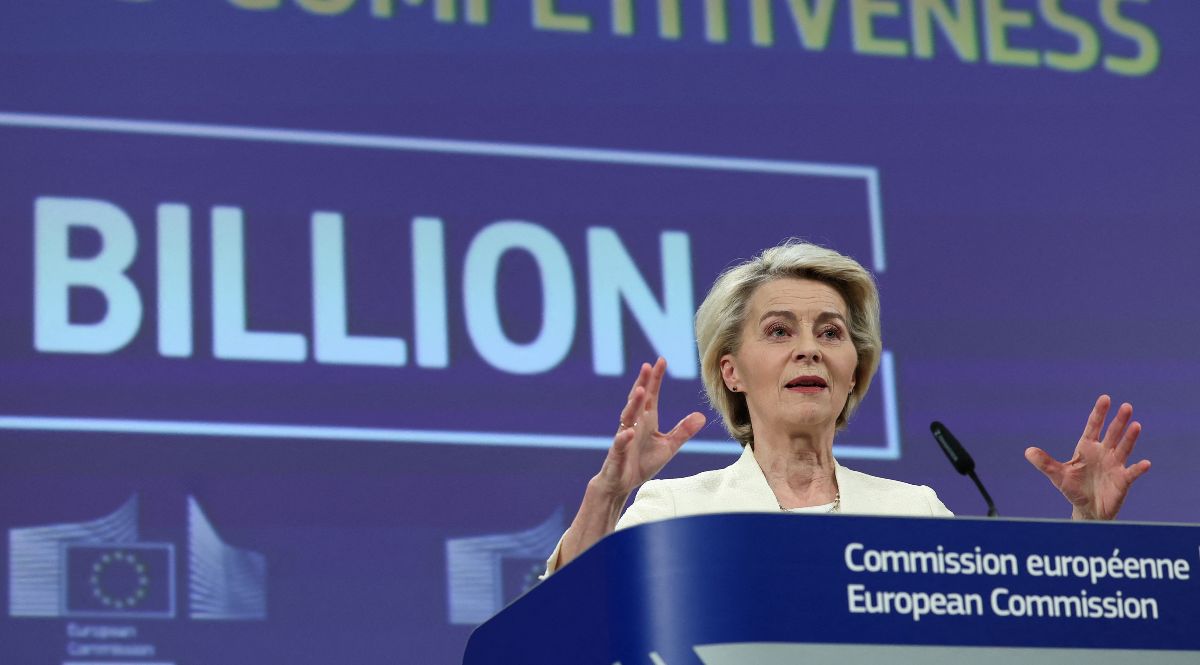
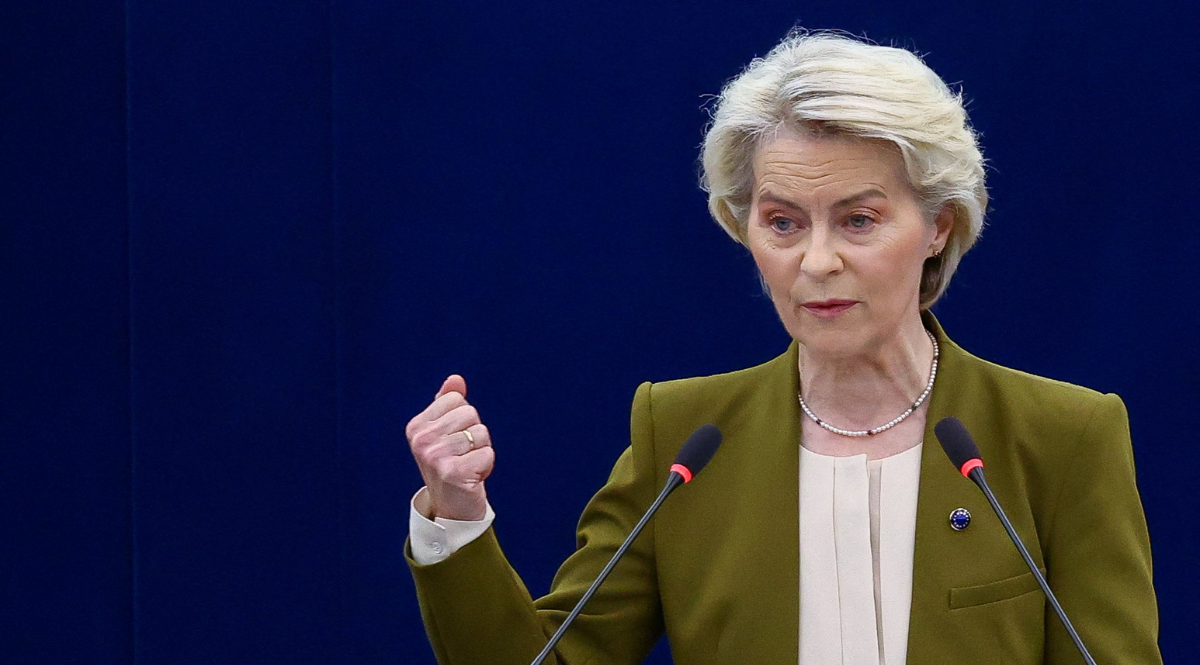
When Ursula von der Leyen first became President of the EC in 2019, she declared her intention to create a ‘geopolitical Commission,’ indicating significant ambitions in this area. The President has spoken on numerous occasions on topics that were closely related to, or fell squarely within, the CFSP (e.g. regarding Israel’s war in the Gaza Strip), thereby going beyond her office’s treaty-defined remit. Although von der Leyen did not claim to be speaking on behalf of the EU, given her position and media profile, such statements are interpreted as representing the voice of the Union as a whole. While in the case of support for Ukraine, her statements did not provoke opposition, her limited criticism of Israel’s actions in the Gaza Strip, non-escalatory approach towards the US, and her cautious statements regarding a US attack on Iran all drew criticism from some Member States. This led to accusations of the EC President of overstepping the boundaries of her position, and she was publicly criticised by politicians such as Jean-Noël Barrot, the French Minister for Foreign Affairs, who accused her of failing to respect the principle of subsidiarity.
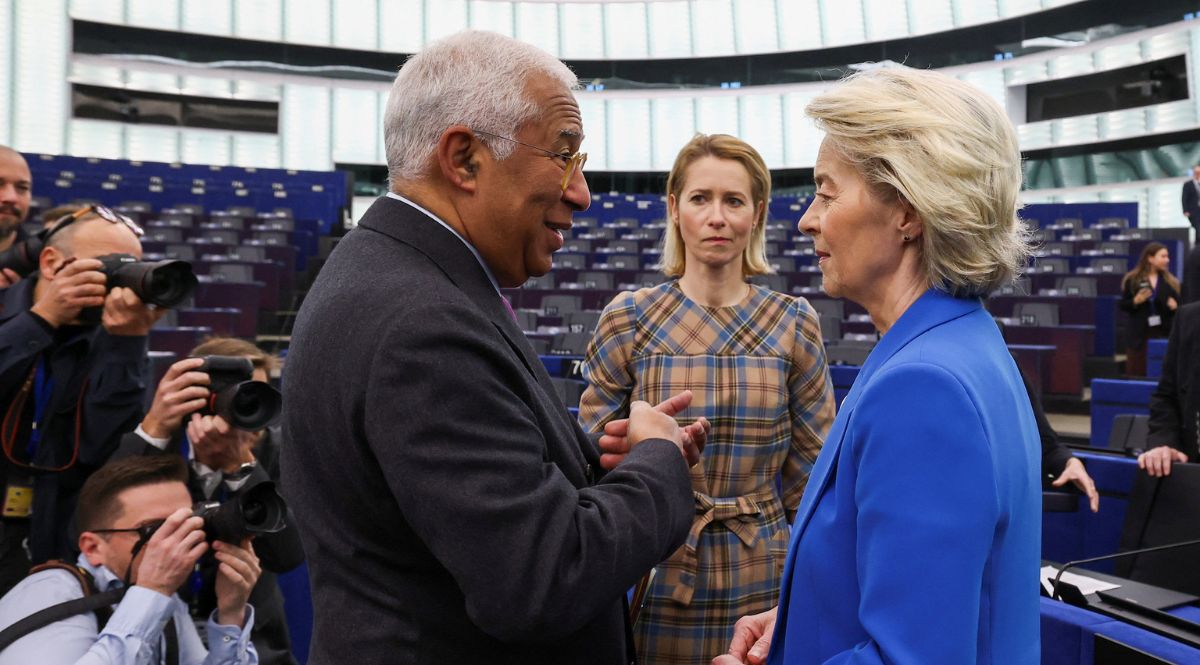
The lack of a clear division of powers regarding the EU’s representation in external relations also led to conflicts between von der Leyen and the former President of the European Council, Charles Michel. These conflicts manifested both in terms of formal representation—during a 2021 meeting with a Turkish delegation, Michel took a seat next to President Recep Tayyip Erdoğan, whilst von der Leyen had to sit on a sofa—and in the mutual public criticism between the two politicians. A further example of a lack of consistency in the external representation of the EU was the meeting with President Trump in August 2025, where the issue of security guarantees for Ukraine was discussed. Although this issue falls within the remit of the CFSP, the EU was represented by the President of the European Commission. The participation of Dubravka Šuica, Commissioner for the Mediterranean, in the Peace Council meeting in February this year also sparked controversy. Although the Council was theoretically intended to deal with the issue of the Middle East conflict, hence the choice of this particular Commissioner, the text of the Peace Council Charter revealed much broader ambitions regarding international conflict resolution. This wider remit suggests the President of the European Council should have been present. Even the decision to attend the Peace Council’s inaugural meeting, despite only being an observer, was criticised by Member States and some representatives of the European Parliament as exceeding the Commission’s mandate.
Conclusions and prospects
The EU’s ambitions to play a more significant role in international relations require greater coherence in both communication and actions related to EU foreign policy. The significant differences in Member States’ positions on contemporary conflicts make it impossible to develop a common EU approach, while at the same time, the lack of a clear boundary between the CFSP and sectoral policies exacerbates existing jurisdictional disputes among EU institutions. Given this situation, the optimal solution would be to reduce the number of entities responsible for external representation, but such a scenario is unlikely due to the treaty amendments that would be required for this change. A more realistic alternative remains an attempt to enforce the provisions of current treaties, to develop a political practice that will lead to a clearer division of these issues between EU institutions, and to the formalisation of this decision, e.g. through an interinstitutional agreement.
The differences between EU member states stem from differing perceptions of contemporary conflicts, divergent national interests and, ultimately, their individual historical and political circumstances. Reaching a common position across the entire Union is very difficult, given this situation, and would often amount to imposing the majority view. In fact, some states are indeed calling for decision-making by qualified majority in this area. However, the risk of being outvoted in such an important area as foreign policy, and consequently the necessity of implementing a decision with which a given state disagrees, is regarded by the majority of EU members as too high a price to pay for greater EU cohesion. It is in Poland’s interest for the EU to have a coherent and clearly communicated foreign policy, consistent with its strategic objectives. In this context, it is important to support candidates for key positions in EU institutions (including at lower levels) who share a similar perception of threats, and to increase the Polish presence in EU institutions crucial to this field.