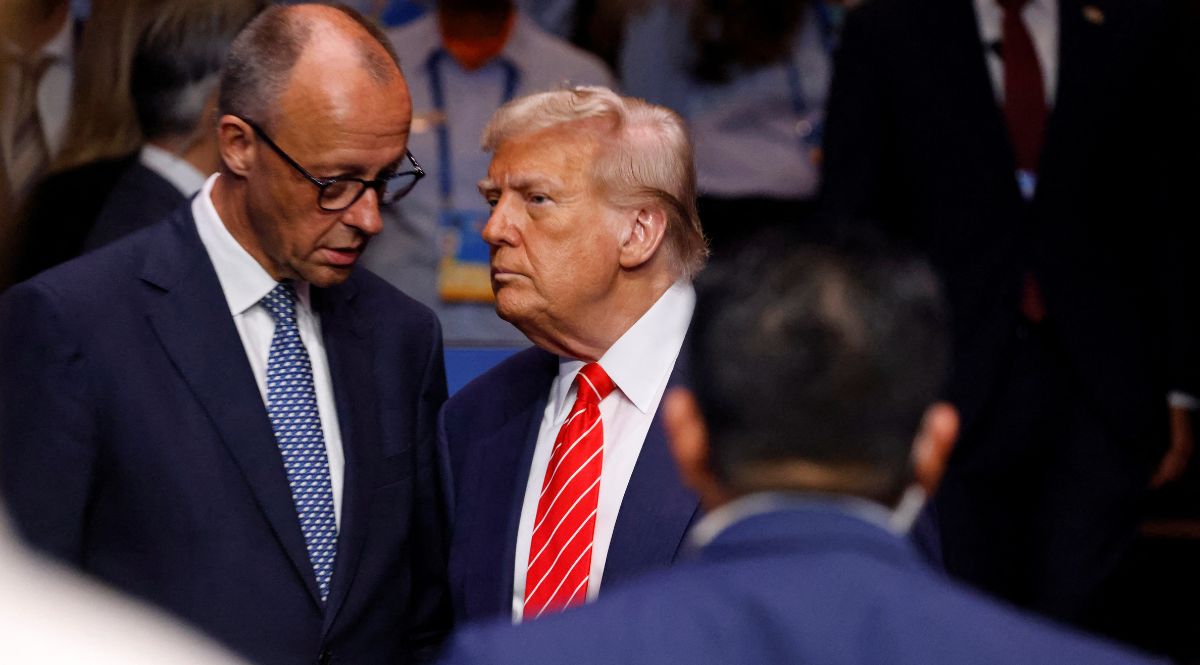
The cooperation between Alternative for Germany and the MAGA movement
Following Donald Trump’s return to the US presidency in early 2025, the MAGA movement has openly supported selected ideologically aligned populist parties across Europe. In Germany, this support has been directed towards Alternative for Germany (AfD). MAGA is a broad current within the American right that emerged from Trump’s presidential campaign ahead of the 2016 election. Centred on the slogan “Make America Great Again”, it encompasses sections of the Republican Party, members of the US administration, as well as sympathetic media and policy circles. For MAGA, engagement with AfD serves the purpose of weakening the liberal political centre in Europe while strengthening anti-immigration and Eurosceptic attitudes. For AfD, the objective is to break out of its political isolation and weaken the EU and its global influence — an outcome that would be detrimental to Poland’s interests.
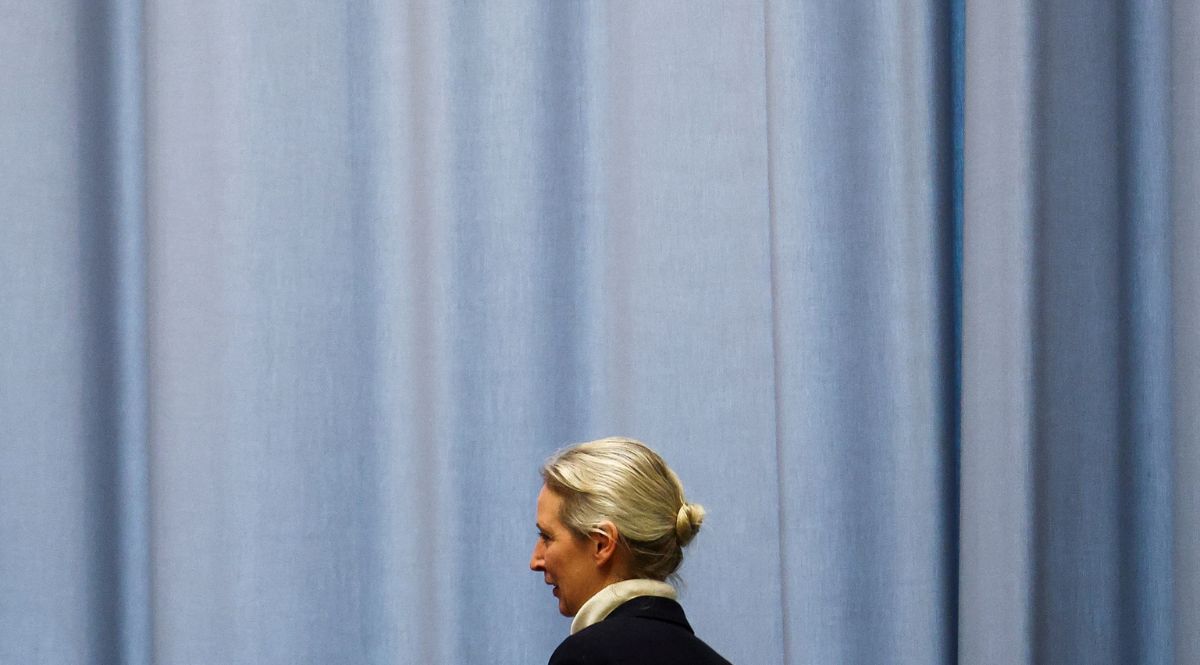 Lisi Niesner / Reuters / Forum
Ideological similarities
The shared ideological core of the MAGA movement and AfD was highlighted by J.D. Vance’s speech at the Munich Security Conference in 2025, shortly after he assumed office as Vice President of the United States. Vance identified the greatest threats facing Europe as mass migration, restrictions on freedom of expression, and the marginalisation of parties challenging the liberal political mainstream. This assessment was subsequently reflected in documents such as the 2025 US National Security Strategy and the Department of State’s Agency Strategic Plan Fiscal Years 2026-2030. These documents emphasise the need to “restore” Europe’s identity, the primacy of national sovereignty, greater European responsibility for its own security, and opposition to measures that limit freedom of speech— a concept broadly understood as the ability to disseminate any content, including disinformation and hate speech. AfD co-chair Alice Weidel endorsed these positions as an important element of her party’s identity.
Like the MAGA movement, AfD takes a critical view of the existing international order and multilateralism, particularly the European Union, which it regards as an expression of liberal elites. In its 2025 election manifesto, AfD explicitly identified the Trump administration as a partner, particularly in opposing European regulations governing digital content. Both camps have also criticised support for Ukraine as excessively costly and see economic benefits in restoring cooperation with Russia. They also share similar views on social and cultural issues, particularly their criticism of the so-called “woke” movement, which stands in opposition to attitudes that emphasise the need to combat discrimination and social inequality.
Contacts and cooperation
AfD’s contacts with the MAGA movement encompass both informal party channels and direct relationships with representatives of the Trump administration. Following Trump’s return to the White House, these contacts became more visible and increasingly important for AfD, although Trump himself did not directly engage. An important communication channel is the New York Young Republican Club (NYYRC), an influential New York-based young Republican organisation that serves as a forum for engagement with the European right. The party has leveraged its ties with MAGA to overcome political isolation, as demonstrated by co-chair Tino Chrupalla’s participation in the presidential inauguration and by Vance’s meeting with Weidel on the margins of the Munich Security Conference.
During the campaign preceding the Bundestag elections in early 2025, the most visible support for AfD came from Elon Musk, then serving as a senior adviser to the President on government efficiency and a prominent advocate of the MAGA movement. On his social media platform X, Musk conducted an interview with Weidel and used the platform’s algorithms to increase the visibility of AfD’s messaging. His activities helped normalise AfD’s presence within transatlantic right-wing networks.
Parliamentarians have also been involved in cooperation between AfD and the MAGA movement. On the Republican side, Congresswoman Anna Paulina Luna met an AfD delegation in December 2025 on Capitol Hill, and in March 2026 co-organised a visit to Washington by members of the Russian State Duma subject to US sanctions. Within AfD, relations with the MAGA movement and the Trump administration lie with Markus Frohnmaier, deputy chairman of the AfD parliamentary group and a member of the Bundestag Foreign Affairs Committee. In December last year, he met with Sarah Rogers, Under Secretary of State for Public Diplomacy, who has criticised European digital content regulations as restrictions on freedom of speech.
The impact of cooperation on US-German relations
For the MAGA movement, AfD’s appeal stems from both ideological proximity and its position as the principal opposition force to Friedrich Merz’s government. A stronger AfD could serve as a useful instrument through which MAGA can influence Germany—and indirectly, the EU—to implement changes favourable to the United States. Such a dynamic would likely drive shifts towards stricter migration policies and the weakening of the Union’s regulatory ambitions towards American technology companies and digital platforms. In ideological terms, support for AfD is intended to strengthen anti-liberal sentiment across Europe, in line with MAGA’s calls for a return to conservative values.
Cooperation with MAGA demonstrates to AfD that, despite its isolation within Germany, it is capable of building relationships with the political environment surrounding the US President. Vance’s speech in Munich and his meeting with Weidel were intended to reinforce the party’s narrative of political discrimination by elites and to mobilise its supporters. The same objective underpinned Secretary of State Marco Rubio’s critical response to the German domestic intelligence service’s decision in May of the previous year to classify AfD as a far-right extremist party.
Nevertheless, there are significant limitations to this cooperation. From the perspective of Trump and the MAGA movement, it is primarily instrumental rather than a deep alliance. The German party is useful insofar as it helps exert pressure on other political forces and shifts public debate in a more conservative direction, but this does not guarantee permanent alignment on strategic issues. At the same time, while AfD seeks to maintain positive relations with MAGA, it has distanced itself from Trump’s policy towards Iran, reflecting, among other factors, the attitudes of its electorate—according to a Forsa poll conducted in March this year, 56% of AfD supporters opposed the war, while 31% supported it. Consequently, Weidel has criticised the conflict, pointing to its negative consequences for the German economy, whereas Frohnmaier praised the United States for its “precise strikes” at the outset of hostilities. This ambivalence may also stem from divisions within MAGA itself—the war with Iran has been criticised by representatives of the movement’s non-interventionist wing, including the influential commentator Tucker Carlson.
AfD’s cooperation with MAGA indirectly affects US-German relations. Although the Merz government has avoided commenting on these contacts, to prevent tensions with Washington, it has still criticised American political support for AfD as interference in Germany’s internal affairs. However, to compete effectively with AfD for voter support, the Merz government has adopted certain policy proposals associated with the party and also aligned with the MAGA agenda, including stricter migration policies. Growing support for AfD is likely to increase the significance of its ties with MAGA, which function as an informal channel of pressure on Germany in areas where the Trump administration and the Merz government remain at odds. These areas of disagreement include the functioning of the EU, trade and tariff policies and ideological issues relating to competing visions of society and democracy. Another contentious issue is the US decision to reduce the number of American troops stationed in Germany from approximately 37,000 to around 32,000—a foreign presence that has consistently drawn strong opposition from AfD.
Conclusions
Cooperation between the MAGA movement and AfD forms part of a broader effort to build an anti-liberal political network on both sides of the Atlantic. Its purpose is to reshape the transatlantic relationship by moving away from a model based primarily on institutional cooperation and shared rules towards one founded on ties between ideologically aligned political actors. From MAGA’s perspective, Germany is no longer viewed solely as a key US ally — it has also become a battleground in the struggle over the future shape of Europe and, more broadly, the West.
For AfD, cooperation with MAGA will remain, at least in the short term and despite the war with Iran, an important component of its identity and its efforts to build international standing. In the longer term, however, economic issues may become a source of friction, particularly US protectionist policies that undermine the interests of German companies. AfD may also distance itself from the Trump administration if further American interventions increase uncertainty regarding supplies of raw materials and the security of international trade routes.
For Poland, cooperation between AfD and the MAGA movement carries the risk of undermining the existing framework of transatlantic relations. The growing prominence of political channels in which ideological affinity and personal ties take precedence over institutionalised alliance mechanisms threatens to weaken American security guarantees. Further, MAGA’s support for AfD strengthens nationalist and revisionist tendencies in Germany, developments that are in direct contradiction to Poland’s interests.