Siege of El Fasher in Sudan Risks Another Genocide
After 500 days of siege by Rapid Support Force (RSF) militias and the cutting off of food supplies to Sudan’s El Fasher, the city is close to collapse. If captured, the militias could commit mass murder against the defenders and the civilian population, of which around 260,000, including 120,000 children, remain in the besieged city.
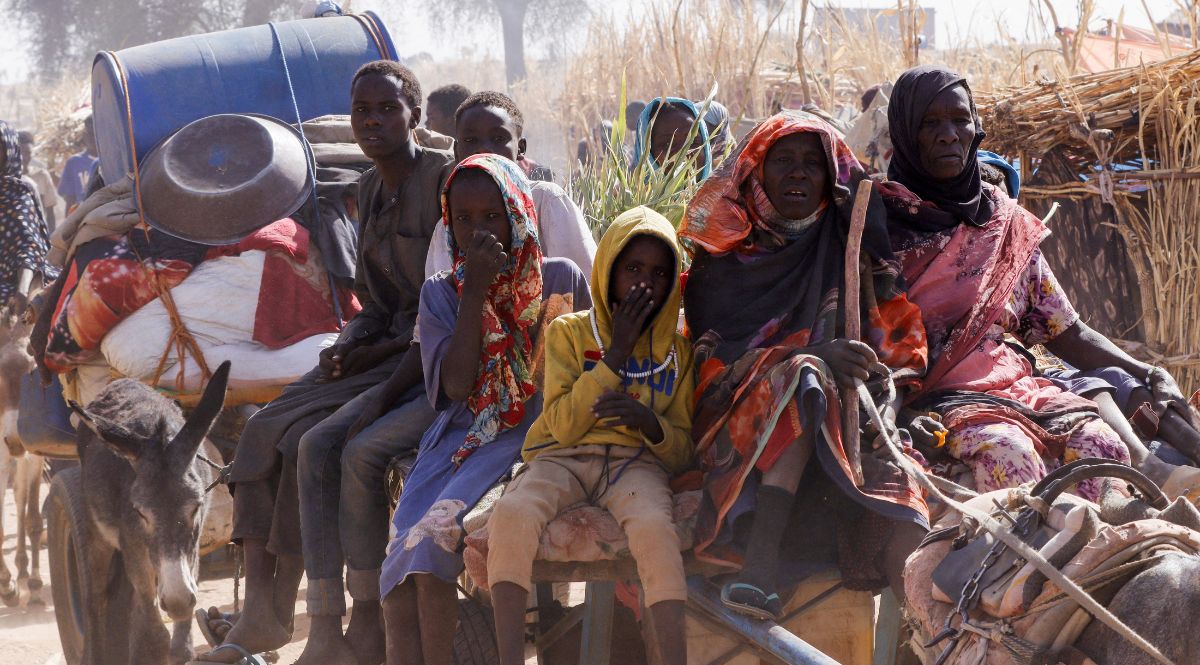 Stringer / Reuters / Forum
Why is the city under siege?
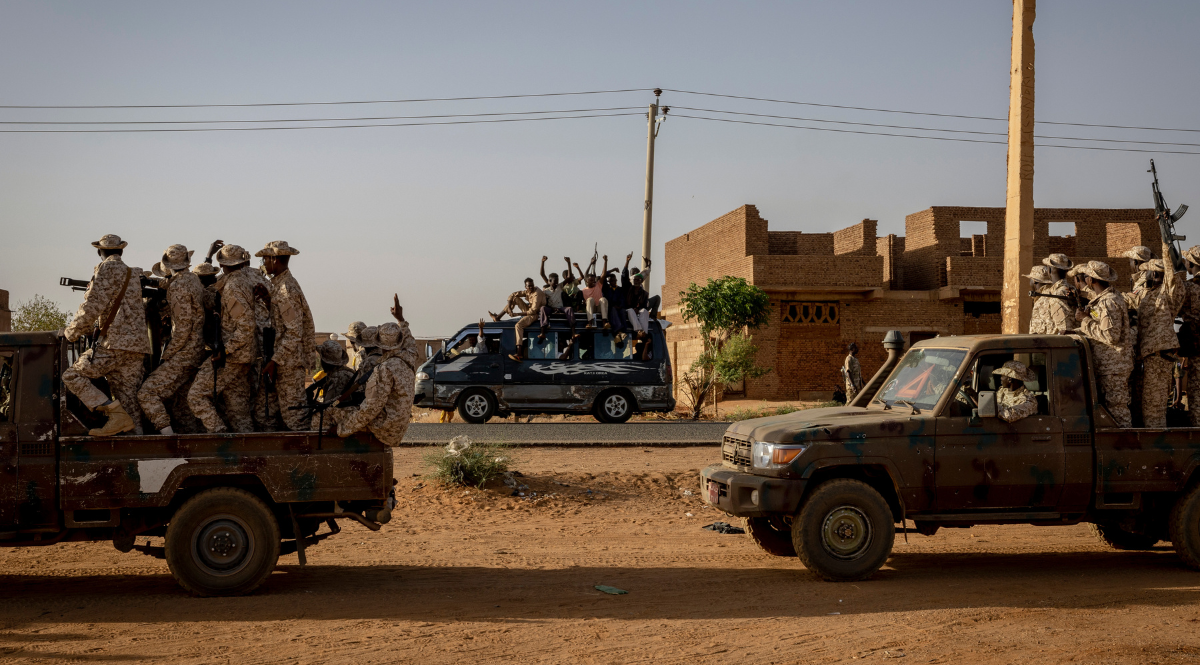
The city was encircled in April 2024 by the RSF, a party to the Sudanese civil war. They seek to consolidate power throughout western Sudan, especially the Darfur region. El Fasher is the historic capital of Darfur and the last significant Darfurian metropolis outside of RSF control. The militias hope that this will bring their “government” closer to international recognition, on a similar basis as the de facto administration of Gen. Khalifa Haftar in eastern Libya. It is also about defeating the 6th infantry division of the Sudanese Army (SAF), which is defending itself in the city, and the former Darfur rebels working with it, called the Joint Forces. They are tying up significant RSF fighters and inflicting significant losses on them (the assaults on El Fasher are reminiscent of the Russian assaults of Bakhmut in Ukraine), which significantly weakens the group. At the turn of August to September, this progress was halted thanks to the actions of the SAF air force. Meanwhile, in North Kordofan (600 km from El Fasher), government forces launched an offensive against the RSF, which is intended, among other things, to lift the siege of El Fasher. However, the fighting may take many months, and previous similar attempts have been unsuccessful.
What is the situation in El Fasher?
Over more than 500 days, the RSF has launched at least 230 assaults on El Fasher, completely destroying its medical infrastructure. The city is cut off from supplies and under constant artillery fire and drone strikes. The advanced anti-aircraft weapons at the disposal of the RSF are preventing resupply drops into the city by government forces (to resume them, the SAF is trying to destroy these weapons with drones). In April this year, the RSF invaded and destroyed the Zamzam refugee camp adjacent to El Fasher, resulting in the displacement of about 400,000 people. UNICEF estimates that around 260,000 civilians, including 120,000 children, remain in El Fasher. Food supplies are depleting and famine reigns—in recent weeks residents have been forced to eat the remaining animal fodder. Defenders, including many women who took up weapons to avoid rape, are aware that the SAF lacks the strength and determination to lift the siege. In contrast, the RSF forces are, with support from the United Arab Emirates (UAE), being reinforced with supplies of equipment and mercenaries (e.g., from Colombia). In recent weeks, RSF forces have occupied several neighbourhoods of the city, approaching the 6th Division headquarters.
What indicates the risk of genocide?
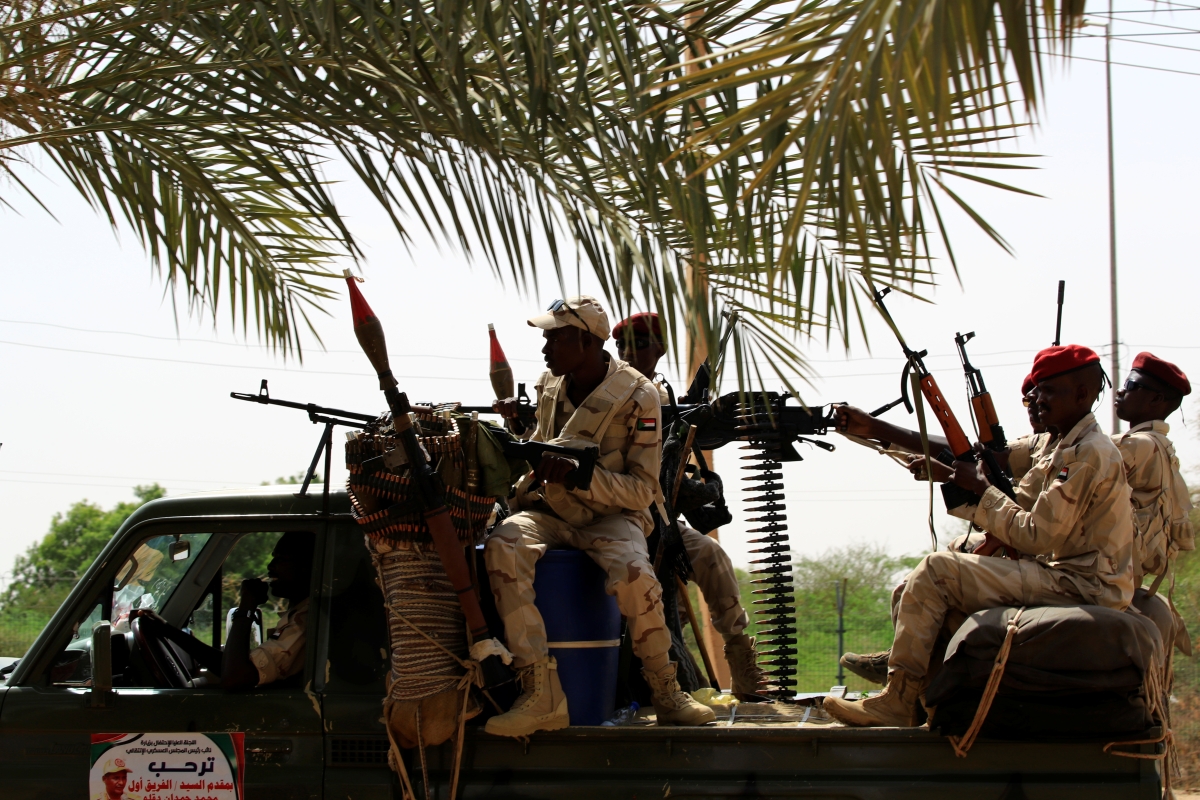
The RSF fighters are mainly descended from Arab nomadic tribes from the Sudan-Chad border region and are driven by an extremist ideology of racial superiority over the indigenous African population. Their aim is to force a demographic shift and remove non-Arab groups from Darfur. As early as 2023, they carried out mass killings of the Masalit population in Geneina (according to the UN, killing around 10,000-15,000 people), which the U.S. government classified as genocide. Members of the RSF have made no secret of the fact that they are planning a massacre in El Fasher, a multi-ethnic town with a significant Zaghawa population that they consider hostile (because the main pro-government armed groups in the region are recruited from it). With a sense of impunity, RSF commanders and militiamen document and publicise their crimes, such as the murder on an ethnic basis of residents trying to escape the besieged town or carrying food supplies. On several occasions, they have also attempted to cut off the city’s main water source. In recent weeks, RSF forces have been building a ring of earthen embankments around the city to prevent defenders and civilians from escaping when defences fall. Numerous statements by RSF commanders and past practice indicate that this poses an additional threat to civilians.
What can be done to avoid a genocide?
The UN Security Council has been constantly informed of the situation in El Fasher, thanks in part to the work of a Panel of Experts. In May 2024, the U.S. ambassador to the UN and the British foreign secretary warned of the threat of a large-scale massacre. On 13 June, the UN Security Council adopted its first resolution calling on the RSF to halt the siege of El Fasher. In September 2024, the EU High Representative for Foreign Affairs declared that the EU “will not bear witness to another genocide”, and in August 2025, the African Union called for the lifting of the siege. None of these declarations has had an impact on the ground.
What may have an effect is decisive pressure on the UAE, the only state with influence over the RSF, but it is considered a valuable ally and investor in the West. The upcoming session of the UN General Assembly provides space for the formation of a broad coalition on this issue. This action could also help to establish a humanitarian pause and deliver food aid to the city, something that has failed so far (for example, in June a WFP convoy was destroyed before it reached El Fasher). It would also be necessary to use the mechanisms that enabled UNICEF to deliver aid to Dalang, another city besieged by the RSF, on 24 August. The international community must also make preparations in case El Fasher's defences collapse. The only option for rescuing residents in such a situation would be to open a humanitarian corridor under international protection to the city of Tawila, some 60 km away, which is in the hands of forces declaring neutrality in the war, where several hundred thousand refugees already reside.
In the medium term, it is also necessary to disrupt supplies to the RSF, which includes the authorities of UAE, eastern Libya, Somalia’s Puntland and South Sudan. It will be helpful to pursue with this goal if the U.S. Congress approves a proposal to set the RSF status as an international terrorist group, which has recently been introduced.

.png)