Pseudo-parliamentary Elections in Myanmar - True Victory for Russia and China
The parliamentary elections in Myanmar, which have been ongoing since 28 December, are intended to legitimise the 2021 military coup and enable the ruling junta to normalise external relations. Although they will not end the four-year civil war, they will weaken the armed opposition and strengthen the junta's control over most of the country. Internationally, this is a victory for Russia and China in their rivalry with Western democracies, which have provided little support to the opposition. In view of the reduced US involvement, the European Union will have to consider a pragmatic engagement with the new government.
 Stringer / Reuters / Forum
Scham elections
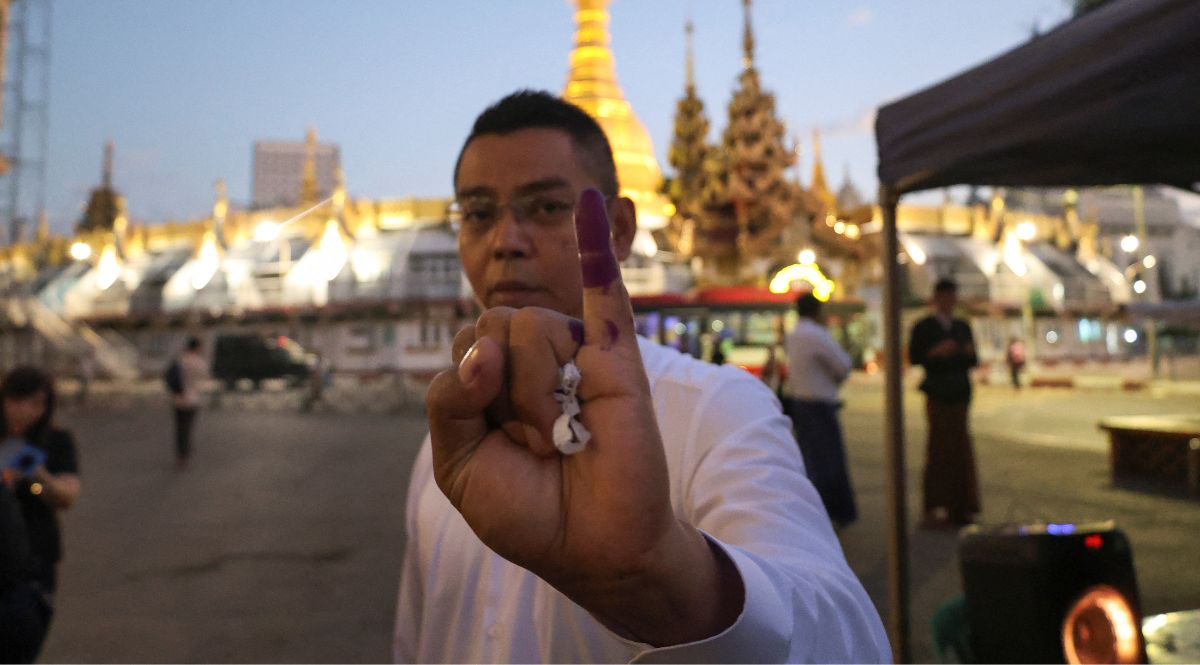
In July 2025, the military lifted martial law, allowing the organisation of the repeatedly postponed elections. They are being held in three stages. On 28 December last year, the first round of voting took place in 102 of the country's 330 townships, on 11 January in another 100, and on 25 January the final stage will take place in a further 63. In at least 56 townships, there is no voting planned due to the lack of government control. A total of 440 members of the lower house of parliament and 224 members of the upper house are being elected, but 25% of the seats in both houses are reserved for military representatives. The favourite in the elections is the USDP (United Solidarity and Development Party), which is linked to the junta. According to official data, turnout in the first two rounds was over 50%, with the USDP winning over 80% of the votes.
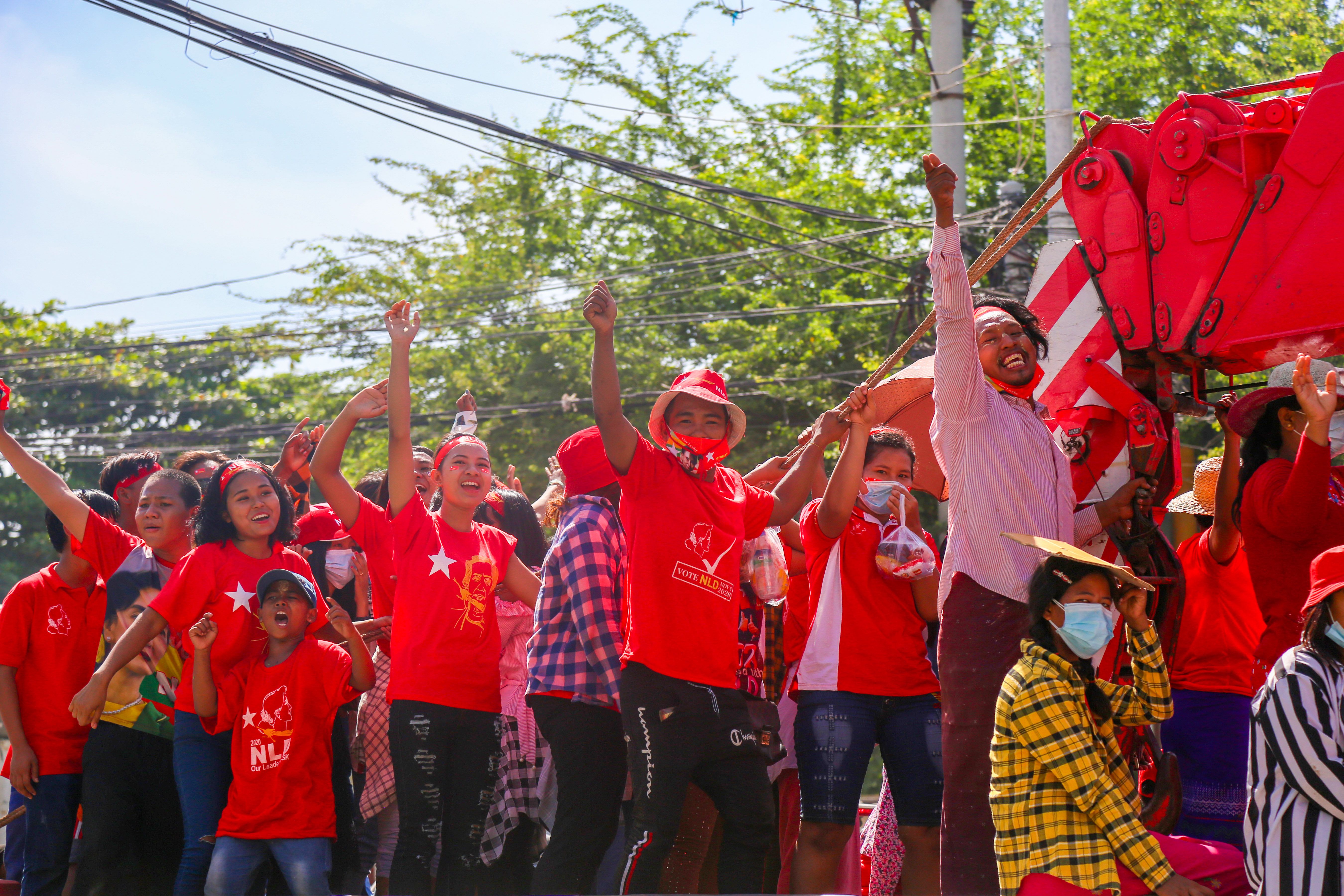
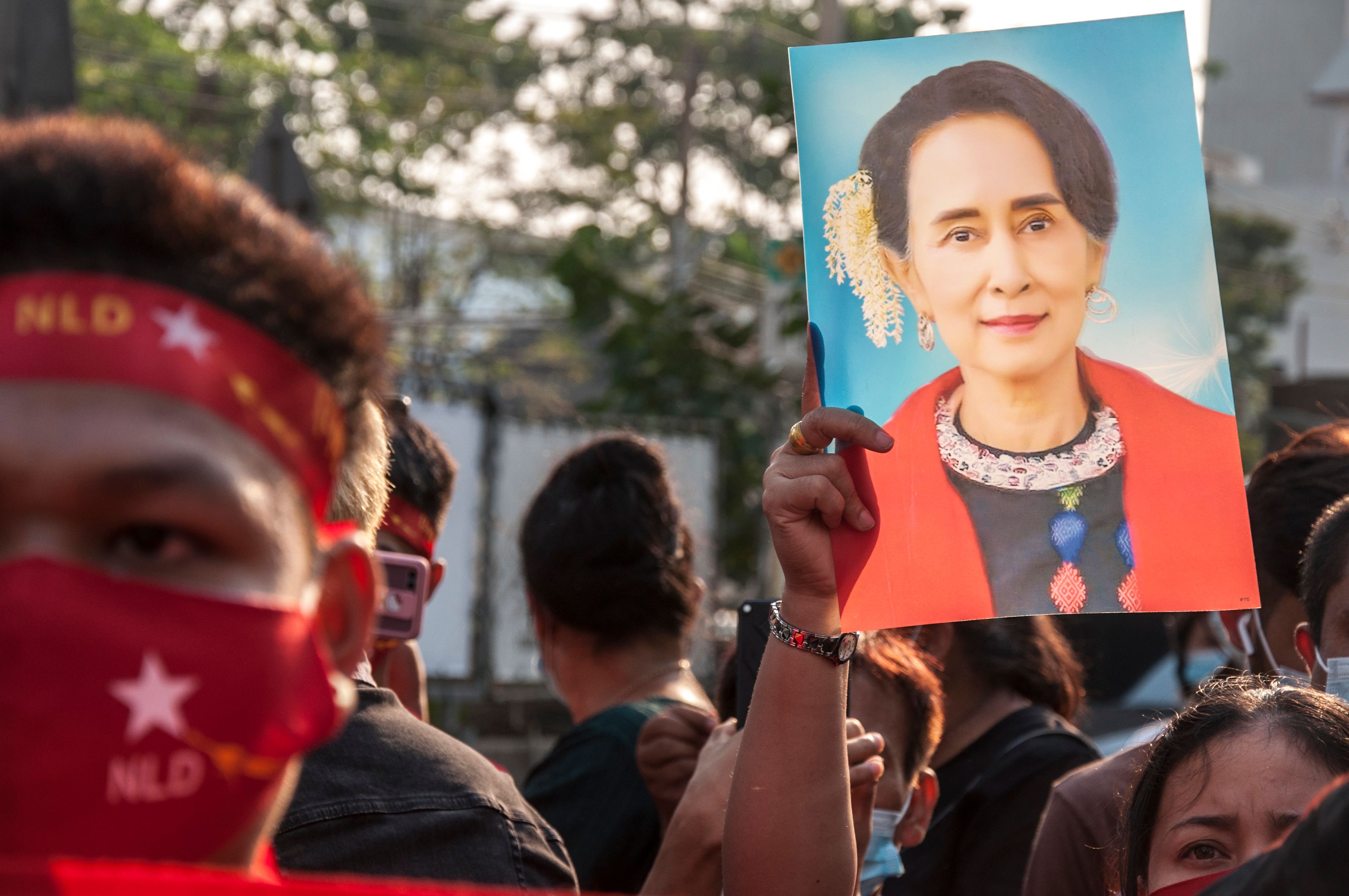
The main political force, the National League for Democracy (NLD), is not participating in the elections, as it was banned in 2023, along with about 40 other pro-democracy and ethnic groups. The leader of the NLD, Aung San Suu Kyi, who ruled the country from 2015 to 2021, is under arrest, as are former President Win Myint and more than 22,000 other opponents of the regime. In the face of calls for a boycott of the vote, the junta has tightened its control over the elections. According to the July 2025 electoral law, disrupting the elections is punishable by up to 10 years in prison, and acts of sabotage are punishable by death. Due to the ongoing fighting, the 2024 voter registration did not cover 19 of the country's 51 million citizens.
Civil war
The elections are taking place despite an ongoing bloody civil war. The conflict began after the overthrow of the democratically elected NLD government in February 2021, which sparked mass protests that were brutally suppressed by the army. It is estimated that more than 13,000 people were killed in 2025 alone, and more than 90,000 since 2021. Over 100,000 buildings have been destroyed, 3.5 million people have been forced to flee their homes, and 22 million (about 40% of the country's population) are in need of humanitarian aid.
Members of the opposition NLD who fled abroad formed the National Unity Government (NUG) on 16 April 2021, and in May 2021, they established the People's Defence Forces (PDF). In September 2021, the NUG called for armed resistance against the junta, and the PDF established cooperation with armed ethnic groups that have been waging a guerrilla war in the border areas of the country almost since Myanmar's independence in 1948. They gradually took control of more and more parts of the country. The launch of the ‘1027’ offensive in October 2023 by the ‘Three Brotherhood Alliance’–of three ethnic groups and the PDF – allowed the opposition to take the initiative. In the following months, the junta lost control of dozens of cities, including the key city in northern Shan State, Lashio, and the main roads to China and India in August 2024, and the area under junta control shrank to 25% of Myanmar's territory.
The risk of the regime's collapse prompted neighbouring China to side with the junta. In August 2024, for the first time, it transferred six fighter jets and weapons to the junta and began to put pressure on ethnic groups to halt their offensive. In the following months, it persuaded two pro-democracy groups (the Myanmar National Democratic Alliance Army and the Ta’ang National Liberation Army) to return the cities they had captured (including Lashio) and conclude a truce with the junta (in April and October 2025, respectively). This allowed the army to focus on attacks on the remaining groups and gradually regain territory.
The role of third countries
The elections are supported by China and Russia, which have become the junta's closest allies in the ongoing war. The establishment of a civilian government is expected to normalise Burmese-Chinese relations, improve the security situation, and, as a result, increase Chinese investment in the country. Support for the junta since mid-2024 and its influence on a number of ethnic organisations give the PRC the greatest influence on the situation in Myanmar. The country plays an important role in China's strategic plans, providing, among other things, access to the Indian Ocean and some of the world's largest reserves of rare earth metals.
While China helped the junta regain control of the situation in the country, Russia was the key partner that saved it from collapse. After 2021, it became the main source of arms, political backing and economic support for the junta. The head of the army and de facto dictator, General Min Aung Hlaing, has made eight visits to Russia since 2021. Russia has supplied, among other things, six SU-30 combat aircraft, Mi-38T transport helicopters, drones and anti-drone systems. During Hlaing's last visit to Moscow in September 2025, agreements were signed for investments in nuclear power plants, refineries and the construction of an ocean port in Dawei in the south of the country. In this way, Russia is expanding its influence in Myanmar and gaining access to strategic ports on the Indian Ocean, as exemplified by the visit of Russian ships to Yangon in November 2025.
Cooperation with Russia is complemented by Belarus' involvement. In November 2025, the country's President, Alexander Lukashenka, was the second foreign leader since the start of the civil war to pay an official visit to Naypyidaw, and the Burmese dictator has visited Minsk twice in recent years. Belarus has become an important source of food and fertilisers for the Burmese regime.
The growing involvement of authoritarian states on the side of the junta contrasts with the declining support for the opposition from democratic partners. Since 2021, the US and EU have mainly provided diplomatic and humanitarian support. However, after Donald Trump took office in early 2025, the US suspended development aid and, in the middle of the year, lifted sanctions on four companies linked to the junta. In November last year, the US withdrew international protection status for refugees from Myanmar, assessing that the signed ceasefires and upcoming elections meant that these people could safely return to their homeland.
Myanmar's neighbours, India and the ASEAN countries maintain a critical distance from the ‘elections’ (they did not send observers), but have not criticised them either. ASEAN proposed its own 5-point consensus plan to end the conflict back in April 2021, which is still not implemented. The EU, which condemned the 2021 coup, imposed sanctions on members of the junta and is involved in humanitarian aid, strongly condemned the pseudo-elections in December last year and called for the implementation of the ASEAN plan. The EU, other European countries and the UN have criticised the elections, assessing that they are neither fair nor free.
Conclusions and prospects
The aim of the elections is to legalise the military coup and legitimise the civilian government controlled by the army. This is intended to help the junta emerge from international isolation by creating the appearance of democratic transformation. A certain victory for the USDP will allow it to strengthen its control over the country and weaken the armed opposition's motivation to continue fighting. This ends any chance of restoring democracy, but does not mean an end to the guerrilla war, especially with ethnic groups. However, the pseudo-elections will allow for a significant normalisation of Myanmar's foreign relations. China and Russia will recognise the election results and use this to increase their involvement in Myanmar, including investment. India and most ASEAN members are likely to decide to slowly normalise relations with the new civilian government, abandoning their five-point plan.
Internationally, the legitimisation of the junta's rule is a victory for Russia and China in their rivalry with the West. Russia is strengthening its influence in Myanmar and proving, contrary to the experiences of Syria and Venezuela, that it can be a support for autocrats. This success was made possible, among other things, by the West's indecision regarding support for the opposition and, ultimately, the Trump administration's abandonment of its interest in Myanmar. The strengthening of Russia and China's position in Myanmar, e.g. through access to ports and raw materials, will weaken US influence in the Indo-Pacific.
The post-election situation will pose a serious challenge for the EU. Maintaining a tough stance towards the junta would be symbolic support for pro-democracy forces, but would have no impact on the situation in the country. The EU, focused on challenges in Europe and unable to count on cooperation from the US, lacks the political will and resources to strongly support the opposition in Myanmar. The EU will most likely reject the election results, maintain sanctions on individuals associated with the coup and continue to support pro-democracy forces. However, it may be willing to engage in pragmatic and sectoral relations with the new authorities, as it did in Afghanistan.