
Polskie Dokumenty Dyplomatyczne 1982
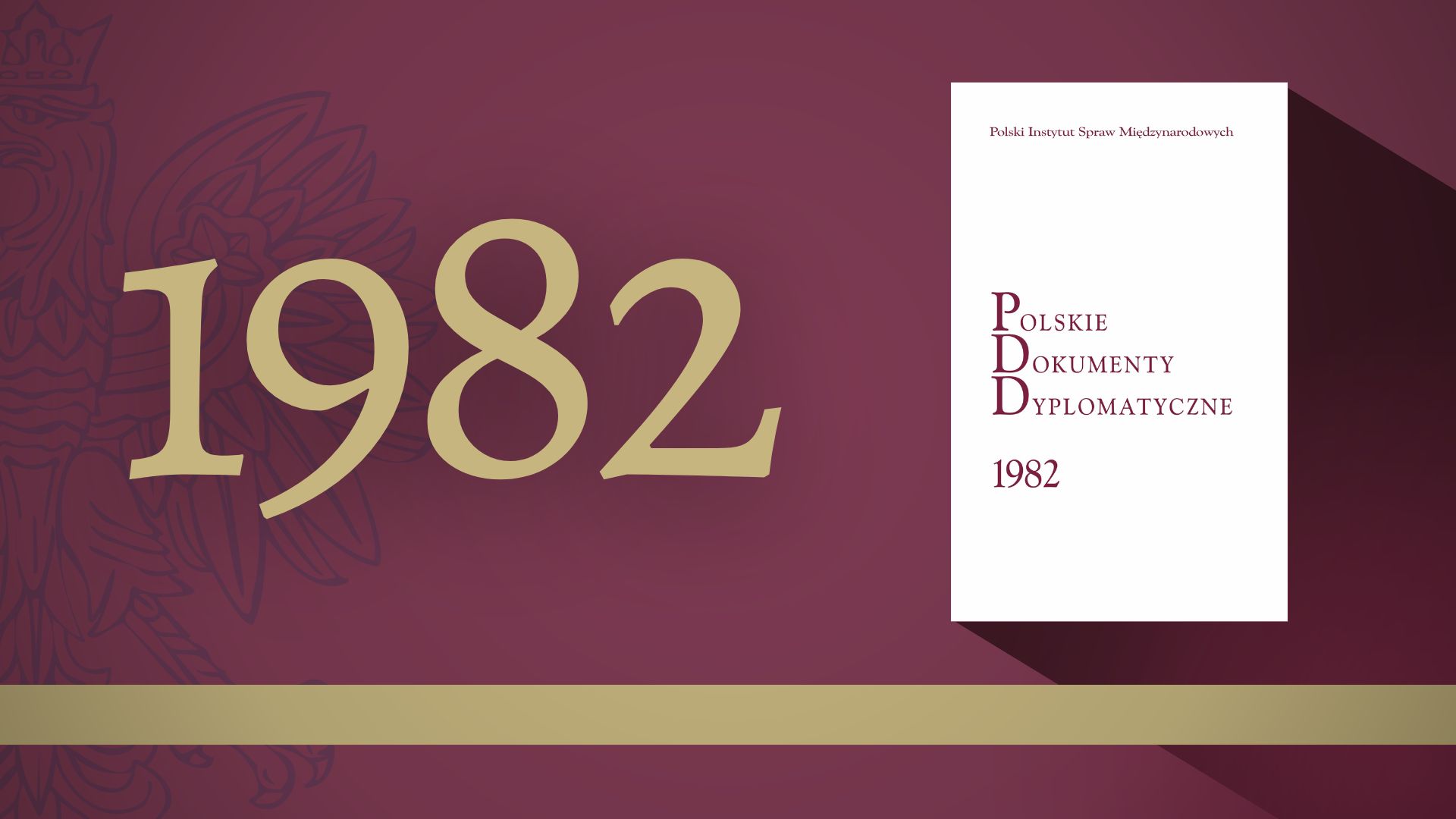
Editor: Małgorzata Ruchniewicz, cooperation: Piotr Długołęcki
Warsaw 2025
ISBN: 978-83-68555-02-8
Pages: LXXVI + 1194
The PDD 1982 is the 32nd volume published in the Polish Diplomatic Documents series. It contains 537 documents illustrating Polish foreign policy in 1982.
Polish diplomacy during the documented period was most influenced by the multifaceted consequences of the decision to impose martial law. The critical reactions of Western countries and the imposed sanctions obviously harmed the relations between Poland and the West. Attempts by the authorities in Warsaw to break the isolation and improve the international position did not bring significant results. The Polish side also tried to counteract any attempts to internationalise the Polish issue and discuss it in multilateral forums (UN, CSCE, ILO).
In contacts with the USSR and socialist countries, efforts were made to assure them that the internal situation was under control and that the crisis related to the activities of the opposition and the Solidarity Trade Union was being dealt with. In relations within the Eastern Bloc, attention was also drawn to the one-day visits of the First Secretary of the Central Committee of the Polish United Workers' Party, Wojciech Jaruzelski, to the USSR and European socialist countries, which were aimed at rebuilding the trust of 'brotherly countries' in the authorities in Warsaw.
A common element of policy towards Western and Eastern countries was the effort to obtain as much economic and financial aid as possible, which would improve the situation in the crisis-stricken country and allow it to avoid a formal declaration of insolvency.
Propaganda efforts focused on countering the information activities of Western states and promoting the thesis of the necessity of introducing martial law, while also disseminating the narrative of Poland's sovereign decision-making in December. In terms of propaganda, considerable attention was paid to attempts to limit the activities of Polish community representatives abroad and to neutralize the influence of Solidarity activists living in the West. Efforts were also made to minimise the significance of all kinds of demonstrations organised in front of Polish diplomatic missions abroad.
Relations with the Holy See were also an important element of diplomatic activities, which were given a special character by the personal involvement of Pope John Paul II (exchange of letters with Prime Minister Jaruzelski) and the contacts of Vatican diplomacy as well as the activities of the Polish Episcopate.
The international conflicts and crises of the time also influenced the agenda of Polish diplomacy. In the spring of 1982, The Falklands dispute between Great Britain and Argentina escalated into open warfare, while in the Middle East, the war between Iran and Iraq was ongoing, additionally Israel launched a military operation in Lebanon, which directly threatened the Polish embassy in Beirut.
An essential element of Polish foreign policy at the time was also a staff rebound in the Ministry of Foreign Affairs, and budget cuts resulting in the liquidation or reduction of the activities of some foreign missions.
The vast majority of the documents included in the volume are previously unpublished sources, mainly from the Archives of the Ministry of Foreign Affairs and the Central Archives of the Modern Records. The volume is user-friendly thanks to extensive personal and subject indexes, as well as an introduction and a list of abbreviations. The volume also includes annexes, such as a list of international agreements concluded by the Polish People's Republic and a diagram illustrating the structure of the Ministry of Foreign Affairs in 1982.