Perspectives on U.S.-UK Relations after Brexit
The United Kingdom’s withdrawal from the EU and Britain’s new integrated strategy from March 2021 is creating challenges for President Joe Biden’s transatlantic policies. The lack of cooperation between the UK and EU in areas of foreign and security policy may adversely affect U.S. policies in Europe. Even though the new UK strategy generally emphasises the importance of British-American cooperation, it also suggests potential tensions in relations with the U.S. associated with the question of Northern Ireland, economic relations with China, or shifting British involvement to the Indo-Pacific.
 Fot. POOL/Reuters
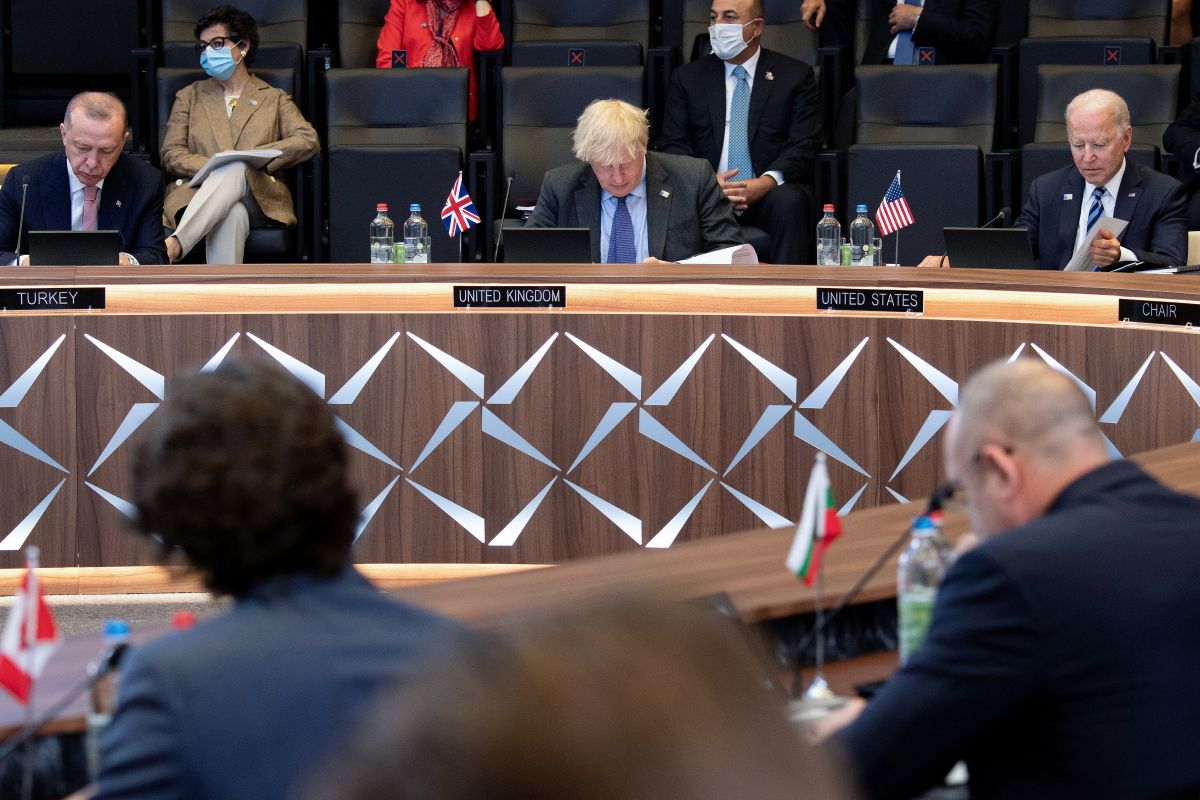
The presidency of Donald Trump abounded in tensions between the U.S. and UK caused, among others, by his backing of supporters for a “hard” Brexit. In turn, President Joe Biden, like Barack Obama earlier, criticised the British withdrawal from the EU. Despite this, Biden declared a willingness to tighten cooperation with the UK and Prime Minister Boris Johnson the need to strengthen the liberal international order, as expressed in their bilateral declaration—the “New Atlantic Charter” (NAC) of 10 June 2021.
Common Goals of Biden and Johnson
The main areas of U.S.-UK cooperation will remain security and science/technology. Both leaders reaffirmed their willingness to fulfil NATO’s collective defence commitments and announced plans to modernise their armed forces with the goal of increasing interoperability. Important will be intensified cooperation among the intelligence services (bilaterally and within the “Five Eyes” partnership of the U.S., UK, Canada, Australia, and New Zealand) in terms of cybersecurity threats, as announced by Secretary of State Antony Blinken and Foreign Minister Dominic Raab. Moreover the U.S. and UK confirmed the high level of their partnership in key strategic documents: the Interim National Security Strategic Guidance (INSSG) and Integrated Review (IR). NAC also signalled maintaining the international order based on principles of multilateralism, inclusiveness, respect for the rule of law, and fair trade as areas of bilateral collaboration.
Cooperation is further fostered by the challenges of global policies, such as supporting vaccination efforts against COVID‑19 in developing countries. The U.S. and UK committed to provide 500 million and 100 million doses, respectively, to the COVAX initiative. Nevertheless, the countries have divergent positions toward intellectual rights to vaccines. The U.S. supports suspending patent rights, while the British government prefers to use its ownership rights to transfer free or preferential licenses (e.g., production of the AstraZeneca-Oxford vaccine in India). Another priority for both governments is implementing the Paris Climate Agreement (to which the U.S. again became a party on 19 February 2021) and precipitating reductions in CO2 emissions by 2050. This issue will be discussed during the COP26 summit this November in Glasgow. During the G7 summit in June, group leaders, including Johnson, supported Biden’s initiative to introduce a minimum 15% global income tax on transnational corporations even though a dispute continues between the U.S., UK, and EU Member States over the rules for taxing American tech giants.
Despite years of trade negotiations and countless declarations by Trump and Johnson, reaching a bilateral trade agreement is not considered a priority. Even without it, the UK and U.S. are each other’s largest direct foreign investors (about 12–15% of investments in each market, respectively) and trade partners (in 2019, their turnover amounted to about $300 billion, with a surplus of $21 billion for the UK). A trade agreement would only bring limited economic benefits (e.g., a 0.36% increase in UK GDP) at a cost of difficult internal political compromises for the governments of both countries (e.g., lowering quality control standards on food in the UK or excluding part of the U.S. agri-food sector from the agreement).
The U.S. concentration on deterring China in the Indo-Pacific may lead to a reduction in the Americans’ contribution to defending Europe. Likewise, the new UK strategy assumes a more robust presence in the Indo-Pacific where Britain’s post-Brexit economic expansion is focused (e.g., accession submission to CPTTP). In both cases, these moves probably would be made at the expense of the military presence in Europe.
Challenges for Bilateral Relations
The U.S. and UK accordingly define Russia and China as “systemic competitors”. From the American point of view, China is its main political, economic, and ideological adversary, with Russia seen as a less direct threat concentrated only in the security sphere. However, from the British perspective, Russia is its greatest security threat (e.g., the chemical weapon attack in Salisbury in 2018 and regular incursions into UK airspace) and China a potential future economic partner. Further differences in UK and U.S. policies concern opinions towards the future security architecture in Europe and relations with the EU.
While in 2010-2020 China was perceived in the UK almost exclusively as an economic partner, incidents during the pandemic, including China’s limiting autonomy in Hong Kong and violating the rights of the Uyghurs, and the increase in technological dependence on that country heightened the sense of threat from it in the UK. Although in 2020 Chinese investors were excluded from Britain’s most sensitive infrastructure projects (e.g., 5G and nuclear energy), UK-China economic cooperation has intensified in various other sectors. Meanwhile the Biden administration’s decisions concerning, among others, the Nord Stream 2 gas pipeline, demonstrate a U.S. willingness for a closer dialogue with Russia and its European partners with the goal of expanding the freedom to manoeuvre in the strategic competition with China.
Biden’s intention is to break the UK’s programmatic reluctance towards closer cooperation with the EU after Brexit. Maintaining close British-American relations demands the U.S. pursue a more neutral position in UK-EU disputes. An area where this will be especially difficult is the question of implementing Brexit in Northern Ireland (NI). Due to pressure from the Irish-American lobby in the U.S., the Biden administration (and the Democratic Party more broadly) tends to assume the EU view in UK-EU disputes concerning NI. U.S. involvement on the EU side, however, means an increase in the importance of the Northern Ireland question in UK foreign policy and tensions in relations with the U.S., which undermines the position of the U.S. as an arbiter in that conflict, assumed in the 1990s.
Conclusions
Brexit generally diminished the significance of the UK for the U.S. in Europe. Specifically in the defence sector, though, it increased largely due to the Johnson government blocking key Chinese infrastructure investments in 2020 and limiting penetration of British research and scientific centres. These steps are key in maintaining and strengthening U.S.-UK technological cooperation in the near future, as indicated in the NAC and IR. The U.S. also supports the UK initiative towards expanding the G7 group to a “D10” by including key democratic partners in the Indo-Pacific—India, Australia, and South Korea.
Even though American and British armed forces will be modernised and their interoperability deepened, they will face a general reduction (UK) or at least in Europe (U.S.) in preparation for intensifying operations beyond NATO’s area of regional obligation, that is, in the Indo-Pacific and Middle East. Although the U.S. will gain UK support in this key operational theatre (e.g., joint mission of a British aircraft carrier with U.S. fighter jets onboard), it must take into consideration less UK involvement in deterring and defending Europe. Despite established British military capabilities and political will to engage in allied operations, due to Brexit the UK has limited its cooperation with the EU. To strengthen the credibility to deter and defend NATO, the U.S. faces the choice of either increasing its own military commitment in Europe or—what is more likely—induce other NATO members to do so. For this purpose, U.S. and UK leaders will press Alliance partners to reach the defence spending goal of 2% of GDP by 2024. The Biden administration will also seek to strengthen the military potential of the allies on NATO’s Eastern Flank. For Poland, a key country in the defence of this region in crisis scenarios with Russia, this will open further opportunities to tighten bilateral cooperation with the U.S. and UK (as well as within the NATO framework) even though it will require consistent investments in new areas of military interoperability.