No breakthrough reached by the EU on support for Ukraine or defence readiness
The European Council summit in Brussels on 18–19 December failed to address the most pressing security challenges. However, the leaders did agree to grant Ukraine a €90 billion loan to fund its defence efforts. The Helsinki meeting on 16 December aimed to demonstrate the ability to act by NATO’s eastern flank states, but no decision was made at the summit to establish Capability Coalitions.
 AA/ABACA/Abaca Press/Forum
What was discussed at the European Council summit?
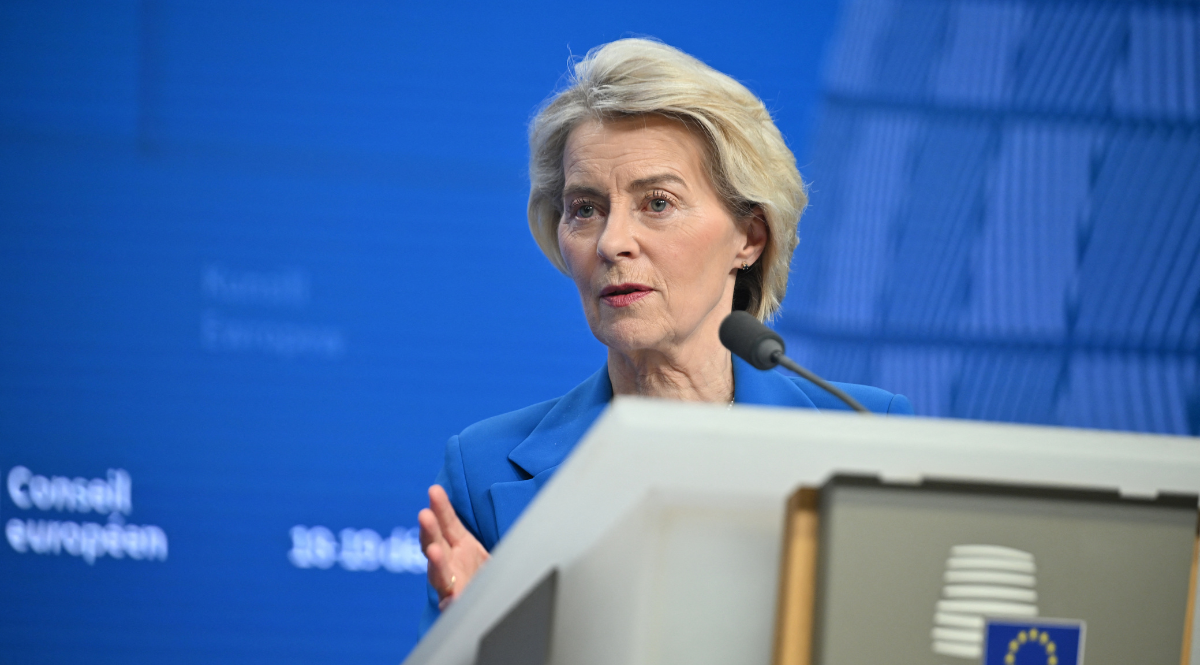
The main topic of discussion among EU leaders at the 18–19 December summit was providing Ukraine with aid to help it defend itself against Russia. While the European Council approved €90 billion in support over two years, it failed to make the long-awaited decision on the reparations loan, involving the use of €210 billion of frozen Russian assets. Belgium, where most of these assets are located, was the main opponent of this solution due to concerns about legal and financial consequences. Despite many hours of negotiations, the other EU states refused to accept the Belgian Prime Minister’s demand for unlimited financial risk sharing. While the EU has reserved the right to use frozen Russian assets to repay the aid granted, this is unlikely to happen in the near future due to the lack of political consensus. A wide range of other issues were also discussed, including European defence, the situation in the Middle East, the size of the new budget, progress in migration management, and the enlargement process.
How does the loan mechanism for Ukraine work?
EU countries (excluding Czechia, Hungary and Slovakia) will grant Ukraine a loan of €90 billion for the period 2026-2027. This will be sourced from EU loans on capital markets and secured by the EU budget reserve. Crucially, Ukraine will only be required to repay the loan once it receives compensation from Russia for war damages. Despite the lack of agreement on a reparations loan, this move has secured Ukraine’s most urgent defence needs for the coming year. The decision will also strengthen Ukraine’s long-term integration with the EU, as the funds can be used to produce military equipment and ammunition, including in collaboration with European defence companies. EU leaders emphasised the need for cooperation between European and Ukrainian industries, as well as for locating part of the Ukrainian production efforts in the EU. They pointed to urgent needs such as air defence and anti-drone systems, as well as large-calibre ammunition.
Why were no decisions made at the summit regarding Capability Coalitions?
Capability Coalitions are intended to bolster European defence in the face of a deteriorating security situation. They stem from the European Commission’s proposal on priority areas earlier this year, which included air and missile defence, artillery systems, drones, military mobility, artificial intelligence and cyber and electronic warfare, and strategic enablers. According to the EU leaders’ conclusions at the October European Council, states were to have taken swift national-level action to adopt decisions on creating Capability Coalitions by the end of the year, with the aim of launching them in the first half of 2026. However, despite this being the final European Council summit of the year, no concrete solutions have been presented by the Member States, which may indicate a lack of agreement at the EU level on how to implement them.
What was the significance of the Eastern Flank meeting in Helsinki?
This meeting, which took place two days before the European Council summit, brought together the leaders of Bulgaria, Estonia, Finland, Lithuania, Latvia, Poland, Romania, and Sweden. It served to build consensus and strengthen their voice in the debate on Capability Coalitions. In a joint declaration, the leaders emphasised the particular importance of the Eastern Flank and committed themselves to developing flagship projects: Eastern Flank Watch and the European Drone Defence Initiative. The leaders also stressed that responsibility for security does not rest solely with the frontline states. The meeting sent a strong signal that the Eastern Flank states, which are at the greatest risk of potential Russian escalation, do not agree to security conditions being set without their participation, nor will they accept the future of the European security architecture being decided without them. However, the outcomes of the European Council summit did not reflect the urgency of this message. Thus, the declarations following the meetings of the Eastern Flank states and the European Council point to a divergent approach to EU defence policy, which could hinder the ability to defend and deter Russia in Europe.