Migration from Arab States and the Crisis on the Border with Belarus
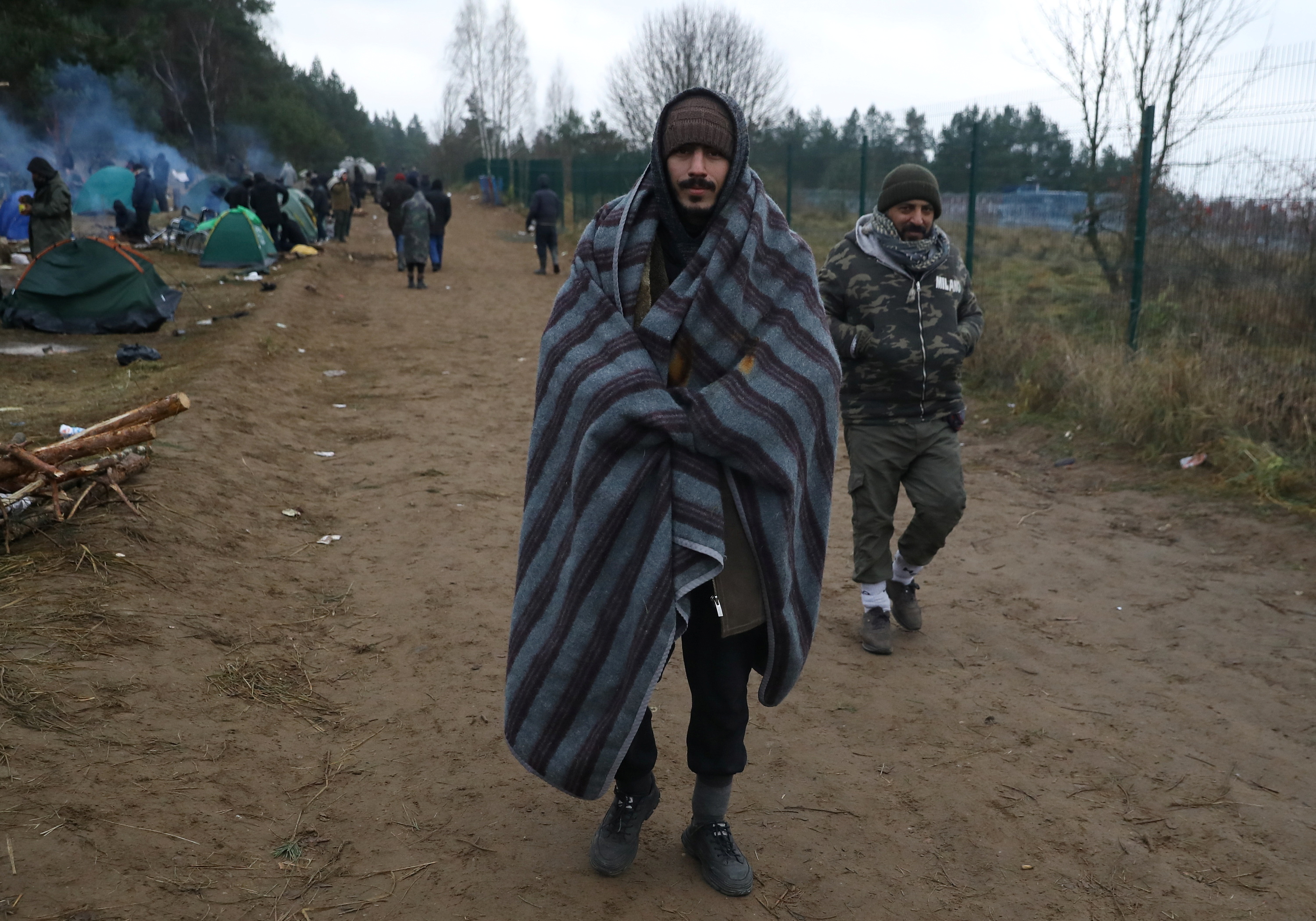 Photo: KACPER PEMPEL/Reuters/Forum
Socio-Political Context
Over the past few months, the number of irregular migrants from Iraq, Syria, Afghanistan, and Yemen trying to enter the EU via the Belarusian border has increased. The Belarusian authorities have organised this new migration route to undermine Poland, Lithuania, and Latvia in the EU over their criticism of the regime in Belarus. The increasing migration pressure is also intended to challenge the EU’s image as a promoter of compliance with international law by highlighting reports of human rights violations by European border guards.
The human smuggling activity on the route through Belarus is professional and carried out through Arab tourist agencies, which, thanks to the facilitation of Belarus, for a fee from $6,000-12,000, organise a Belarusian visa, flight to the country, hotel accommodation, and transport to near the border with one of the EU countries. These travel agencies cooperate with Belarusian state tourist offices and airlines and advertise “easy” access to the EU. Migrants most often fly to Minsk via Istanbul and Dubai, and until mid-October, flights from Baghdad and the capital of Iraqi Kurdistan, Erbil, were also popular. Although reports are increasing about the dangers and exploitation of migrants by the Belarusian authorities among global Arab social media, migrants already in the country are still using the route. Most likely, only a few of them qualify for international protection, while the rest are fleeing difficult living conditions. Unemployment in Iraq remains at around 14%, and as much as 25% among those 15-24 years old, and residents have limited access to electricity and clean water. Most of the Iraqis who cross irregularly into the EU come from the Kurdistan Region, near where active ISIS fighters still operate. Civil war continues in Syria and Yemen, and Lebanon's economy is mired in its worst crisis in history, which has led to a shortage of fuel, electricity, and a drastic decline in Lebanese living standards with around 76% now living below the poverty line. At the same time, 38 million migrants and refugees (about 15% of the worldwide total) and 15 million internally displaced persons reside in Arab states. Lebanon and Jordan host the most refugees per capita in the world. Bad living conditions in the camps and extremely difficult access to work and education prompt them to attempt further migration.
EU Response
Lithuania, Latvia, and Poland have responded to the rush of migrants to the Belarusian border by tightening security. The authorities of these states declared various states of emergency in the border regions, deployed troops there, and started building barriers. EU representatives describe the mass migration as a threat intended to destabilise the Union. They also refer to the need to seal the borders with Belarus, and although they criticise the practice of “pushbacks” (when security forces literally force people back across the border), when asked to support Lithuania and Latvia, Frontex made no attempt to stop them. The EU has also engaged in ad hoc diplomatic activities, for example, representative visits to Iraq and Turkey, which resulted in the suspension of flights to Minsk and a temporary ban on selling tickets for Turkish flights to citizens of Iraq and Syria. Iraq also closed the Belarusian consulates.
Most of the migrants on the border do not want to stay in the countries adjacent to Belarus, but aim to apply for asylum in Western European countries, namely Germany, where they voluntarily place themselves in the hands of the security services. Once an application for international protection is accepted for examination, the applicant is relocated to facilities throughout the country where a further increase in the number of arrivals is expected. This shows that the experiences of the migration-management crisis of 2015-2016 have strengthened state institutions dealing with immigrants, making Germany less vulnerable to the Belarusian migration pressure.
Migration Policy
Since the crisis in 2015, tackling irregular migration has become one of the dominant aspects of the European Neighbourhood Policy (ENP) as applied to the EU’s North African and Middle Eastern partners. One assumption of the EU’s cooperation with the countries of the Southern Mediterranean is the transfer of migration controls to non-EU transit countries. The Union strives for this goal by providing development aid aimed at limiting what it calls the root causes of migration and supporting security apparatuses in Tunisia, Morocco, or Egypt in border protection. At the same time, in meetings with EU institutions and the Member States, Egyptian representatives themselves emphasised the importance of the country’s efforts to combat irregular migration. They argue that increasing EU financial support of the Egyptian military is key to further protecting the borders and stopping smugglers. Nevertheless, Egypt already has the strongest army in Africa, and in 2018 was the largest recipient of EU official development assistance among the EU’s southern neighbourhood.
In recent years, the European Commission (EC) and the European Parliament have taken steps to popularise legal methods of entering the Union, recognising the admission of immigrants as an element of coping with the problems resulting from the ageing EU population. In 2016, the European Commission proposed a reform of the EU Blue Card (known as a “BC”, it’s a visa system for qualified people), which resulted in an increase in visas issued under the programme: for example, in Poland the number of BCs rose from 369 in 2015 to 2,104 in 2019 (for comparison, in France, it was similar, from 657 to 2,036 in the same period). However, only one BC was issued in Poland—and none in France—to a person from an Arab state.
In the meantime, the EC decided that facilitating visas for seasonal workers at consulates in the migrants’ countries of origin could serve to limit irregular migration. Although the Arab population is dominant among irregular migrants to the EU, the Member States are still not issuing them with these seasonal workers’ visas. In 2019, of the more than 17,000 such visas issued in Finland and 12,000 in Spain, only two and zero, respectively, were issued to a person from an Arab state. This is a consequence of the lack of agreements between EU Member States and Arab states concerning work visas and because of the weak networks of employment agencies facilitating employment of the Arab population.
The EU continually emphasises that people wishing to apply for international protection should be able to enter the Union through a legal channel (currently around 90% of such applications come from irregular migrants). This system issues humanitarian visas to potential refugees. However, so far, the system has not been able to marginalise smugglers in this area, mainly due to the inconsistency of its application among the Member States.
Conclusions
Belarus’s use of tourist agencies to organise people smuggling puts the process in the area of semi-legality. This makes it difficult to treat the participation of Arab companies in this practice as a criminal activity and makes it harder to pressure Arab security services to limit their activity. The EU authorities can only document such activities as evidence for the possible imposition of individual sanctions. The suspension of flights to Minsk by Iraq demonstrates the effectiveness of the EU’s ad hoc diplomatic actions. The lower number of migrants arriving to the EU via the Mediterranean suggests that cooperation in this regard with Arab countries is effective.
The rhetoric of some Arab autocrats suggests that they are using the EU’s emphasis on combating migration in the ENP to use migration as a means to stall the EU from conditioning support for them on political reforms or to force a similar agreement to the Union’s 2016 deal with Turkey. To make it more difficult for Arab states to blackmail the EU and limit the activity of smugglers, Member States could better facilitate legal migration for Arab populations. Taking into account the demand on European markets for workers and the high unemployment among young residents of Arab countries (especially those with higher education), EU states could increase the number of work visas issued to these populations or at least encourage them to apply for a BC. Overall, this would require analysis and improvement of the existing mechanisms supporting the integration of immigrants.
Arab authorities where large numbers of refugees make economic recovery even more difficult may perceive the opening of the new “route” as an opportunity to relieve the state’s burden of care. Instead, further EU support to these countries is necessary. At the same time, greater coherence and facilitation of the humanitarian visa system would not only provide better protection for applicants seeking international protection but also limit the possibilities of autocrats to try to undermine the EU on the global stage.