
Local Elections Mark a New Phase in Georgia's Political Crisis
The decisive victory (nearly 82% of the vote) of Georgian Dream (GD), which has been in power for 13 years, in the local elections on 4 October heralds an intensification of the political crisis that has been ongoing for a year and the consolidation of the party’s authoritarian rule. In the coming months, pro-Western opposition parties will be outlawed and a de facto one-party system will be established in Georgia.
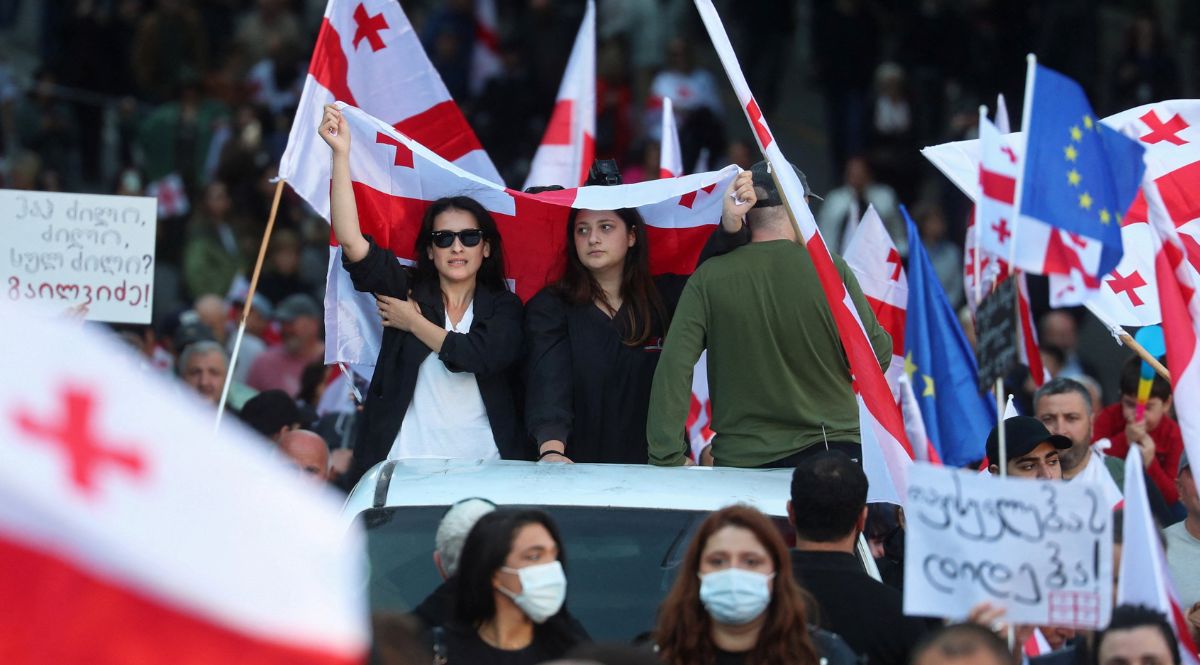 Irakli Gedenidze / Reuters / Forum
Why did Georgian Dream win the elections?
The victory was a result of GD’s dominant position on the political scene and the opposition’s partial boycott of the elections, which translated into low turnout (41%). In addition, the ruling party’s success was influenced by its election campaign, which was built on presenting a dichotomy—the ruling party guaranteeing peace, stability, and development of the state versus a chaotic opposition. The ruling camp’s repression of the opposition (including the arrest of its leaders), non-governmental organisations, and media, along with the lack of international observers and GD’s media advantage, were also significant. The opposition has been unable to mobilise and unite since last year’s parliamentary elections due to internal disputes over how to fight the authoritarian authorities. The part of the opposition that refused to participate in the elections considered the vote a “Russian special operation” and called on its supporters to peacefully remove GD from power.
What is the reason for the opposition’s lack of effectiveness?
The weakness of the Georgian opposition stems from several reasons: a lack of unity, charismatic leaders, and the ability to mobilise its electorate. The opposition was unable to develop a unified strategy for the local elections. Its key players—the United National Movement (UNM) of former Georgian President Mikheil Saakashvili and the Coalition for Change—boycotted the vote. Only two smaller entities decided to participate in the elections: the Lelo-Strong Georgia coalition and the For Georgia party. Despite the high expectations of pro-Western Georgians, the former Georgian president, Salome Zourabichvili, who lacks determination and a concrete plan to fight the Georgian regime, did not become the leader of the opposition. Furthermore, no new figure has emerged from the opposition who would be able to lead the protest movement against the authoritarian rule of the GD. The quarrels and mutual accusations of discredited opposition politicians have discouraged a large part of Georgians from participating in the elections and the post-election protests.
How is the West responding to this new phase of the crisis?
The head of EU diplomacy, Kaja Kallas, and EU commissioner for Enlargement, Marta Kos, assessed that the elections were not pluralistic and took place in an atmosphere of suppression of political competition. However, they did not explicitly state that they were not free and democratic. As a result, no further sanctions against the Georgian authorities have been announced. The EU’s cautious stance stems from a lack of unanimity among the Member States on the political crisis in Georgia. The EU has still not addressed the issue of a possible suspension of visa-free travel for Georgians, despite the fact that more than a month has passed since the deadline for the Georgian government to meet the conditions necessary for its maintenance. The U.S. also remains passive towards the events in Georgia. The sanctions passed by the House in the spring (the MEGOBARI Act) have still not been adopted by the Senate. This lends a sense of impunity to the Georgian authorities.
What does the future hold for the Georgian opposition?
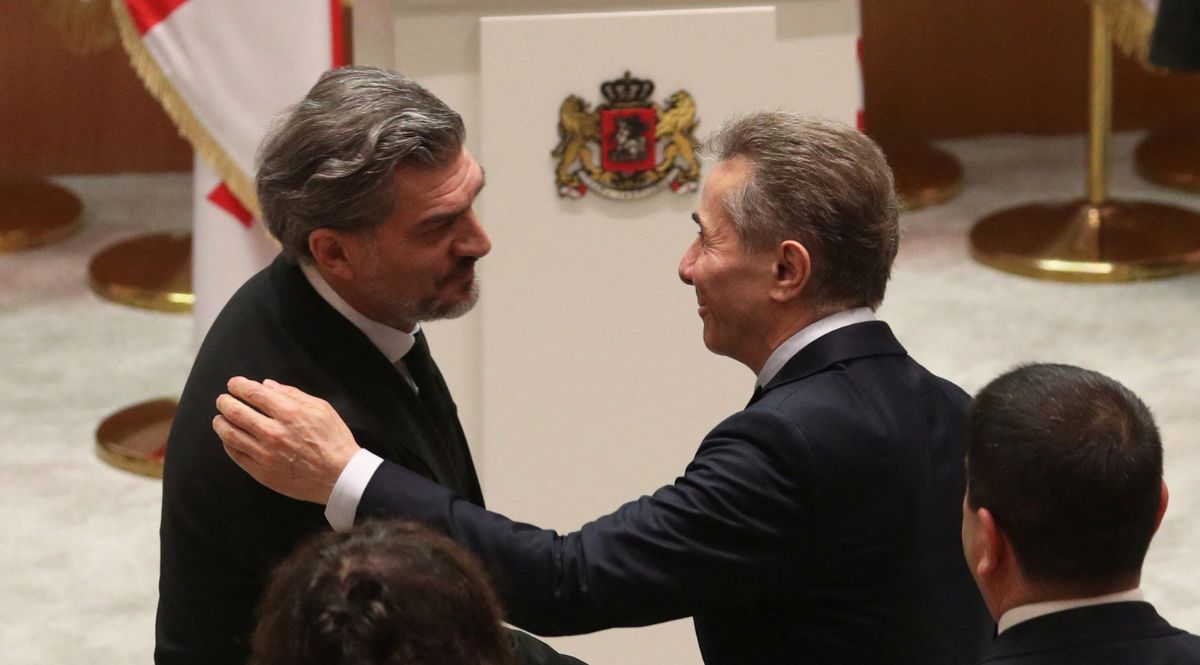
After the local elections, GD will have a monopoly on power, both at the national and local levels. It is to be expected that the ruling camp will seek to ban pro-Western opposition parties. The Constitutional Court, which is under the control of the authorities, is to consider a motion on this matter later this month. The motion will be based on the findings of a parliamentary inquiry committee which investigated alleged abuses of power by the UNM during its time in office (2003-2012). Another wave of persecution of NGOs and free media, and even a complete ban on demonstrations, is to be expected. The Georgian authorities have announced severe reprisals against the organisers of the post-election protests, which they argue were aimed at staging a coup d’état on behalf of foreign secret services. All these actions will result in the further consolidation of the authoritarian political system in Georgia and the country’s distancing from the West.

(3).png)
.png)