Formation of a new government in Latvia
On November 17 of this year, the Latvian Sejm granted a vote of confidence to the government of Andris Kulbergs of the centre-right United List (AS), which formed a coalition with the right-wing National Alliance (NA). The cabinet will focus on modernising the armed forces, as well as improving the economic situation, administrative efficiency, and the management of public finances. The priority in foreign policy will remain maintaining close cooperation with the United States and other allies, in particular Lithuania and Estonia, as well as the Nordic countries, Canada, and Poland.
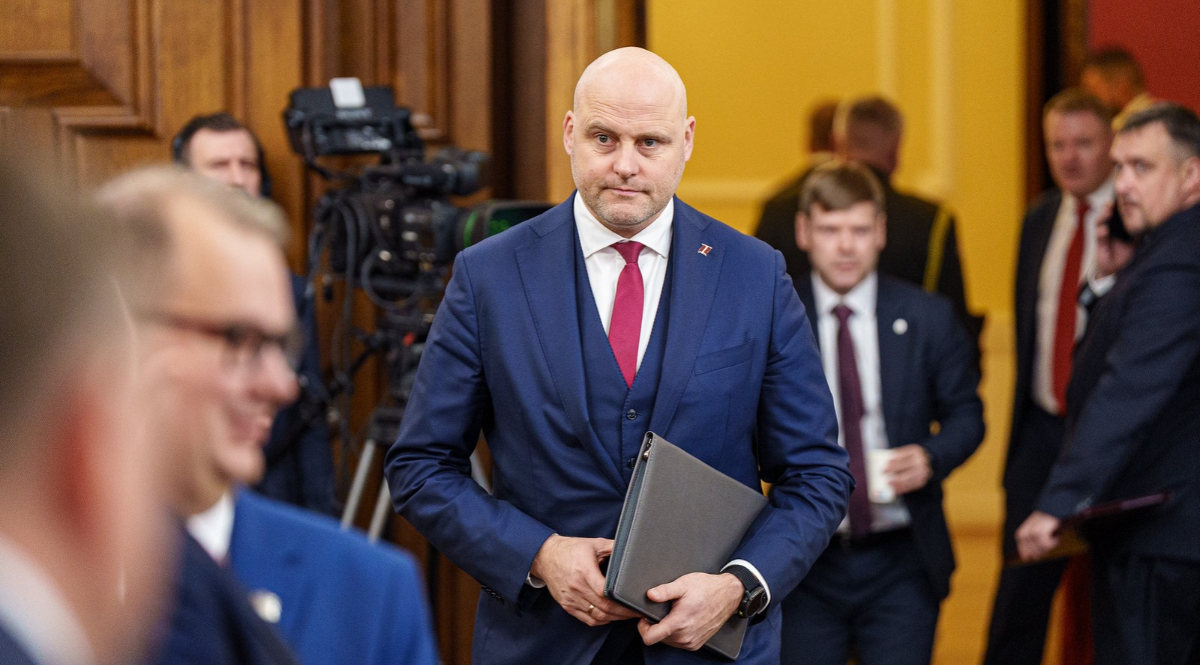 Reinis Inkēns | State Chancellery of Latvia
What circumstances was the new coalition formed under?
By winning 41 seats in the October elections, AS became the strongest party in the Sejm. In the previous legislative term, with Kulbergs leading the government since May of this year, it held only 15 seats. During the election campaign, AS worked closely with NA and declared a willingness to form a coalition. Since these parties won a combined total of 51 seats, they attempted to broaden the coalition’s base. The coalition secured parliamentary support from the populist Latvia First (LPV; 7 members of parliament), which made it a condition that the centrist New Unity (JV) and the left-wing Progress Party not join the government. The government’s program also incorporated LPV’s demands to focus on the quality of public services, economic development, and pro-family policies. However, LPV represents an unreliable partner for the entire four-year term—not least given its reluctance to support Ukraine. This means AS and NA must enforce discipline among their own MPs, especially since Kulbergs rejected an offer from JV (7 MPs), a former coalition partner, which demanded that the Ministry of Defence and the Ministry of Foreign Affairs remain under its control in exchange for its support.
What is the composition of the new government?
All the ministers formally unaffiliated with any political party are instead closely associated with the prime minister. Karlis Purgailis and Krišs Lipšāns, former social advisors to Kulbergs, have been appointed ministers of transportation and finance, respectively. Normunds Staņēvičs—his college classmate and a board member of the alcohol producer Amber Beverage Group—took over the Ministry of Health. Raivis Melnis remains Minister of Defence, having been nominated to Kulbergs’ first government in May by JV, and has expressed a desire to continue working as an independent expert. AS has taken over the ministries of Smart Administration and Regional Development, Agriculture, Economics, Education and Science, as well as Justice. NA has been assigned the ministries of Culture, Welfare, and the Interior. Kulbergs announced the appointment of AS’s Krists Avots and Uldis Tatarčuks—an independent but close associate of the prime minister—as deputy prime ministers, giving them responsibility for cybersecurity, AI, and information technology. The head of government also plans to abolish the Ministry of Climate and Energy, though he did not specify which ministries would assume its responsibilities.
What foreign and security policy will the Kulbergs government pursue?
The new Kulbergs government will maintain Latvia’s current foreign and security policy. The dominance of AS in the cabinet, alongside the appointment of Ģirts Jaunzems—a career diplomat with no party affiliation and a school friend of the prime minister—as head of the Ministry of Foreign Affairs in place of JV’s Baiba Braže, who held the position since 2024, means that Kulbergs will be the main architect of this policy. He favours close cooperation by Latvia within the European Union and NATO, as well as the best possible relations with the United States and continued support for Ukraine. The parties supporting the government welcome the allied military presence in Latvia—including Poland’s contingent. They also support the modernisation of the armed forces and endorse maintaining defence spending at 5% of GDP, while remaining positive toward increasing cooperation with Poland, especially in the security and defence sphere.
What are the main goals and challenges in domestic policy?
One of Kulbergs’ main goals is to improve the quality of public administration, including reducing costs. In the first phase of the reforms—running through the end of 2027—he intends to stabilise the budget, improve spending efficiency, and evaluate the organisation of ministries and the administration. In the second phase—from 2028 to 2029—inefficient or redundant agencies will be restructured or eliminated. And in the third phase—in 2030—the public sector is expected to take its final form. At the same time, the government plans to audit major projects, including the significantly delayed Rail Baltica railway project and the operations of airBaltic, which is facing serious financial problems. The economic transformation is to be supported by a Latvian Development Fund, with a budget of 1.2 billion euros, which will be established by a separate law. NA’s participation in the government will mean a renewed push to limit the role of the Russian language in Latvia and expand the areas where the use of Latvian is mandatory. These measures will harm the interests of the Russian-speaking population—approximately 23% of Latvia’s population—especially those unwilling to learn the official language. The Russian Federation will inevitably exploit these tensions in its information operations to destabilise Latvia internally and discredit it on the international stage.