Evolution of EU Travel Rules During the COVID-19 Pandemic
The new variants of SARS-CoV-2 and the development of the vaccination process in the EU are changing the rules of travel within the territory of the Community. New guidelines on this matter adopted by the Council of the EU in January focus not so much on the country of departure of the traveller as on his/her personal health situation. This more individualised approach is to make it possible to dispense with additional ad hoc travel restrictions imposed by Member States. At the same time, it promotes vaccination, recognising it as essential in fighting the pandemic.
 Fot. Andrzej Hulimka/ FORUM
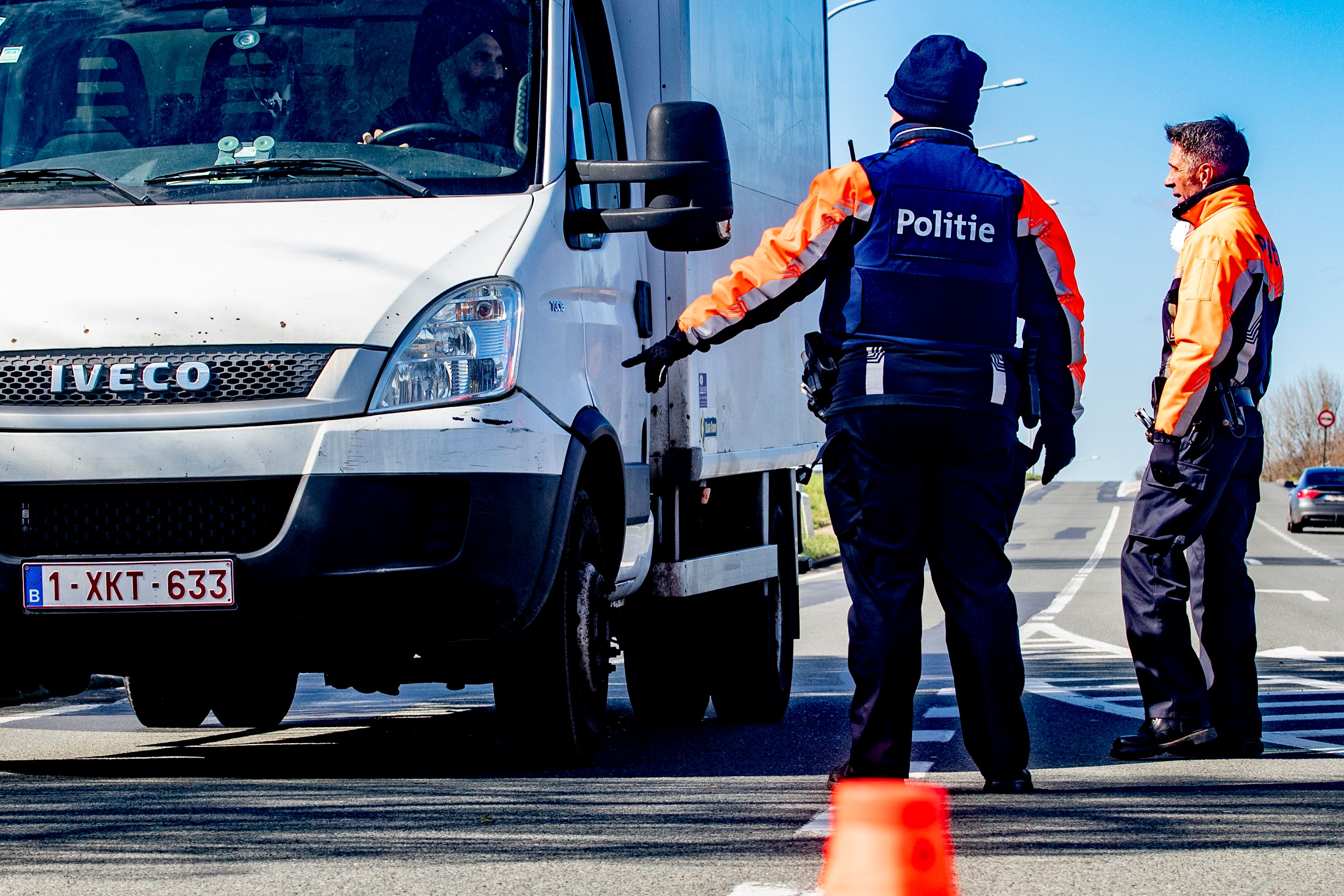
Due to the emergence and course of the COVID-19 pandemic in Europe, EU Member States have repeatedly taken unilateral decisions to reintroduce border controls, as well as to extend them beyond the period provided for in the provisions of the Schengen Borders Code. In order to eliminate conflicts and protect the single market, in autumn 2020 the Council, at the request of the European Commission, adopted the first recommendation on a coordinated approach to restricting free movement in response to the COVID-19 pandemic. The Council’s recommendations are updated on an ongoing basis, taking into account the changing epidemic situation in the EU. The last modification requested by both the Member States and the European Centre for Disease Prevention and Control (ECDC) was approved by the Council on 25 January and is valid from 1 February. In addition, on 3 February the European Commission proposed extension of the validity of the regulation on the EU digital COVID-19 certificate.
Risk Mapping
The originally agreed system involved mapping COVID-19 transmission risk using colour coding. The restrictions on people moving between areas depended on the level of risk of transmission of infection in these areas. Created on the basis of data collected by the ECDC and constantly available on the Re-open.eu website, the system initially included three classification colours (the traffic-light map): green for regions with a low level of infection, orange for regions with an average level of infection, and red for high-risk areas. Along with the increase in the number of infections, in February last year the Council decided to add a dark red colour to mark the areas with the highest risk of infection. It also introduced stricter measures for travellers from these regions.
The weakness of the risk-mapping system proved to be the differences in national testing systems, which made statistical comparisons difficult. This problem has been exacerbated by the emergence of new SARS-CoV-2 variants in Europe, first the Delta variant and then Omicron. In December last year, Denmark, which has one of the most effective systems for detecting new variants, accused other countries of unjustifiably penalising it with border restrictions for high infection rates.
COVID Passports
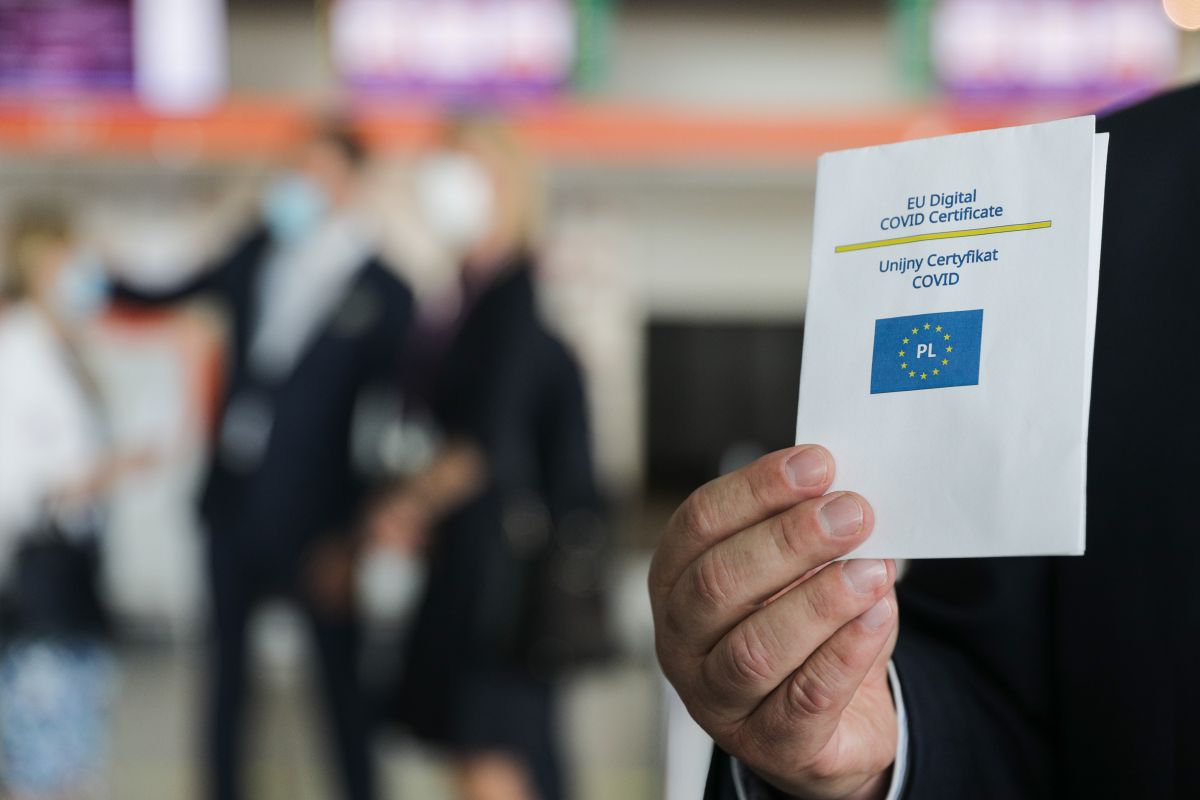
The development of vaccines and the progress of vaccination in the EU allowed for the introduction of the digital COVID certificate in June 2021. This document identifies people who had earlier contracted COVID-19, tested negative for COVID-19 and/or had been fully vaccinated against COVID-19. The certificates have become a required pass to travel within the EU but also outside the territory of the organisation—so far 60 countries have joined the system (from outside the EU-27, they include Israel, Morocco, Tunisia, Turkey, and the United Arab Emirates). It was assumed that countries participating in the system will not impose additional travel restrictions on persons identifying themselves with a digital COVID certificate unless necessary for the protection of public health. In the face of the emergence of new variants, individual countries took advantage of the possibility to introduce additional restrictions. For example, in December last year, Austria introduced a requirement to perform an additional PCR test before entering the country for convalescents and people vaccinated with two doses (the so-called 2G-plus rule). Only travellers vaccinated with a booster dose were exempted from this obligation. In Norway, on the other hand, after arriving in the country, all travellers were tested, without exception.
Although the EU regulation on COVID certificates did not regulate the scope of their use within Member States for purposes not related to travel, many Member States, including France, Germany, Italy, and Czechia, ordered that the certificates be checked before entering cinemas, theatres, restaurants, and even shops. The wide use of certificates encouraged vaccination. So far, more than 1.2 billion people have downloaded digital COVID certificates.
Towards Normalisation
The revised recommendation on facilitating safe and free movement in the EU during the COVID-19 pandemic, adopted in January, recognises the central role of COVID passports in the travel system within the territory of the Community. The Council concluded that holders of this document should not be subject to entry restrictions. Member States, adjusting their travel recommendations to the EC Delegated Regulation of December 2021, recognised that the passports are valid for nine months (not 12 as originally assumed) from the end of the primary vaccination series in two doses or the single-dose Johnson and Johnson vaccine. This change was based on the ECDC guidelines that recommended a booster dose at the latest six months after completion of the first vaccination course. Due to insufficient scientific evidence, the guidelines did not specify the validity of the booster doses, leaving the possibility for the EC to regulate this in a timely manner. The guidelines update the methodology of the epidemic-signalling map, taking into account the positive impact of vaccination against COVID-19, as well as the number of tests performed. The updated traffic-light map aims to continue to help provide information and underpin some travel measures.
Parallel to the finalisation of work on the new guidelines, individual Member States began lifting domestic COVID restrictions. Due to the lower rates of hospitalisation and mortality from the Omicron variant, a discussion began about changing the treatment of COVID-19 not as a pandemic, but as an endemic disease (in which the expectation is of a constant number of cases remaining at a similar level). This approach is promoted by, among others, Spain, which is considering moving away from reporting every SARS-CoV-2 infection and testing every person showing one symptom of coronavirus infection. Sweden decided to go a step further, lifting in February the requirement to show COVID certificates when entering the country or using services on its territory.
Conclusions and Perspectives
The experience of two years of the pandemic has accustomed Europeans to frequent changes in the rules of travel within the EU. With the development of vaccines and the advancement of the vaccination process (and the proliferation of COVID certificates), the EU is promoting an individual-centred approach. Thus, the colour coding of regions is slowly losing importance. This trend may intensify as the status of COVID‑19 changes from a pandemic to an endemic disease and, with it, moves away from strict reporting of the number of infections in individual Member States.
Regardless of the change or maintenance of the current status of COVID-19 (as a pandemic), it is not expected that there will be in the coming months a wide end to the use of COVID certificates for travel in the EU. This is confirmed by the presentation at the beginning of February this year of the EC’s proposal on extending the use of COVID certificates until June 2023. At the same time, shortening the validity period of the certificate to nine months from the end of primary vaccination (and the failure to specify the validity period of the booster dose) raises the question of the need to take further booster doses in the future. Such a solution may be necessary to protect public health and maintain the possibility of traveling on the basis of a certificate, especially for people who started the COVID vaccination course early.
Considering the above considerations, it is worth strengthening the efforts of the Member States to promote immunisation as a measure to protect public health and to travel safely in the EU. In Poland (as well as in other Central European countries), which has a lower percentage of vaccinations than the average for Western European countries (less than 60% of the population in Poland have received the full dose of vaccinations, and only 30% have decided to take a booster dose), these efforts should be especially increased.