
Czechia after Parliamentary Elections: ANO on Its Way to Forming a Government
The elections to the Czech Chamber of Deputies on 3 and 4 October were won by Andrej Babiš’s populist ANO party. He can count on returning to power thanks to cooperation with the Eurosceptic Motorists for Themselves (AUTO) party and the far-right Freedom and Direct Democracy (SPD) in the form of a coalition or minority government. Such a government would mean a shift in Czechia’s position towards a more critical stance on EU policies, a reduction in its support for Ukraine, and a loosening of its close relations with Poland in favour of closer cooperation with Slovakia and Hungary.
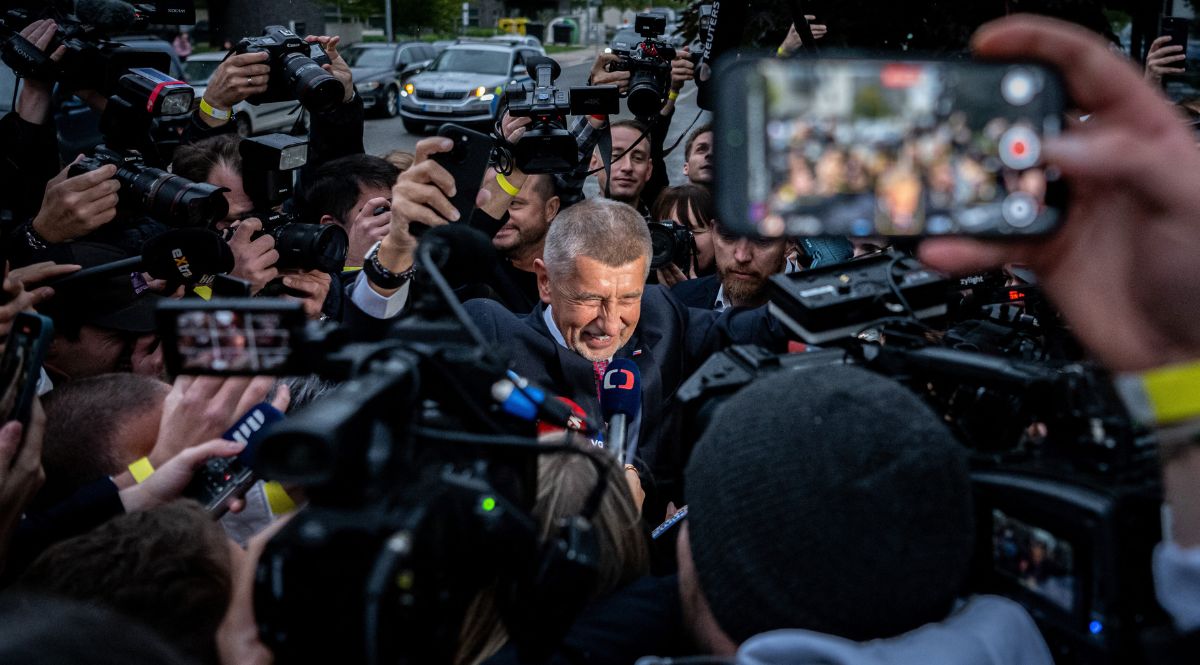 AA/ABACA / Abaca Press / Forum
Election Results
While 34.5% of voters voted for ANO, all governing parties saw a decline in support. The right-wing liberal coalition Together, which includes Prime Minister Petr Fiala’s Civic Democratic Party (ODS), the Christian and Democratic Union–Czechoslovak People's Party (KDU-ČSL) and the liberal TOP 09, won 23.3%. The co-governing centrist Mayors and Independents (STAN) won 11.2% of the vote, and the left-wing liberal Czech Pirate Party, which was part of the government until October last year, won 9%. Meanwhile, the party AUTO, which was making its debut in the parliamentary elections, won 6.8% of the votes. Thus, in the 200-seat Chamber of Deputies, ANO will have 80 seats, Together 52, STAN 22, the Pirates 18, and AUTO 13.
The elections showed a decline in the importance of extreme parties that question Czechia’s membership in NATO and the EU. The Communists did not make it into the Chamber of Deputies—sharing seats with the Social Democrats in the Enough! group, they obtained 4.3% of the vote (with the electoral threshold for parties set at 5%). In the previous parliamentary elections, these forces won a total of 8.2%. The SPD, on the other hand, won 7.8% of the vote and 15 seats, five fewer than previously.
Post-Election Prospects
AUTO and SPD have expressed their willingness to form a government with ANO—such a coalition would have a majority of 108 votes. ANO and AUTO are close in terms of their programmes, with both in the Patriots for Europe fraction in the European Parliament. The SPD, on the other hand, due to its radical profile, is a less reliable partner for Babiš and AUTO’s leaders, so a compromise on a coalition is not certain.
If the tripartite talks fail, the SPD would probably consider supporting a minority cabinet of ANO and AUTO in exchange for political concessions (e.g., support for the position of Speaker of the Chamber of Deputies). This possibility is supported, among other things, by Babiš’s experience in 2018 when he managed to form a cabinet with the Socialists and the support of the Communists. However, the single-party minority government preferred by the ANO leader was ruled out by AUTO, which refused to support a government of which it would not be a part.
President Petr Pavel, given his limited prerogatives in this area, may refuse to swear in SPD nominees, arguing that their anti-EU or anti-NATO views are extreme. To avoid this, the SPD suggests delegating experts in place of party nominees. In addition, Pavel is demanding that Babiš resolve the conflict of interest related to his business activities.
Reasons for ANO’s Victory
ANO won in 13 regions—all except for Prague—thanks to maintaining a clear long-term advantage over other parties and taking over part of the extreme electorate. This was achieved through an effective media campaign, particularly on social media, with the highest turnout in parliamentary elections since 1998 at 69%. Babiš based his campaign, among other things, on the promise to move away from the restrictive budgetary policy of Fiala’s government by increasing social spending and abandoning his plan to gradually raise the retirement age. After the elections, he called on the outgoing government to amend next year’s budget before the 3 November meeting of the renewed Chamber of Deputies. He also announced that he would move away from financing aid to Ukraine from the state budget.
Disappointment with the ineffectiveness of reforms and the economic situation weighed heavily on the defeat of the previous coalition. This was mainly due to a decline in real incomes and the highest consumer electricity prices in the EU (according to Eurostat data from May this year). This was not offset by the data highlighted by Fiala on one of the lowest unemployment rates (3.2% in August this year) and the lowest budget deficits in the V4 (below 2% of GDP) and relatively high economic growth (2.6% year-on-year in the second quarter of this year).
Implications for Foreign Policy
The change of government in Czechia does not mean that it will imitate the pro-Russian policies of Slovakia and Hungary. Unlike their leaders, Babiš does not show any political or economic interest in relations with Russia. Moreover, during his time as prime minister in 2021, the largest expulsion of Russian embassy staff in Prague in Czech history took place over Russia’s involvement in explosions at ammunition depots in Vrbětice. The limited potential for narrowing cooperation with Russia also stems from Czechia’s independence from Russian energy resources, unlike Slovakia and Hungary. AUTO excludes dialogue with Russia—even after the end of its war with Ukraine—and supports contacts with the Belarusian opposition. The SPD, on the other hand, is a pro-Russian party.
The new government may, however, indirectly favour Russia by reducing support for Ukraine. Babiš is repeating the slogans of his 2023 presidential campaign, as well as the rhetoric of the prime ministers of Slovakia and Hungary, about the futility of military support for Ukraine and the urgent need to end the war, even at the cost of a just peace. As a result, the continuation of the Czech ammunition initiative, the legitimacy of which Babiš questions, suggesting that NATO could take over its coordination, is uncertain. At the same time, he is sceptical about Ukraine’s accession to the EU. However, in order to avoid weakening its position in the EU, Czechia will not block this process.
The ANO-led government, building on Babiš’s previous contacts with U.S. President Donald Trump, will seek close ties with his administration. Babiš pins his hopes on it, among other things, for peace between Ukraine and Russia. Although he has been inspired by Trump’s political rhetoric for years, he also criticises the U.S. for its current tariff policy and pressure on Europeans to increase defence spending. Babiš condemned the Fiala government’s policy aimed at this goal (last year, Czechia reached 2% of GDP spending on defence for the first time since joining NATO) and army modernisation programmes (including the purchase of F-35 fighter jets, the most expensive military transaction in Czechia’s history).
ANO’s likely return to power is linked more to a critical stance towards the EU rather than the prospect of Czechia leaving the EU, as proposed by the SPD. ANO and AUTO share a desire to reform the EU, which they understand as rejecting the Green Deal, the migration and asylum pact, and the prospect of Czechia joining the eurozone, as well as maintaining the principle of unanimity in EU voting.
Conclusions for Poland and the V4
The prospect of ANO coming to power means that Poland will lose one of its closest partners in supporting Ukraine in its war with Russia, and as a result, joint action on eastern policy and security will be weakened. As these are fundamental issues from Poland’s point of view, the result may be weaker political cooperation with Czechia in general. The possible entry of the SPD into the government (especially if it took over, for example, the Ministry of Defence or the Ministry of the Interior) would also weaken Czechia’s position in Western structures (as was the case in Austria between 2017 and 2019, when the far-right Freedom Party of Austria co-shaped security policy).
Babiš’s proposal to restore political cooperation within the Visegrad Group will be difficult due to the continuing differences in the perception of Russian aggression in Ukraine between the countries of the format. For Hungary, which currently holds the V4 presidency, ANO’s return to power may be an incentive to attempt to resume Visegrad political cooperation, with the participation of Slovakia, while blaming Poland for the lack of success in this area (Babiš mainly blames Fiala for the cessation of this cooperation).
Relations within the V4 after the change of government in Czechia will continue to be shaped mainly on a bilateral basis. Babiš’s return to power is associated with the prospect of improved Czech relations with Hungary and Slovakia, also due to his good personal contacts with their prime ministers. Czech-Slovak intergovernmental consultations are expected to resume after they were suspended last year by Fiala’s government.
Poland, on the other hand, is an important point of reference for Babiš (primarily in economic matters) and a potential partner in EU cooperation. He sees opportunities, for example, in the renegotiation of the EU’s ETS2 emissions trading system.


.png)