
Coup in Gabon, but Lacking Real Change
On 30 August, the military overthrew Gabon’s incumbent leader, Ali Bongo, shortly after he was declared the winner of the presidential elections for a third term. Although the intervention ended 56 years of dynastic rule of the Bongo family, power remains in the hands of the elite and political change is limited. Gabon’s most important partners, especially France, count on continued cooperation. The example of Gabon threatens the rule of other, African leaders-for-life.
.jpg) GABON 1ERE / Reuters / Forum
GABON 1ERE / Reuters / Forum
Historical Context
Gabon is a former French colony, a country with a small population (2.4 million people). It is a member of OPEC+ and one of the largest oil producers in Sub-Saharan Africa—last year it exported oil worth $6 billion. It is also the world’s second-largest producer of manganese. Profits from the exploitation of natural resources were mainly used by the ruling Bongo family to accumulate wealth. President Omar Bongo, head of state from 1967 to 2009, was one of the richest men in the world. He owned at least 39 luxury properties in France and financially supported French politicians, including Jacques Chirac and Nicolas Sarkozy. French-Gabonese relations during his rule were illustrative of the so-called Françafrique, the system of political, economic, and military influence that France maintained in its former colonies. They included an informal monopoly of French companies on government contracts. Stable and somewhat developed Gabon hosts a relatively large community of several thousand French people who have become its citizens, as well as French military bases. After Omar Bongo’s death, his son Ali took over and continued managing the family empire. He loosened ties with France somewhat, including bringing Gabon into the Commonwealth. He gained some global recognition thanks to protecting water and forest resources. In Gabon, where there are 22 million hectares of rainforests, the sixth edition of the One Planet Summit was held this year, co-hosted by Emmanuel Macron.
The authoritarian, quasi-dynastic political system in Gabon was anachronistic on the scale of the continent. Although elections were held there, previously in 2016, it was not possible to independently verify their results, and Bongo’s competitors faced severe repression.
Electoral Coup
This year, Ali Bongo’s opponent in the elections was the common candidate of the main opposition movements, the economist Albert Ondo Ossa. The authorities did not allow observers and correspondents into the country, turned off internet access, and blocked French radio and television stations that were critical of the electoral process. Votes were counted in a non-transparent manner. Immediately after the announcement of the winner—Ali Bongo—the Republican Guard, led by Gen. Brice Oligui Nguema, a relative and close associate of the president, arrested the president-elect and announced the end of his rule. This move looked planned. By taking advantage of the increased hope for change that accompanied the elections, Nguema was seen as liberating Gabon from dictatorship. It was reinforced by televised reports of the arrests of regime representatives with suitcases of cash and the subsequent release of political prisoners. In turn, Ali Bongo, recording an appeal from house arrest to “make noise” in his case, seemed detached from reality. Contrary to the opposition’s expectations, Nguema did not declare Ossa the rightful winner of the election, nor did he order a rerun of the elections or recounting of votes. Instead, he quickly (on 4 September) held his own swearing-in ceremony as the head of state. He swore on the transition act he had written, the content of which was unknown at that time. After its publication, it turned out that it did not specify the end date of the transition period, nor did it prohibit Nguema from running as a candidate after it concludes. According to part of the opposition (Ossa), this proves that Nguema is merely preserving the system (e.g., under the informal patronage of Ali’s influential sister Pascaline, with whom the general was close) and not to reform it. However, the coalition supporting Ossa’s candidacy split and some of them accepted the invitation to join the interim government of Raymond Ndong Sima, a former dissident whom Nguema appointed as prime minister. The military dominates the cabinet.
International Context
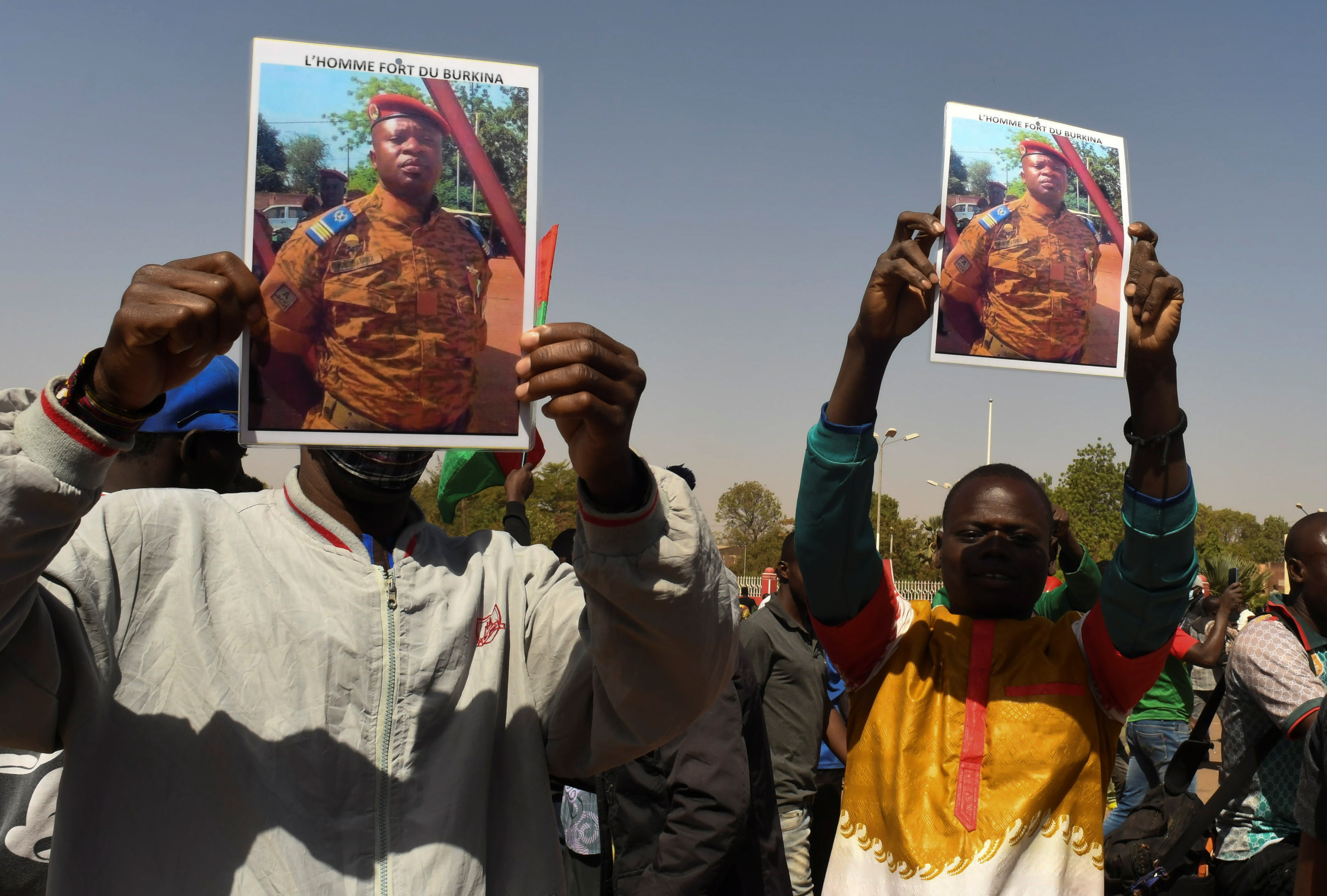
Gen. Nguema issued reassuring declarations to foreign economic partners, the most important of which are Western countries, China, and Morocco. They were relatively soft in condemning the coup, for example, EU High Representative Josep Borrell pointed out that it was a consequence of unfair elections and that the situation was not comparable to that in Niger. At the same time, however, Nguema is reviewing policies that Bongo favoured, such as plans to build a Chinese naval base. He also ordered audits of payments to the state by oil companies. Although the coup took place in yet another Francophone country, following takeovers in Mali, Guinea, Burkina Faso, and Niger, it was not anti-French in nature. Shortly after the coup, the availability of French media was restored, and Gen. Nguema assured the French ambassador of his will to tighten relations. Therefore, radical, anti-Western opinion leaders who are influential in French-speaking Africa, such as Benin-based Kemi Seba and Egounchi Behanzin, close to the Cameroon-based pro-Russian AfriqueMedia TV, announced mobilisation in the region to pursue the anti-French agenda in Gabon. Perhaps to prevent clashing with these circles, the junta appointed Laurence Ndong, who is seen as close to them, as minister of communications. She collaborated with the AFRIC group, linked to Yevgeny Prigozhin, and spoke at the 2019 Russia-Africa summit.
The coup resonated most strongly in African states with similar power structures, ruled by virtually irrevocable authoritarian leaders. The presidents of Cameroon, Paul Biya (in power since 1982), and Rwanda, Paul Kagame (formally since 2000, de facto since 1994), quickly reshuffled the leadership of their armed forces, fearing that officers might follow in Nguema’s footsteps.
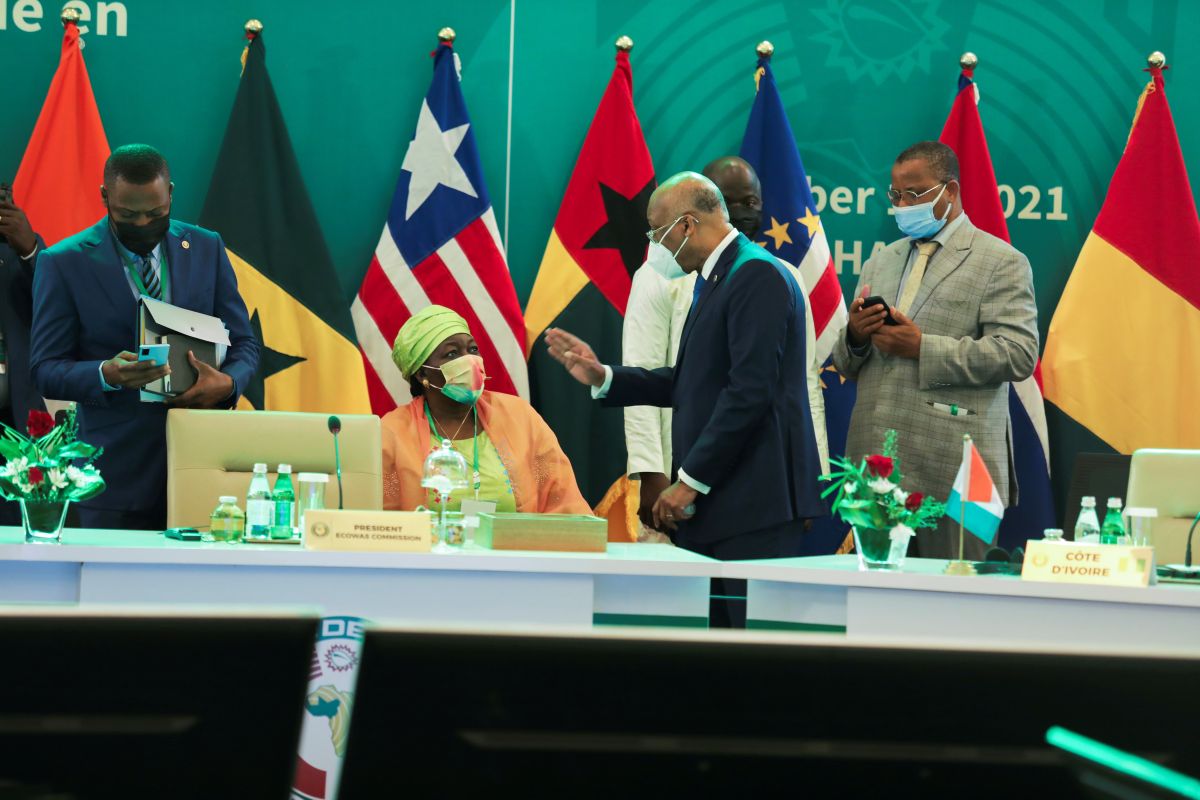
In a routine response to a coup, the African Union (AU) suspended Gabon as a member, while the Economic Community of Central African States (CEEAC-ECCAS) demanded a transition period of a maximum of one year. These organisations are not considering economic sanctions. Their goal will be to call new elections, this time transparent and monitored by observers.
Conclusions and Perspectives
Gen. Nguema’s coup looks more like a palace coup than the military interventions that actually led to the restoration of democracy (e.g., in Mali in 1991, in Mauritania in 2005). At the same time, however, the scale of arrests among Bongo’s associates indicates that the personnel changes will go far. At this stage, there is no indication that Gabon will join the anti-Western alliance of the new juntas from Mali, Burkina Faso, and Niger. For France, the current situation may be beneficial in the short term because it allows it to retain its influence and distance itself from ties to the disgraced Bongo clan, which have badly affected its image. Nor does it pose a threat to the French community in Gabon. The anti-French/anti-Western trend may gain strength if the changes prove too shallow and public demand for Nguema’s resignation grows.
The example of Gabon proves the false assumption that long-term authoritarian rule ensures stability. It will encourage militaries to attempt to remove de facto lifelong leaders from office in countries such as Cameroon, Togo, the Republic of Congo, and Equatorial Guinea. This is favoured by social moods, which, according to Afrobarometer, although the majority (67%) of Africans do not want juntas, 53% will support military interventions against rulers who abuse their power. For the AU and CEEEAC-ECCAS, the case of Gabon, in which the junta does not contest regional institutions, creates an opportunity to put more effective pressure on restoring civilian rule than on the Sahel countries, even if Nguema was to retain actual power after the elections. This would prove that Africa can cope with coups. The example of Gabon will also revive discussions before the next AU summit on recognising the extension of rule by constitutional manipulation as an equally unacceptable form of unlawful seizure of power as a coup. This will be difficult because the scale of the phenomenon is widespread—for example, all of Gabon’s neighbours.
The EU’s reaction to the coup in Gabon, although understandable for political reasons, will make it difficult to maintain the coherence of European arguments regarding other coups in Africa. While in Niger the EU, like France, strongly demands restoring the deposed president, it does not do so in Gabon. Russia and anti-Western African activists will point to this as a double standard and evidence of the West’s hypocrisy in its approach to the values it declares. The EU should therefore emphasise the rejection of both military and constitutional coups and connections between the two phenomena.

.jpg)