
Consequences of the Iberian Blackout Stretch across Europe
While the exact causes of the Iberian blackout remain unclear, the scale of the event and its impact on Spanish domestic politics have drawn into focus the social, economic, and political importance of failures in the energy system. The event has also emphasised the need to modernise power grids to strengthen energy security and enable the EU and its Member States to make an ambitious green transition.
 Europa Press/ABACA / Abaca Press / Forum
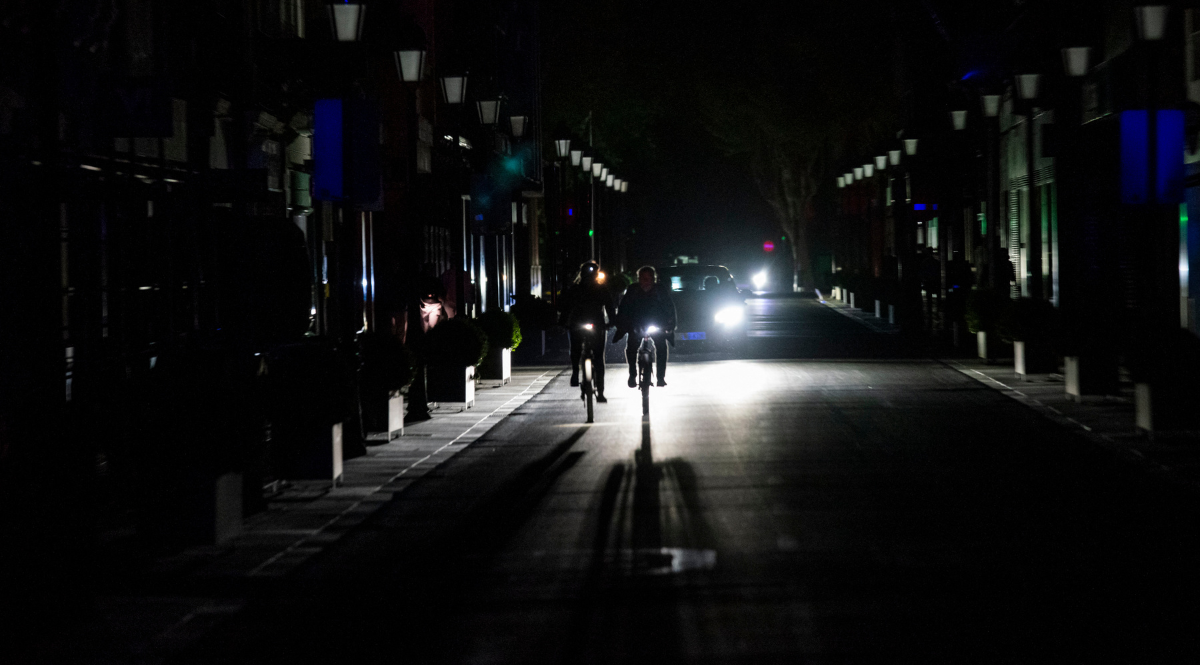
A blackout is a sudden and uncontrolled interruption to the electricity supply over a large area. The largest such failure in the EU in at least 20 years occurred on 28 April on the Iberian Peninsula, affecting Spain, Portugal, and border regions of France. Sixty million people were affected, and it took between six and 24 hours to restore power.
The blackout resulted in economic and social paralysis in both countries. This was particularly noticeable in the transport sector, where all trains and subways stopped, traffic lights were turned off (causing accidents and putting pressure on the police), and most flights were cancelled. Telecommunications were severely affected, with network traffic falling by 83%, leaving most regions without access to mobile networks and the internet. The banking system was paralysed as payment systems were halted, and most public services, industry and commerce (including shops and pharmacies) suspended activity. Economic losses are estimated at between €0.4 billion and over €2 billion.
Reasons
Over the past seven years, Spain’s electricity mix has undergone a profound transformation due to the significant growth in renewables and the phase-out of coal-fired power plants. Between 2018 and 2024, the share of solar energy (PV) in electricity production increased fivefold, reaching 20.9% (the highest in the EU), while the share of wind energy increased from 18% to 22.4%. During this period, the share of coal energy fell fifteenfold, from 13.6% to 0.9%. Around 20% of energy is currently generated by nuclear and gas power plants, although their share is also in decline (see Fig. 1). The rapid growth in PV capacity is the result of legal changes promoting its development (including an initiative by Teresa Ribera, the then deputy prime minister and current vice president of the European Commission for the Transition). Other factors include falling technology costs and Spain having the best insolation in the EU. Investments have reduced energy prices, but this has come at the expense of network expenditure, which was among the lowest in the EU in relation to spending on renewables. The growing share of weather-dependent renewables poses a new challenge to Red Eléctrica, the transmission system operator. This has necessitated a different approach to operating the power system, whereby the variable production of electricity from renewables must be continuously balanced through the flexible operation of gas and nuclear power plants or by importing energy .
The causes of the blackout have not yet been fully determined, and an independent international investigation conducted by a panel of experts from the European Network of Transmission System Operators for Electricity (ENTSO-E) is expected to be completed by the end of this year. Preliminary statements from ENTSO-E and a report from the Spanish government in June highlight the key factors involved. The failure resulted from fluctuations and a rapid increase in voltage in the grid of unknown origin (an unusual, cascading increase caused by periods of oscillations in power and voltage and frequency swings), which was exacerbated by insufficient reserves to stabilise it (so-called reactive power). This was further compounded by errors in grid stability management by Red Eléctrica and by the weak interconnection with France. Despite the operator’s emergency attempts to stabilise the system, the voltage spiralled out of control and safety mechanisms disconnected power plants and transmission lines, causing a complete system blackout. The cause of the anomaly remains unclear. Red Eléctrica blames the Núñez de Balboa PV power plant (500 MW, one of the largest in the EU), but its owner, Iberdrola, denies the accusations.
Politically, the blackout highlighted years of regulatory neglect—the authorities had not updated voltage and reactive power reserve management procedures for years, despite the increased share of renewables in the energy mix. The blackout was also the result of a policy of promoting renewables development at the expense of grid security and investments in energy storage and grids. Political responsibility was compounded by a lack of professionalism in the appointment of energy companies, fragmentation of responsibility, and weak supervision of the renewable energy sector.
Consequences
The failure exacerbated the political crisis in Spain, which was sparked by corruption scandals involving the governing Socialist Party (PSOE). The opposition accused the prime minister of being incompetent in his management of the energy sector. They claimed that he had shown excessive support for renewables at the expense of the security of the power system, and that he had been lacking in transparency with regard to the operations of energy companies, including Red Eléctrica. In July, the PSOE proposed an “anti-blackout law”, but this was rejected due to opposition from coalition parties such as the left-wing Podemos, which accused the PSOE of cementing the energy oligopoly and lacking real mechanisms to prevent failures. Another point of contention is who should pay compensation for losses incurred as a result of the blackout: the government or the energy companies. This reveals an increasingly deep rift within the ruling left-wing coalition, which may lead to snap elections—a prospect that is being pushed for by the opposition right-wing parties, the People’s Party and Vox.
Meanwhile, the blackout has reinforced the importance of energy security in the Spanish debate on energy transition at the expense of decarbonisation. Investments in network development and modernisation are set to increase—Portugal itself announced a €400 million spending plan for this purpose in July. Interest in energy storage investments has increased (currently 60 MW compared to over 1 GW in Italy, for example). The discussion also covers changes to the management of the energy system, including increasing the role of transmission system operators and amending crisis procedures. The debate on the long-term maintenance of gas and nuclear power, which would stabilise the system, has also resurfaced. The phase-out of these energy sources in Spain is set to begin in 2028 and conclude in 2035, though this would necessitate a political decision and additional funding to modernise them.
Implications for the EU
The risk of power outages is a growing systemic challenge for the European Union and its Member States due to the electrification of economies and the increasing share of renewables. The Iberian blackout has prompted renewed discussion about energy security, network development, and the role of conventional energy sources, especially nuclear power, in modern energy systems. In terms of EU policy, work on the European Network Package, submitted by the European Commission for consultation in May, has been accelerated. The package is intended to support the rapid development of renewables while ensuring security through improved network planning, stronger regional coordination, accelerated administrative procedures, increased funding and greater resilience of network component supply chains. Cross-border cooperation is set to be strengthened, including the development of interconnectors in regions that are less well connected to the European network (e.g., the Iberian Peninsula). Some EU countries have begun work on anti-blackout packages (e.g., Portugal and Poland).
The blackout also caused a massive increase in disinformation about the event itself and the energy transition. False narratives supported by networks linked to Russia and China pointed to causes such as a cyberattack, a rare atmospheric phenomenon, or the demolition of a nuclear power plant. The aim was to sow chaos in Spain after the event. Far right-wing parties and lobbying groups associated with the mining sector have also used this to criticise the green transition. They claim that it poses a threat to energy security and argue that renewables allegedly increase the risk of power outages.
Conclusions
The Iberian blackout emphasised the importance of modernising energy networks in the context of economic electrification and the rapid growth of renewables. In Spain’s case, this may result in a slowdown in the development of renewable energy capacity in order to address investment backlogs in grid infrastructure and energy storage. In the long term, development of renewables may accelerate the establishment of energy-intensive industries (e.g., data centres) and support electromobility in the region. At the same time, the political conflict surrounding the energy sector could lead to the erosion of the government majority, potentially rewarding opposition parties that have a more conservative approach to the energy transition. This could include longer support for gas in particular, and nuclear energy.
At the EU level, the importance of modernising power grids as a key element in building energy security and maintaining an ambitious pace of transformation will grow. However, due to the costs involved and the divergent interests of Member States (e.g., concerns about dependence on imports from neighbouring countries), cross-border cooperation will present an increasing challenge in terms of building new energy connections, deepening market integration and coordinating investments in generation capacity and networks. The Member States, including Poland, must strengthen energy resilience, particularly with regard to the cybersecurity and physical security of network infrastructure. Society’s resilience to hybrid threats related to power outages should also be increased, including by learning from Ukraine’s experience by modernising buildings with PV and energy storage, providing public education, and increasing the energy independence of public facilities.
%2025%20sierpnia%202025%20r-3.1.jpg)

.png)

.png)