Changes in Sweden's migration policy
Regulations in effect since June of this year have tightened the rules governing the legalisation of residence and naturalisation of migrants in Sweden, which until recently had one of the most open immigration policies in the European Union. The changes, one of the main priorities of Ulf Kristersson’s government, aim to limit migration by introducing a “good conduct” requirement, with violations of it facilitating deportations. The change in government predicted by polls following the September parliamentary elections may result in the repeal of some of the new regulations. Still, it will not reverse the direction of migration policy.
 Fredrik Sandberg / TT newsagency / Forum
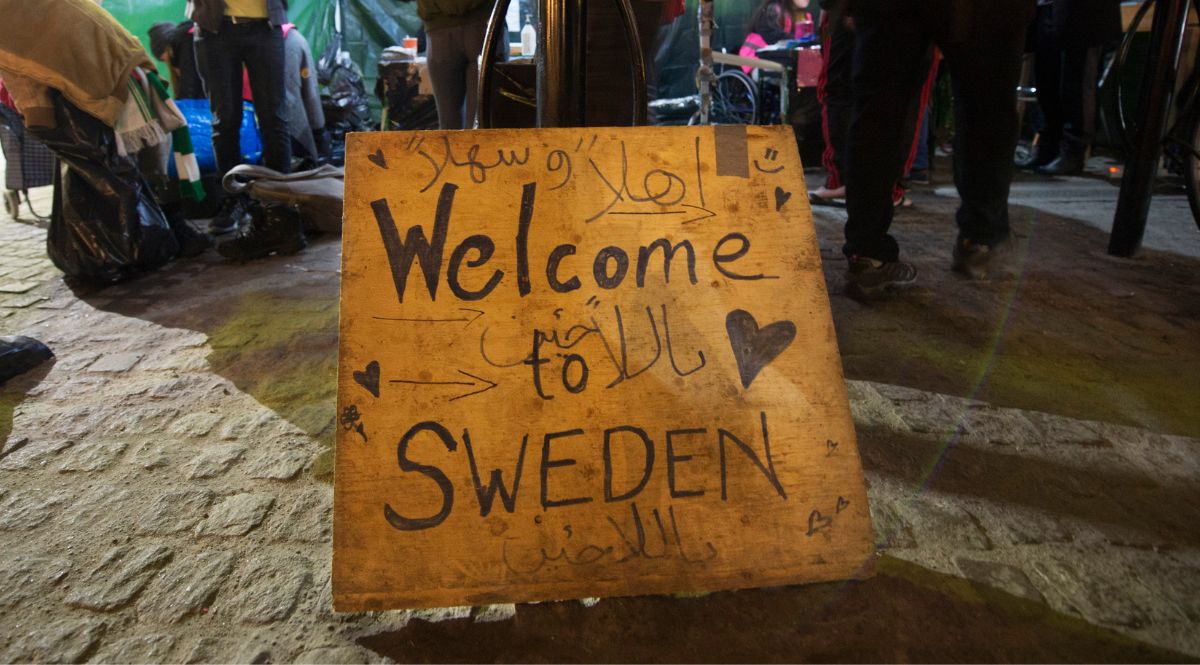
Sweden’s migration policy. Sweden’s migration policy has been one of the most liberal in Europe (in 2000, about 11.3% of its population was people born outside Sweden, and by 2025, about 20.8%). Based on humanitarian grounds for admitting migrants and family reunification, newcomers were eligible for the benefits of the Scandinavian welfare state model. It was not until the 2015 migration crisis and the problems it brought to light (including integration issues) that discussions arose regarding the need to limit migration. In 2015, although Sweden’s population constituted less than 2% of EU citizens, it received 163,000 asylum applications—12% of all applications filed in the EU. As early as late 2015, Stefan Löfven’s left-wing government, with the support of the opposition, announced tighter border controls and restrictions on family reunification.
Logistical challenges associated with receiving large numbers of migrants, as well as a rise in organised crime (including gang-related crimes, shootings, and bombings, which climbed from 90 in 2018 to 190 in 2025), linked to uncontrolled migration, also shifted how Swedish society views migration. In 2016, 55% of Swedes supported the call to admit fewer foreigners, and by 2022, that figure had risen to about 65%. This also led to a rise in popularity for parties advocating for a significant reduction in migration, such as the right-wing Sweden Democrats (who in December 2019 reached their highest support level at 25%).
Latest developments
The coalition of Moderates, Liberals, and Christian Democrats that has been in power since 2022 (along with the Sweden Democrats, who support the government but remain outside it)— has announced a paradigm shift in migration policy. The government plans to lower the standards of protection offered to asylum seekers to the minimum level required by EU law and international conventions. It has proposed tightening citizenship rules, restricting family reunification, increasing the number of returns of individuals not entitled to residence, increasing support for those willing to leave, and adopting a more selective approach to economic migration (with an emphasis on admitting highly skilled individuals). By the beginning of 2023, Sweden had substantially cut its intake of refugees under UN programs. In March 2025, it abolished the “EBO” law (from the Swedish eget boende—own place), which had allowed asylum seekers to choose their own place of residence within Sweden. Instead, individuals are placed in state-run asylum centres, which makes it easier to deport those whose asylum claims are denied. In April 2025, Sweden began requiring working migrants to return to their home countries if their asylum claims were rejected—previously, a work permit allowed these individuals to remain in the country.
The most significant changes were introduced at the beginning of 2026, when the payments offered for voluntarily leaving the country were significantly increased. Now, an adult migrant who decides to leave receives approximately €32,000, and a household can receive up to approximately €55,000. In addition, changes to the wage thresholds required to obtain a work permit took effect in June this year—before arriving in Sweden, a migrant must receive a job offer with a salary equivalent to at least 90% of the median wage. This is intended to limit the import of very low-cost labour from outside the EU. However, to continue attracting specialists to specific professions, the authorities have introduced a lower wage threshold for these, at 75% of the median.
New naturalisation regulations also took effect in June. They extended the required period of legal residence to qualify for citizenship from five to eight years. In addition, they introduced the requirement to pass tests demonstrating proficiency in Swedish at A2/B1 level and knowledge of Sweden, as well as the “good conduct” principle, which makes the granting of citizenship contingent on compliance with the law, including having no criminal record and being up to date on tax payments. The lack of a transition period means that any application which remained unprocessed by June 6 of this year is now considered under the new rules. Furthermore, on July 13, regulations came into effect allowing authorities to revoke residence permits following violations of the “good conduct” principle even for individuals who have been resident in Sweden long term.
The reaction of the opposition and the public
The coalition’s plan to change migration policy also found partial support among the opposition. Magdalena Andersson, leader of the Social Democrats—who are leading in the pre-election polls—views the general direction of the changes as beneficial for Sweden, but considers some of the restrictions to be too radical, including the lack of a transition period for ongoing naturalisation processes and the “good conduct” requirement. A large group of civil society organisations has taken a similar stance.
The issue of migration is one of the most important topics of the ongoing election campaign, not only in light of recent changes in the law but also in the context of the ongoing debate on the fight against organised crime and the involvement of minors. In early 2025, 73% of Swedes believed that immigration to Sweden was too high. However, up to 92% of the Swedish public supports the integration of migrants, 81% indicated that the state should make it easier for working people to remain in the country, and only 24% support the proposal to revoke permanent residence permits from those who already hold them. This is influenced by the distinction made in Swedish public debate between labour migration and asylum migration.
Sweden’s stance on EU migration policy
Sweden has advocated for stronger cooperation within the EU to protect external borders, and for cooperation with non-EU countries to control migration flows. It continues to view the right to asylum as an important element of the international legal system but seeks to reduce the number of people granted asylum. It supports EU measures aimed at curbing irregular migration and advocates for greater coordination of member states’ migration policies and has also expressed its willingness to participate in the solidarity mechanism, which is one of the pillars of the Migration Pact. However, rather than participating in relocation activities, it proposes to contribute through financial support or operational and technical assistance. It has further announced that it will comply with the new division of responsibilities, provided that countries such as Italy or Greece strictly comply with the Dublin Regulation, which obliges frontline states to take back individuals who, despite having been registered on their territory, have travelled deeper into the EU. Thus, the pact is primarily intended to significantly reduce migratory pressure on Northern European countries.
Conclusions and outlook
The tightening of migration policy is a continuation of the changes which began after 2015 in Sweden, and is also in line with EU trends in the approach to migration. Extending the naturalisation process or increasing the requirements (including language skills) imposed on newcomers to Sweden as part of the integration process is intended to increase control over migration and limit its scale. Sweden’s approach to the migration pact, including the solidarity mechanism, is not significantly different from the trends observed across many member states, including Poland.
Any potential change in government in Sweden following the September parliamentary elections will not fundamentally alter the current approach to migration. The Social Democrats, who are leading in the polls and have historically been supportive of migration, have significantly hardened their stance on this issue, as is common among such parties across all Nordic countries. Should they win, they may indeed scale back some of the most restrictive changes and place greater emphasis on the integration of migrants rather than their deportation, but they will retain most of the regulations that have already been introduced.