African Union Summit
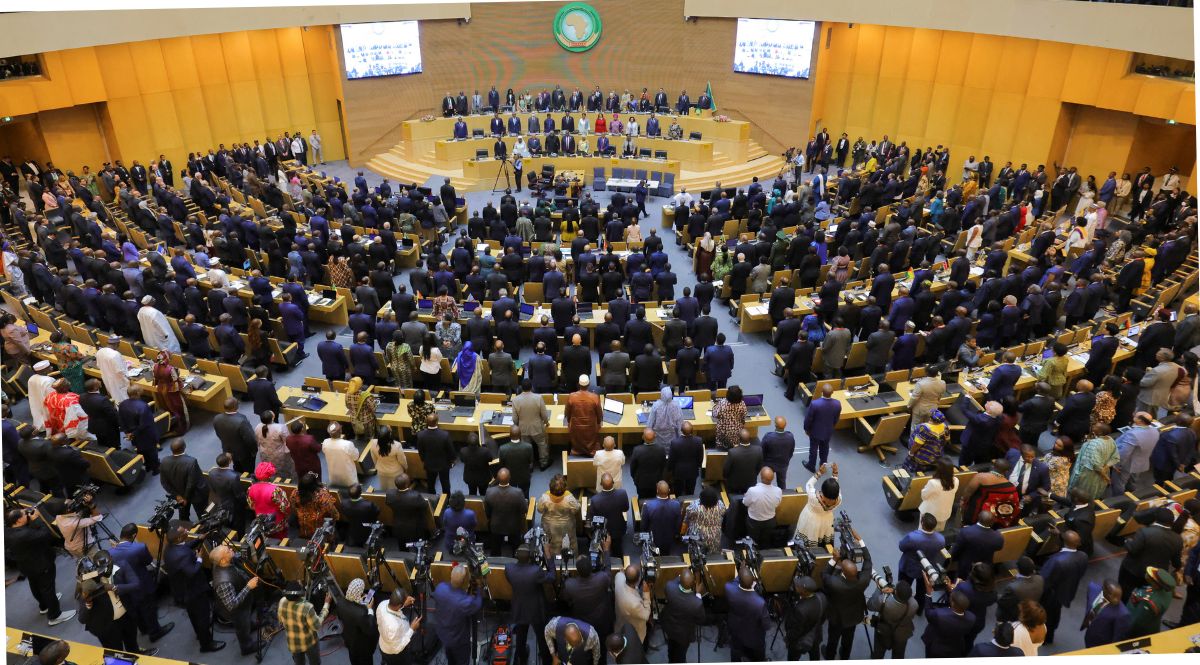
On 14–15 February, the 39th Ordinary Session of the Assembly of the African Union, involving heads of state and governments, was held in Addis Ababa. Its deliberations took place against the backdrop of growing tensions in the Horn of Africa, rivalry between the Gulf states and accelerating adverse changes in the international order.
 Tiksa Negeri / Reuters / Forum
What was the context of the summit?
The crisis of multilateralism and the return to power politics threaten to marginalise Africa and weaken the voice of the continent’s states on issues that are important to them. African states must also adapt to the collapse of the development aid system, especially American aid. The talks were overshadowed by the growing conflict between Saudi Arabia and the United Arab Emirates (UAE), in which both countries are pressuring their African partners to take positions in line with their interests, e.g. on the war in Sudan. The date clashing with the Munich Security Conference (which will be avoided from 2027 onwards) meant that African leaders did not participate in discussions on the major global challenges. There were also echoes of Marco Rubio’s speech in Munich, which praised colonialism and Western domination, to which South African President Cyril Ramaphosa, among others, responded by calling for unity and resistance to returning to exploitation of the continent.
What are the most important results of the summit?
The theme of the summit was to ensure sustainable access to water and safe sanitation systems as part of Agenda 2063 (the AU’s long-term vision for development). This highlighted the central importance of the effects of climate change, such as more frequent flooding, on the continent.
During the summit, a meeting was held at the level of the heads of state of the C5 group (Algeria, Chad, Nigeria, Rwanda, and the AU) on South Sudan, with the participation of its president, Salva Kiir, where progress was made on de-escalating tensions and organising elections in that country. However, the summit did not approve the request put forward by Egypt for neighbouring Sudan to return to the AU (it was suspended in 2021 following the military takeover). Nigeria refused to give consent, as it takes a hard line on unconstitutional governments, e.g. recently sending military support to Benin, which was threatened with a coup. No new declarations of recognition of Somaliland were made during the summit.
The African Union (AU) member states have replaced the organisation’s rotating leadership. It has been confirmed that the outgoing chairperson, Angolan President João Lourenço, will be replaced by Burundian leader Évariste Ndayishimiye. At the same time, they took the opportunity to consult on putting forward a joint candidate for the next UN Secretary-General – former Senegalese President Macky Sall is a likely contender.
An unexpected event, and contrary to the spirit of the AU, was the speech by Ethiopian Prime Minister Abiy Ahmed, who announced that the security and stability of the Horn of Africa depend on his country gaining access to the sea. This was a manifestation of the normalisation of territorial revisionism, which is particularly dangerous in the context of growing tensions and Ethiopian military movements in the direction of Tigray and Eritrea. Italian Prime Minister Georgia Meloni, who was in Addis Ababa for the earlier Italian-African summit, took the floor at the AU summit as well, calling on the inhabitants of African countries to refrain from migrating to Europe.
In the area of security, Israeli actions in the Gaza Strip were strongly condemned, while equally firm statements were absent when it came to action regarding the conflicts in Sudan, the DRC, or the possible conflict between Ethiopia and Eritrea.
What does the summit say about the state of the AU in 2026?
The organisation remains unprepared to face the biggest security challenges, although it has the opportunity to play a greater role than before in the DRC and South Sudan. The Union and its member states lack the determination and necessary strength to resist the influence of third countries, such as the UAE, which pursue their interests on the continent in a destabilising manner. At the same time, the current international context is motivating for the AU, as one of the biggest beneficiaries and defenders of multilateralism. In light of the intensifying global competition for access to resources (especially critical minerals), the challenge will be to maintain course towards the development of resource processing, which will also be an integrating factor. Declining trust in the US works to the advantage of Arab countries (which have financial resources that can fill the gaps left by USAID, for example), but also European countries, as evidenced by the presence of the Italian Prime Minister and the organisation of the Franco-African summit in Nairobi, Kenya, in May this year.


.jpg)