The Prospects of Freezing the Conflict in Donbas
What Are “Frozen Conflicts”?
Frozen conflicts in the post-Soviet area have occurred in four disputed territories belonging to the former republics of the USSR. As a result of military action, Abkhazia and South Ossetia claimed independence from Georgia, Transnistria from Moldova, and Nagorno-Karabakh from Azerbaijan. Each conflict developed in a similar manner, beginning with the outbreak of hostilities, followed by fighting and a ceasefire, but no peace treaty. Thus fighting ended in South Ossetia (June 1992), in Transnistria (July 1992), in Nagorno-Karabakh (May 1994) and in Abkhazia (May 1994). Peace negotiations between the parties involved, mediated by Russia, the OSCE, the EU, the UN and various contact groups, have not yet yielded satisfying results.
A characteristic figure of the frozen conflicts is the formation of “quasi-states,” each with its own administration, territory and population, but without full international recognition. In the documents of the Council of Europe and the European Union they are sometimes called “de facto administrations.” Their authorities have never been sovereign, because their protector and guarantor of existence has always been directly or indirectly the Russian Federation.
Russia’s annexation of Crimea in March 2014 cannot be considered a frozen conflict. According to international law, Crimea remains a territory occupied by the Russian Federation, but in this case there are no peace talks and Russia maintains that the peninsula is an integral part of its territory.
Frozen Conflicts in Russia’s Foreign Policy. Since the outbreak of the separatist conflicts in the 1990s, Russia has tried to use them to build its image as a guarantor of peace and a regional leader that can stabilise the post-Soviet area. One example is Russia’s involvement in mediation between Azerbaijan and Armenia, after the resumption of fighting between the two countries from 2–6 April 2016. President Vladimir Putin personally appealed for a ceasefire, and despite of accusations that Russia inspired the re-eruption of the Karabakh conflict, the Kremlin became the guarantor of the ceasefire, negotiated at the meeting of chiefs of staff of Azerbaijan and Armenia in Moscow.
Russia is using frozen conflicts to stop the enlargement of NATO and the European Union to the east, and to protect of its sphere of influence in post-Soviet area. These conflicts are also instruments of Russian interference in its neighbours’ internal affairs, and means of limiting their room for manoeuvre in foreign and security policy. Among the Eastern Partnership countries, only Belarus is free of territorial disputes.
As a result of the war in August 2008, Georgia lost control of part of its territory. Russia froze the conflict in separatist South Ossetia, accusing the Georgian authorities of attacking peacekeepers stationed there. In addition, as a result of military action in Georgia, Abkhazia seceded. For Russia, it was crucial to block Georgia’s accession to NATO and to send a clear warning to other post-Soviet countries.
At the same time, Russia is using frozen conflicts to slow processes it considers a threat to its interests, and does not promote, for example, new cooperation initiatives. Nevertheless, of the counties affected by frozen conflicts, only Armenia has pursued a univectoral pro-Russian policy and remains in military alliance with Russia. Other states are trying to strike a balance between the EU, the United States, Turkey, Iran and Russia. It should also be noted that these countries have existed independently for more than 20 years, and in that time have cooperated with the EU and NATO, sometimes pursuing assertive policy towards Russia or receiving foreign financial aid, as, for example, Georgia did after 2008.
The Conflict in Donbas
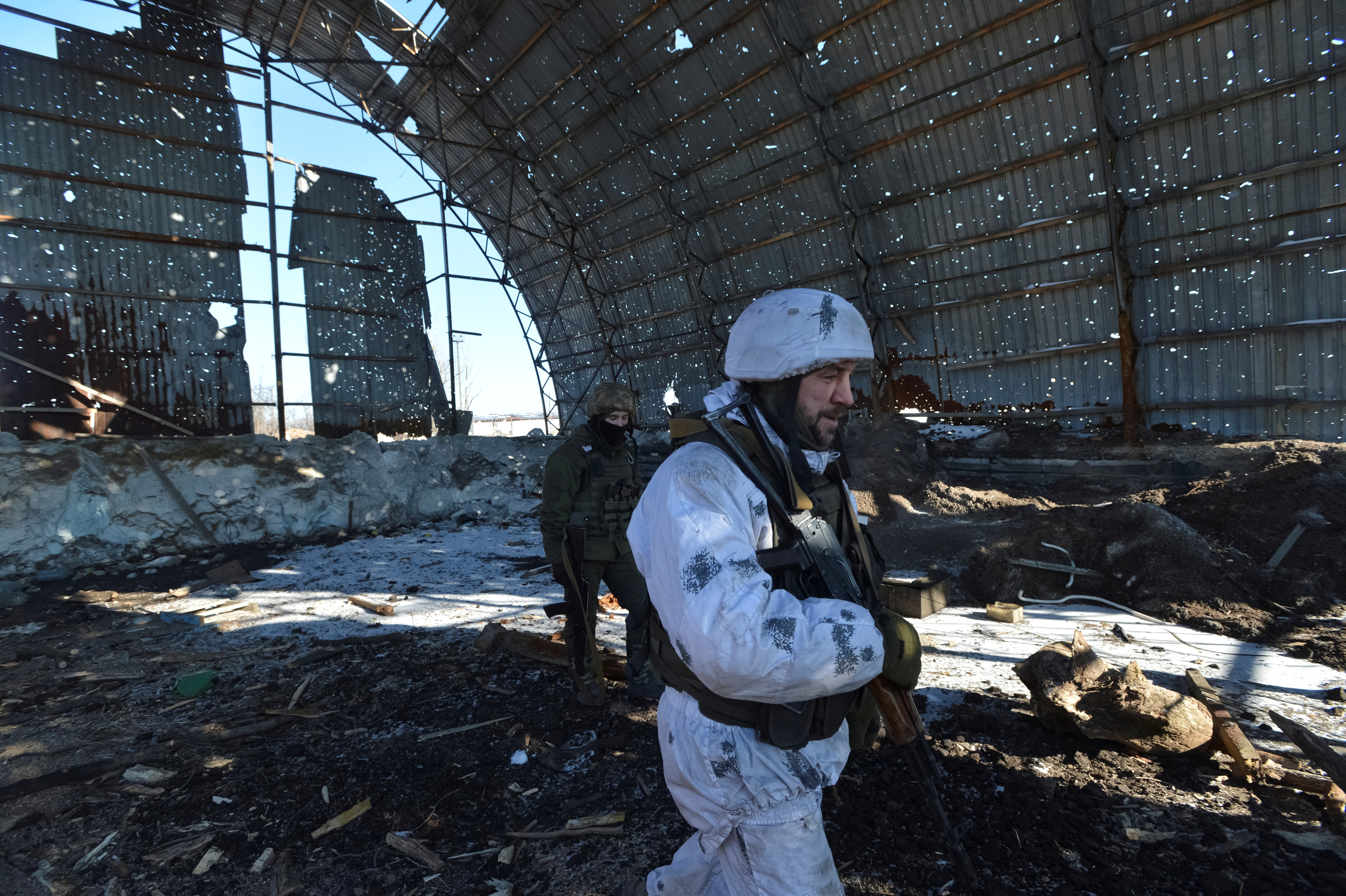
Military operations began in eastern Ukraine in March 2014. The Donetsk People’s Republic (DRL) was proclaimed on 7 April, and the Luhansk People’s Republic (LRL) on 27 April. Russia initially missed the chance to expand its “Novorossiya” project, which was based on the unification of several regions of southern and eastern Ukraine. That is why it started to promote local representatives to represent Donbas community in the peace talks. Russia recognised the DRL and LRL as parties to conflict, and started lobbying for the inclusion of their leaders among the signatories of the Minsk agreements. At the same time, while creating and sustaining separatism in Donbas, Russia rejected the proposal to incorporate those territories into the Russia Federation. Thus, the Kremlin made no territorial claims against eastern Ukraine, allowing Russia to play the role of mediator in a conflict to which it is party. Without Russian military support, DRL and LRL troops would have been defeated in the summer of 2014. At that time, Russian contributed heavy weapons and regular Russians armed forces to Donbas. It is estimated that within a year of the beginning of the conflict, separatist military manpower increased from 10,000–15,000 to 35,000–37,000, and the number of Russian soldiers among them increased from 3,000–5,000 to 8,000–10,000. Russia’s military engagement in the region was complemented by forces stationed in Crimea (about 24,000 Russian soldiers) and in the Southern Military District (about 72,000 soldiers) ready for deployment in Donbas.
Compared to other post-Soviet conflicts, it is much harder for Russia to act as a mediator and stabilising force in Donbas. However, thanks to its participation in the peace talks within the Normandy format (Ukraine, Russia, France and Germany), appointed to implement the Minsk agreements (Minsk I and II), Russia can push its own proposals to resolve the situation in Donbas. It promotes the decentralisation and federalisation of Ukraine, in which regional authorities would have a strong influence on domestic and foreign policy. Ukrainian leaders reject this, believing that the regional representatives of Donbas would hamper independent policy toward Russia. Thus Russia will promote the Minsk agreements to the minimum degree possible, while attempting to ensure that no progress is made in their implementation. In addition, Russia will support and supply the DRL and LRL administrations. This was confirmed by a decree signed by the Russian President on 18 February, recognising the validity of documents such as identity papers, certificates of education and civil status, and vehicle registrations issued by the Donbas authorities. The decree is in force “temporarily,” until a political settlement is reached on the basis of the Minsk agreement, and is motivated by “humanitarian concerns,” This means that Russia is seeking de facto legitimisation of the Donbas “administration” and may be preparing to freeze the conflict there.
Conclusions
The situation in eastern Ukraine cannot currently be described as a frozen conflict, primarily due to the ongoing military operations. However, Russia, by supporting troops in the Donbas, has achieved its goals and blocked Ukraine’s prospects for accession to the European Union and NATO. The Russians have also hampered Western support (political, financial and economic) for Ukraine, and gained a permanent instrument of influence on the country.
In the long-term perspective, the situation in Donbas may become a frozen conflict under two circumstances. First, it is unlikely that the authorities in Kyiv will agree with Russian conditions for peace in eastern Ukraine. Moscow will provide further support for the Donbas administrations, helping them to become “quasi-states.” But, unlike in other frozen conflicts, the authorities will be under the strict control of Russia. Second, freezing the conflict in Donbas could be presented by Russia as a contribution to ensuring European security, and as an argument for lifting sanctions imposed by the West due to its support for the DRL and LRL. Along with falling energy prices, the sanctions exposed the structural weakness of the Russian economy. In 2016, Russian GDP decreased to almost the 2009 level ($1.331 billion), and in 2017 the Reserve Fund, which in recent years saved the exchange rate of the rouble,
will run out.
Poland should consistently underline the need to respect Ukraine’s territorial integrity and support of its interests in the EU, paying particular attention to persuading Germany and France to maintain sanctions against Russia. At the same time, Poland should attempt to ensure the continued use of EU funds to help Ukraine carry out internal reforms, assist in the energy sector, train the Ukrainian army to NATO standards, and develop multinational military cooperation (similar to the Polish-Ukrainian-Lithuanian brigade).