PISM Spotlight: 19th Chinese Communist Party Congress
What is the significance of the 19th CCP Congress?
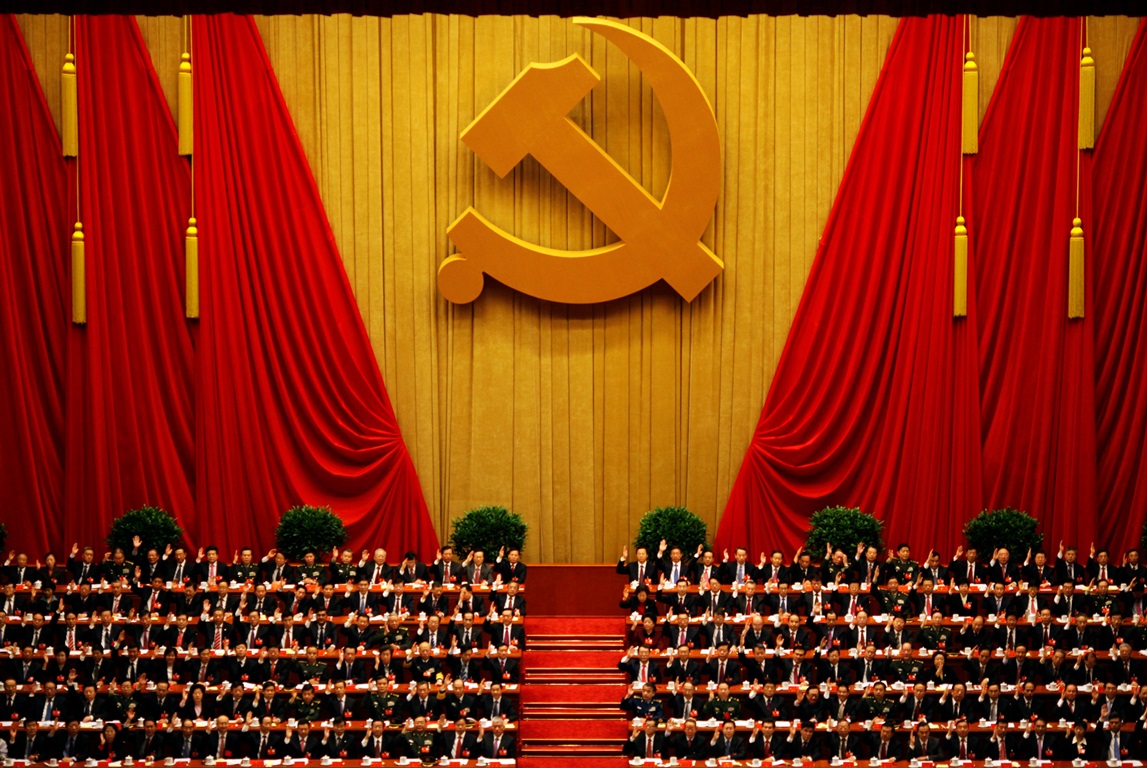
The Congress will start personnel changes in the highest-level party institutions. It is the most important CCP decision-making body and is convened by the CC every five years. In total, 2,287 delegates (from elections that finished on 29 September) will adopt the work report of the current CC, elect a new one, and introduce changes to the party constitution. The Congress will also elect members of the Central Commission for Discipline Inspection (CCDC), an institution responsible for a large-scale anti-corruption campaign—a symbol of Xi’s first term. Members of these bodies (e.g., party factions, relationship with current or former leaders) and the content of the party charter modifications will indicate to what extent Xi has expanded his power. But the most important personnel decisions will be made at the 1st CC plenum and will be conveyed just after the Congress, around 25 October.
What is the context of this Congress?
This one is different from the previous Congress in 2012, with visible factional struggles, the culmination of which was the case of Bo Xilai and his removal from the party. Nowadays, access to inside information is limited, which not only hampers speculation about possible changes but also prevents the impression of chaos or internal scrambles for power. Nevertheless, Xi is consistently rejuvenating party staff. People associated with former leaders Hu Jintao and Jiang Zemin whose appointments were not approved by Xi have lost their posts. In July, Sun Zhengcai, considered one of Xi’s potential successors—was dismissed as party head in Chongqing, and then in September, removed from the CCP. At the same time, some of Xi’s allies have been fast-tracked for promotion in their party careers. For example, two such men, Chen Miner and Cai Qi were appointed party secretary in Chongqing and Beijing, respectively.
What will happen at the 1st Plenum?
The CC will elect the highest party decision-making bodies: Political Bureau (PB), Standing Committee of the Politburo (SC), General Secretary (party chief), and the Central Military Commission (CMC). There is no doubt that Xi will remain both the party and CMC chief. Unknown are who or how many will comprise the PB and SC. There is the possibility the unwritten rule on age limits—those age 68 or older should retire—might be broken. This rule would pertain to 11 of 25 current PB members and five of seven SC members. The biggest speculation is whether this rule will apply to Wang Qishan, who is 69 years old and the current head of the CCDC and a member of both the PB and SC. He is a Xi loyalist and the face of the anti-corruption campaign. It is also unclear whether the new party chiefs in provinces and cities will become SC members without having been in the PB.
What does Xi want to achieve?
Xi wants to be like Mao Zedong and Deng Xiaoping, that is, to be the paramount leader. He has regularly abandoned the rule from Hu’s term of “collective leadership.” The first sign of this approach was a decision made in 2012 to trim the SC from nine to seven members. Confirmation of the strength of his position will be the introduction to the party charter of “Xi’s theory”, which would come after his first term, but importantly not before the end of his second term, and would pointedly use his name—a special right reserved so far only to Mao and Deng. This move might be the result of giving him the title of the party’s “core” (hexin). Finally, by breaking the age-limit rule or circumventing it (e.g., by taking state instead of party posts) and the rapid elevation of Xi’s allies to the PB and SC without the previously requisite experience in provinces, will be evidence of the centralisation of power in Xi’s hands.
What will change in China’s policy?
Analysis of the CC, PB and SC membership and the course of the Congress and Plenum (e.g., side events, CC report content, etc.) may allow an assessment of possible policy changes in Xi’s second term. If he is able to consolidate power, there is the possibility of a weakened anti-corruption campaign and a focus on economic reforms. So far, the changes to the economy have been conducted at a slow pace, probably because of the resistance of interest groups. As far as foreign policy is concerned, one may expect new ideas, such as institutions under Chinese leadership. In that sense, along with its “Belt and Road Initiative,” China will strive to promote its own development model (e.g., one based on Chinese values), including through diplomacy. China is likely to further limit Hong Kong’s autonomy and strengthen efforts to unite Taiwan with the mainland.