Launch of the European Border and Coast Guard Agency
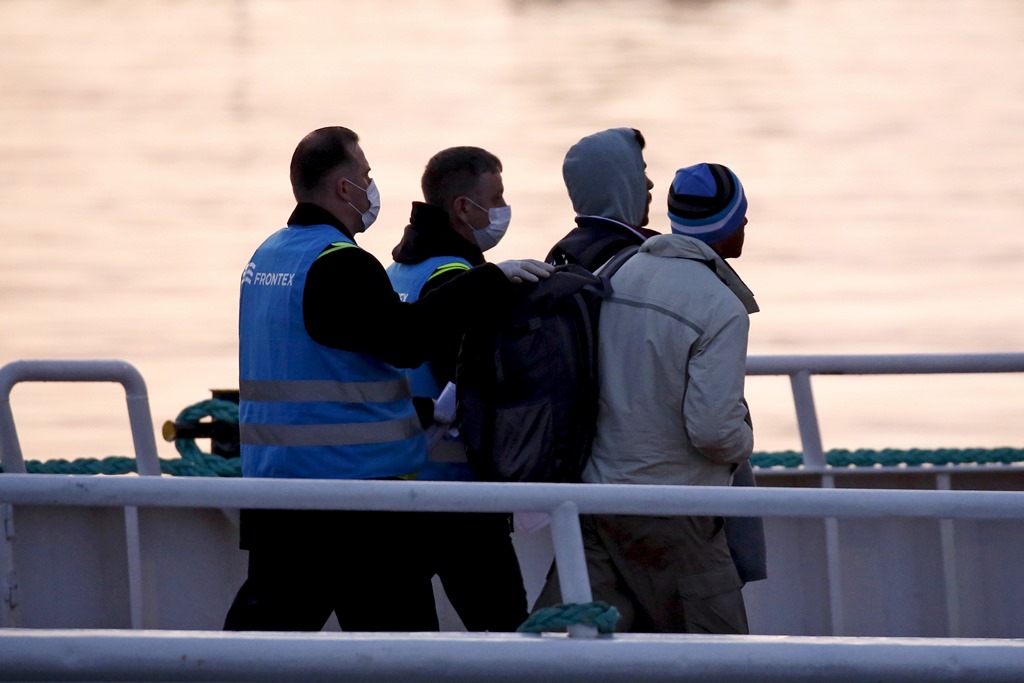
On 15 December 2015, the European Commission proposed a set of measures to better manage the EU’s external borders, including the establishment of a European Border and Coast Guard (EBCG). Less than 10 months after the proposal’s presentation, Frontex, the EU’s border authority, was relaunched as the European Border and Coast Guard Agency (EBCGA). The new structure will be fully operational at the beginning of 2017 and makes use of pooled resources. In December, a rapid reaction force and equipment pool will become operational, and then in January, so-called “return pools” will become operational and the agency will launch vulnerability assessments. The agency aims to reach its target size in 2020.
New Name, Old Tasks
The EBCG links Frontex with Member States’ border services. Despite its name, it is not a uniform, supranational European body but a combination of existing national and European structures under a common institutional banner. The change of Frontex’s official name (the “European Agency for the Management of Operational Cooperation at the External Borders of the Member States of the EU” to the “European Border and Coast Guard Agency”) has not been accompanied by a significant increase in powers. The agency primarily will continue to be a centre for expertise and practical support for the border services of the Member States. Its key tasks include monitoring migration flows, providing technical and operational assistance to Member States through joint operations and rapid intervention at the borders, organising, coordinating and conducting return operations, training national border guards, as well as participation in research and development activities relevant to the control and surveillance of the EU’s external borders.
Many of the agency’s competences presented in the reform as new are not in fact new. One example is the possibility to purchase its own equipment to protect borders. Frontex received this right in 2011. The vulnerability assessments, meanwhile, resemble the Schengen evaluation mechanism that was created in 2013 (Regulation 1053/2013).
The reform was in relation to its operational tasks and external mandate. EBCGA will be able to initiate joint intervention and return operations, not just wait to respond to a Member State request for assistance. It will also be able to delegate liaison officers to third countries and carry out joint operations on their territory with their permission. This is in response to the problems found with inter-agency cooperation with countries of the Western Balkans.
Planned Growth
The essence of the reform was to increase Frontex’s operational capacity. A lack of resources to carry out required operations was cited as the main barrier to the agency’s effectiveness when faced with the mass migration crisis in southern Europe in recent years. By 2020, the agency’s budget will double, reaching €322 million. Staff will also more than double, from the 417 currently to about a thousand people. The agency also plans to have a ready reserve of 1,500 experts who can be deployed within five days when there is a need for rapid border intervention. Importantly, border and immigration officers will not be agency staff members but made available by the Member States. Personnel will be provided to the agency by each Member State and the numbers are specified in an annex to the EBCG regulation. For example, Poland’s contribution will be 100 people. Until now, Member State contributions to specific joint operations had been planned based on annual bilateral negotiations and agreements between the agency and the states.
No Intervention without Permission
Despite the European Commission’s proposal, the EBCGA will not be able to conduct operations within or on a Member State’s border without the state’s consent When urgent action is required, the Council of the EU (using qualified majority voting) will decide on intervention. The operational plan, however, would still need to be agreed between the agency and the host state. If the state does not agree to the intervention, other countries can then reintroduce temporary controls (six months to two years) on the internal borders of the Schengen area. This possibility existed before the EBCGA. It was introduced to the Schengen Borders Code in 2013 (Regulation 1051/2013). In May 2016, it was used for the first time in Germany, Austria, Sweden, Denmark and Norway. Given the experience of the mass migration crisis in 2015, Member States will be tempted to use this mechanism more often to exert pressure on frontline countries.
Will Headquarters Remain in Poland?
Frontex has been located in Warsaw since 2005. In 2006, Poland signed a memorandum of understanding with Frontex concerning its operations in the country. In 2007, an agreement between Poland’s Interior minister and the director of Frontex confirmed the privileges granted to the agency and its employees. The agreement, however, is general and does not specify a number of issues related to the functioning of the agency in Poland. To finally resolve the issue, the EBCG regulation provides that the agency’s seat will remain in Warsaw if an agreement is signed by 7 April 2017. The agency expects the new agreement to convey that Poland will finance the headquarters, provide immunity (including jurisdictional, diplomatic and fiscal) to Frontex staff, and create a European school for the children of Frontex employees. These demands are particularly relevant in the context of the planned growth of the agency. Frontex argues that the lack of legal certainty and adequate infrastructure make it difficult for the agency to hire the best professionals. If the parties fail to reach agreement by the deadline, the agency may be relocated to another country. Many other Member States are interested in hosting the EBCGA. Among them is Romania, which does not yet have any EU agency headquarters, and the Netherlands, where Eurojust and Europol are already centred in The Hague. By acquiring Frontex, the Netherlands would create an institutional centre for EU Justice and Home Affairs. Due to the challenges of mass migration, the agency seat also could be transferred to Greece or Italy, closer to where it conducts most of its operations.
Conclusions and Recommendations
The EBCG is not significantly different than the system based on the older Frontex. As was the case after the mass migration crisis in 2011, the change to Frontex has been limited to an increase in resources without a clear strengthening of its powers.
The reform confirms the sovereignty of EU states when it comes to protecting their own borders. The EU agency still primarily acts as support for states faced with a crisis rather than as a permanent guarantor of the security of the EU’s external borders. When national border and asylum systems in frontline countries fail to work effectively, the ad hoc deployment of the agency’s border officers probably will not be able to fill the gap. The threat to close or actual closure of Schengen borders with frontline states that are having problems failed to protect the EU from the mass migration crisis of 2015. It likely will not work in the future. Moreover, the potential for abuse of this mechanism may deepen distrust among the Member States and result in functional paralysis of the Schengen area. Enhancing the EU’s resilience to crises should not be done through blackmail but through solidarity and the division of costs associated with the protection of the Union’s external borders. Given that context, in addition to the greater involvement of states in the agency’s operations, the necessary financial support for border guards in EU frontline countries should be provided.
The Polish government and the EBCGA’s authorities should treat the headquarters matter as a top priority. Relocation of the agency would complicate its activities and, if faced at the same time with another surge in migration, could harm the security of the EU. The EBCGA is one of the EU’s most important agencies and after the planned funding and personnel increases take place, it will also be one of its largest. The failure of the headquarters negotiations would limit Poland’s impact on the agency.