FDP Well-Positioned Ahead of the Bundestag Elections
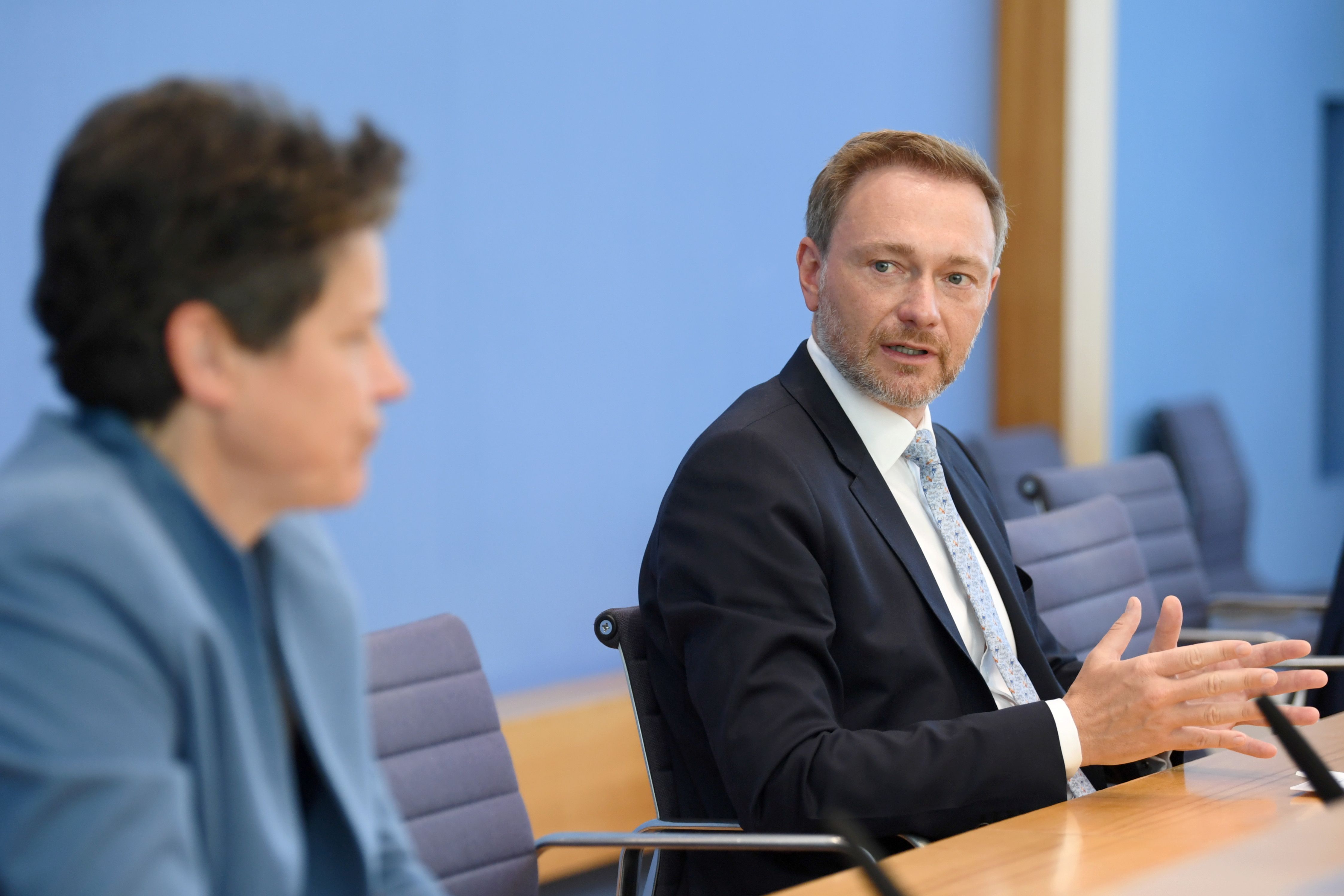
From the beginning of this year, FDP has seen a gradual increase in support in opinion polls: according to Forsa data presented in June, the liberals can count on 14% of the vote in the upcoming federal elections (6% in January this year). The positive polls are accompanied by the party’s success in this year’s regional elections in Rhineland-Palatinate, where the party formed a coalition government with the SPD and the Greens, in Baden-Württemberg, where it managed to improve on its 2016 result, and in Saxony-Anhalt, where it re-entered the local parliament. The party’s election programme, “There has never been more to do”, is expected to help translate the growing polls and regional achievements into success at the federal level. The proposals contained in it and the problems of the FDP’s main competitors—CDU/CSU and Alternative For Germany (AfD)—may help the liberals win new voters and thus increase the chances of expanding their representation in the Bundestag.
An Alternative to the Christian Democrats
One of the factors influencing the increase in support for the FDP has been the growing dissatisfaction with the work of the CDU/CSU-SPD government. Research conducted by the Infratest Dimap institute shows that in April, 79% of respondents assessed the government coalition negatively (56% in February this year), mainly due to problems in managing the pandemic: the lack of transparency in the strategy of lifting restrictions in March this year and the government’s withdrawal from the decision to tighten the lockdown during the Easter holidays indicated difficulties in coordinating the actions of the federal government with the local authorities and created communication chaos. An additional problem was the slow vaccination rate that persisted until March (4.3% of fully vaccinated people then compared to 22.8% on 9 June), which 83% of respondents negatively assessed.
The FDP’s response has been to play the role of defender of the interests of small and medium-sized enterprises, which have suffered most from the economic downturn caused by the pandemic. In the application presented in the Bundestag in January this year, the liberals stated that the financial aid offered by the state was too small and its distribution was delayed by protracted bureaucratic procedures. To improve the situation, it suggested changing the model of calculating granted funds, among other ideas. At the same time, as a liberal group, the FDP presented itself as a defender of civil rights, which were limited during the pandemic. In April this year, the party opposed an amendment to the act on the prevention of infectious diseases that introduced a curfew in Germany, and threatened to appeal it to the Federal Constitutional Court.
The rise in FDP’s ratings is also fostered by disputes within the Christian Democrats. After the tumultuous rivalry between CDU Chairman Armin Laschet and CSU leader Markus Söder, the party has still not presented its electoral programme. It results from a difficult bargain: on the one hand, the programme aims to prevent the outflow of voters to the Greens to the maximum extent possible, but, on the other hand, it must take into account the postulates of economic liberalisation proposed by party conservatives. If the FDP presents proposals that are close to the liberal wing of the Christian Democrats, that may allow the liberals to win votes in the Bundestag elections. The liberals also can count on a change in the voting preferences of some AfD supporters who have become discouraged by its radicalisation. This year’s regional elections revealed that the liberals can only count on a small migration of Green voters to their side.
A Liberal Country in a Time of Pandemic
In view of the problems of the CDU/CSU and the AfD, the FDP presents itself as a stable alternative to the voters of both parties: during the last congress, President Christian Lindner received a mandate to continue to lead the party with record 93% support. Additionally, FDP delegates approved the programme for this year’s elections to the Bundestag, which indicates as the main goal the comprehensive modernisation of the state. One area that requires special attention is education. The FDP proposes, among others, earmarking 1% of VAT revenues to the school system. The digitisation of Germany remains the second pillar of modernisation as it is key to strengthening the country’s competitiveness on global markets. The implementation of this task is to be helped by the modernisation of the 4G network in Germany, as well as the introduction of an “artificial intelligence roadmap”, according to which each ministry would identify and implement 10 specific uses of artificial intelligence by 2025.
The FDP remains committed to economic liberalisation as one of the main elements of the group’s identity: the party opposes tax increases and supports a return to the principle of budget equilibrium, abandoned during the pandemic. In the area of climate protection, the FDP wants to make maximum use of innovation and new technologies, which should allow a reduction in the costs of the energy transformation they support. Among the liberals’ proposals is also the extension of EU emissions trading to all sectors.
Foreign Policy of the FDP
German liberals are supporters of deepening European integration: the party calls for the convening of a convention to draw up a European constitution, which, if approved in national referendums, would become the basis for the creation of a decentralised federation. The party, however, rejects the pooling of debt and calls for tougher sanctions for countries violating the budgetary rules contained in the Stability and Growth Pact. The party also supports the enhancement of European strategic autonomy, which it understands as the EU’s “independent ability to act” in global politics. At the same time, the FDP emphasises that autonomy understood in this way does not conflict with NATO, will not lead to the self-isolation of the Union, but is to increase the role of the Community as a partner of the Alliance. That is why a European military, the organisation of which is supported by the FDP, is to maintain interoperability with NATO structures. The party proposes to raise the defence budget to 3% of GDP to cover expenses in three areas that guarantee Germany’s security: defence, development policy, and diplomacy (“3Ds”—defence, development, and diplomacy).
In their programme, the liberals also postulate intensifying the dialogue with the U.S. and deepening transatlantic cooperation in areas such as the economy (return to talks on the Transatlantic Trade and Investment Partnership, TTIP) or digitisation. The group proposes to suspend work on the Nord Stream 2 (NS2) gas pipeline until the Russian authorities guarantee an independent investigation into the case of Alexei Navalny and improve the observance of human rights. The FDP also wants amendments to its investment agreement with China, which it believes does not provide security for European investments. The liberals also advocate greater political support for Taiwan and Hong Kong. One of the main global goals of the FDP is the fight against climate change. The key to its implementation is the use of new technologies that will stimulate economic development and will not burden enterprises and households to a large extent.
Conclusions
Maintaining support in the double digits will be key to the FDP’s position after the federal elections. An obstacle to achieving this goal would be a decline in voter interest in the fight against COVID-19 and an acceleration of the vaccination rate, which may again raise the Christian Democrats’ ratings. Another problem for the FDP is the lack of women politicians in prominent positions in the party, which weakens the party’s popularity among the electorate, for which the equal participation of women in politics and the economy is an important factor influencing electoral preferences.
However, if the FDP manages to win more than 10% of the vote, the liberals will gain a comfortable position regardless of the outcome of the coalition negotiations. A scenario in which the party remains in the opposition increases its chances of winning an electorate opposed to a CDU/CSU-Greens coalition and the government’s probable left-wing policy. However, if the FDP were to participate in governing, the grouping would have a chance to build a coalition with both the Christian Democrats and in a constellation with the Greens and even the SPD. The likelihood of success in any coalition talks between the Greens, CDU/CSU, and FDP would be increased by the fact that the liberals may be ready to make bigger compromises so as not to repeat the situation of 2017 when they broke off the negotiations.
From Poland’s perspective, the FDP’s entry into the government would mean support for a tightening of policy on Russia, closer cooperation with the Eastern Partnership countries, and a renewal of transatlantic relations. The FDP would create a counterweight to the Greens on defence policy issues. A controversial point in relations with the Polish authorities would be the party’s vision of EU federalisation.