EU Relations with Australia: Time for a Strategic Partnership
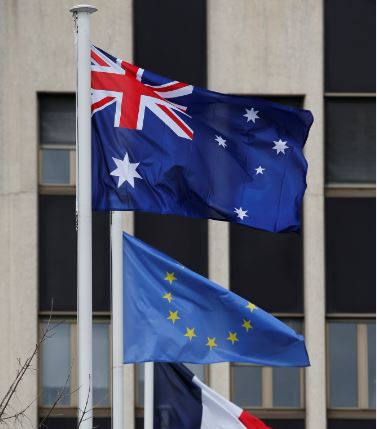
Australia and Europe share strong historical, cultural, economic, political, and personal relationships. EU diplomatic relations with Australia date back to 1962, but only in the last decade have they taken on more political and security issues. Australia is the 13th largest economy in the world and an important EU partner in Asia and the Pacific. Today, the Union is Australia’s second-largest trading partner after China and the second-largest investor after the United States. In turn, Australia is the EU’s 19th largest trading partner (1.5% of the EU total) and ninth in foreign direct investment (FDI). The EU-Australia Framework Agreement, negotiated in 2015 but still awaiting signatures, envisages a wide range of cooperation, from security through trade to science.
However, because of Brexit, EU-Australia economic ties may lose importance. The United Kingdom accounts for 23% of merchandise trade and 40% of Australia’s trade in services with the EU and receives 65% of Australia’s direct investment. Brexit can further reduce mutual knowledge and understanding between the country and the bloc. This risk will increase with the change of demographics of Australia. The 2016 census shows that for the first time, more immigrants to Australia were born in Asia (40%) than in Europe (36%). What’s more, the EU and Australia share the concern about some of U.S. President Donald Trump’s decisions in global politics. Both sides were disappointed by the announcement of the withdrawal of the U.S. from the Paris agreement on climate change and by increased protectionism in trade, as well as the preference for bilateralism over multilateralism in international relations.
Political and Security Cooperation
Australia and the EU are working more closely in the fight against terrorism, conflict resolution, development cooperation, trade, climate, and migration. Since 2014, they have been conducting a formal dialogue on combating terrorism. Cooperation in this area has become even more important in the last two years, as attacks from Islamic extremists intensified in the EU and Australia. Along with the U.S. and Canada, Australia is one of only three partners with which the Union has signed a bilateral air Passenger Name Record (PNR) agreement, used to combat terrorism and organised crime. Australian soldiers serve with European troops in the international coalition in Afghanistan and fight ISIS in Iraq and Syria. Defence cooperation and arms purchases in Europe (including French submarines) are becoming increasingly important. In 2015, an agreement was signed for cooperation in European Union Crisis Management Operations, though by 2014 Australia already supported the EU’s EUCAP Nestor mission in the Horn of Africa. Moreover, both sides are among the largest donors of development assistance and, since signing a delegated cooperation agreement in 2014, have joint development assistance projects in the Pacific and in Africa.
Australia and the EU also share concerns over Russia’s increasingly aggressive foreign policy and China’s assertiveness. Australia joined the sanctions imposed on Russia after its annexation of Crimea in March 2014 and accused Russia of bearing some responsibility for the shooting down of Malaysian Air flight MH17 over Donbas, Ukraine, in which 38 Australian nationals and residents were killed. Like the EU, it also calls on China to respect freedom of navigation in the South China Sea and to resolve disputes by peaceful means. Despite the strong trade relationships with China, which accounts for 30% of Australian exports, Australia is showing reservations towards the Chinese Belt and Road Initiative (BRI). At the Beijing BRI summit, Australia raised similar concerns about the project as the EU. It emphasised the need for transparency and the application of the highest standards of project implementation.
The refugee crisis in Europe has also led to a convergence of positions on migration. European states that had criticised some of Australia’s activities with refugees (e.g., towing incoming boats with migrants away from its shores) have in recent months modified their approach. Some of them began to recognise the Australian model of active deterrence as a way to solve the problem in Europe. Although the geographical and legal conditions are different (European law imposes greater responsibility on Member States), both parties may benefit from an exchange of experience, particularly in migration management and integration.
Both sides share not only similar interests but also similar values such as respect of democracy, the rule of law, and the protection of human rights. The EU and Australia favour free trade and strong multilateral institutions, including strengthening the role of the UN and WTO. They have confirmed their commitment to climate protection. This means that, at a time of weaker U.S. leadership in the world, Australia can be a good partner for the EU on the promotion of globalisation, international law, and the liberal international order.
Economic Cooperation
Trade in goods between the EU and Australia amounted to €45.5 billion in 2016, compared with €34.8 billion in 2006 (an increase of 30%), and the Union has a large trade surplus of €19.3 billion. Trade in services of €24 billion also shows a positive balance for the EU. By sector, the trade is largely complementary. The EU exports mainly machinery and equipment and imports natural resources and minerals (mainly gold and coal), and agricultural products. Apart from the UK, Australia’s most important trade partners are Germany, Italy, and France. Poland’s trade total with Australia is €827 million, making it 12th in the EU and 36th in the world. EU-originated investments totalled €105.7 billion in Australia by 2015, while Australian sources to the EU (their main investment direction) totalled €22.4 billion.
More opportunities for the EU to strengthen cooperation with Australia can come from the FTA. In April, preliminary preparations were completed for the negotiations that should begin later this year. A comprehensive FTA will not only pare down tariff and non-tariff barriers for trade in goods and services but also will facilitate greater investment and mobility and regulatory cooperation. It will increase the competitiveness of EU goods in relation to third countries such as the U.S., China, and Japan, which already have an FTA with Australia. The most difficult issues will be in the agricultural sector (e.g., Australian beef, alcohol from the EU) and services. Given the change in U.S. trade policy, the EU is not weighed down by other important negotiations, which creates favourable conditions for rapid progress on the Australia agreement. Signing an FTA with the country would be particularly valuable in the face of Brexit. It would give non-UK EU members a chance to take over some of Britain’s trade and investment and would send a strong signal globally in defence of free trade.
Conclusions
The EU and Australia have common interests and shared values. Yet, Australia is not one of the Union’s 10 strategic partners, unlike the U.S., India, and South Africa. It would be advisable to sign the framework agreement at the soonest and elevate the relationship to the strategic level. This would provide for enhanced cooperation while an annual EU-Australia summit would allow for regular consultation and coordination on climate, trade, relations with China and Russia, and other issues. The summit would give more visibility to the partnership among their respective publics. To minimise the impact of Brexit on remaining Member States and to make better use of the potential for cooperation, swift adoption of an FTA with Australia should be sought. Future relationships must also place greater emphasis on scientific and cultural cooperation, as well as people-to-people exchanges. Australia can help the EU increase its influence and play a stabilising role in the Asia-Pacific region, for example, by supporting the Union’s joining the East Asia Summit. Poland, too, should work towards tighter relations. This may result in increased interest in Australia, economic benefits to Poland, such as higher Polish food exports, and political cooperation on matters like Russia.