Car-sharing: A Step towards Electromobility
Car-sharing: A Step towards Electromobility
Car-sharing, more and more popular in Poland, is becoming an innovative element of public transport in cities. However, to make the expansion of car-sharing (rentals by the minute) an important step towards the development of electromobility in Poland and an effective way to improve air quality, cities should focus on electric car-sharing. Local government support for this initiative would be a promotional opportunity for Polish cities in international forums as leaders in low-emission transport and focused on innovative solutions.
Car-sharing, dynamically developing in Europe for many years, is part of the sharing economy. City dwellers can use cars without owning them. This is another stage of development of shared transport following from the public bicycle-sharing systems and an answer to the modern trend of shifting from ownership to usership. This innovative mode of transport, which fits with the idea of smart cities, is especially popular among young and mobile people. City officials hope that the growth of car-sharing services will contribute in the long-term to reducing the number of cars in cities and in other ways. This, in turn, would not only improve transport links but also reduce greenhouse gas emissions in line with the Paris Agreement on climate change.
Car-sharing
in Polish Cities
The first companies offering short-term car rental appeared in Poland in 2016. Although most of the vehicles available in the various car-sharing schemes are conventional petrol autos, they are newer and more ecological than most private vehicles. There also are some hybrid and electric cars. The company with the largest offer is Traficar, which has provided rental cars in Kraków since 2016, and from 2017 in Warsaw, Wrocław, Poznań, Gdańsk, Gdynia, and Sopot. From March 2018, Traficar’s cars can be used in 14 cities in the Silesian agglomeration (Katowice area). Most of the other companies focus on individual locations but may expand their services: 4mobility cars have been available in Warsaw from 2016, this year also in Poznań; Panek Car Sharing, operating in Warsaw, plans to launch its services in the Tri-Cities (Gdańsk, Sopot, Gdynia).
In addition to the commercial services already in operation, the cities of Wrocław and Warsaw have decided to launch a municipal car-sharing system. Wrocław’s has turned out to be particularly innovative. There, Poland’s first municipal electric car rental company, Vozilla, opened in November 2017, with 190 passenger cars and 10 vans, as part of a public-private partnership. The cars are allowed to use selected bus lanes. In addition to free parking in designated areas (similar to what other commercial car-sharing service providers offer), the city has dedicated 200 parking spaces just for Vozilla cars. In the second half of March, after less than five months of operation, the service recorded 100,000 rentals.
In announcing a tender for car-sharing services, Warsaw decided it would not require electric cars. The only company to make an offer by the end of March 2018 was Panek Car-Sharing, the largest operator in the city in terms of the number of cars (300), offering hybrids. Kraków city authorities are also wondering whether to introduce an electric car rental system. Some cities treat electric car-sharing as a destination in the development of low-emission transport. In Gdynia, the local government supports mobile sharing based on traditional cars and hybrids while transitioning to an electric fleet in 2020.
Not all cities or potential operators opt for car-sharing services. Sometimes access to rental cars ends in the test stage. This was Lublin’s experience in 2016 and Warsaw’s just this year with electric cars. In the capital, the firm Innogy tested electric car-sharing. Users had only 10 cars at their disposal, which most likely made it difficult to properly assess the cost-effectiveness of starting the service in the city.
Low-emission Transport and Electromobility
Renting cars by the minute is treated as an element of public transport. The service complements available means of transport but also facilitates a driver’s decision to leave a private car in the garage or outside the city centre. In the long run, it may encourage drivers to give up buying a second car for their family. Modern low-emission cars and an innovative customer service system are additional incentives to use the rental. The chance of reducing the number of cars, especially in city centres, and the promotion of low-emission cars is also important for city managers.
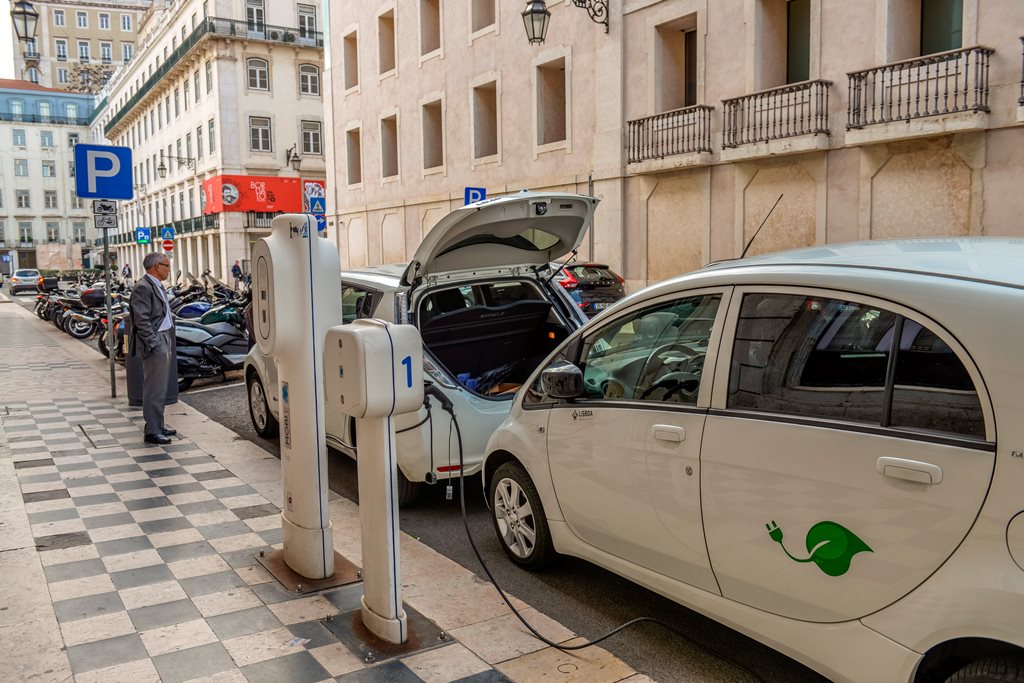
The introduction of municipal car-sharing with electric cars is an effective way to popularise electromobility. The possibility of driving this type of car is a significant incentive to take advantage of the rental. Managing the service in cooperation with the local government increases the credibility of using such cars and services. In Wrocław’s case, the popularisation of municipal electric car-sharing appears to have translated into an increase in retail sales of electric car models.
Local governments have become a very important partner in the process of developing electromobility. Through the availability of services based on low-emission cars, especially electrics, this process can be accelerated. In January 2018, the government adopted the Act on Electromobility and Alternative Fuels. Although this is the first such law in Poland and still requires amendment, it sets a clear direction for the development of low-emission transport and the role of local governments in this process. In addition to the special privileges for electric cars (free car parks and the possibility of using bus lanes), the law imposes an obligation on cities to expand the infrastructure for charging electric cars, which is an incentive for shared mobility service providers.
A significant increase in the number of car-sharing users and the portion of electric cars in the sharing economy by 2040 is forecasted by the authors of the annual report BP Energy Outlook: 2018 Edition. They point to the higher profitability of shared cars, associated with high usage. It has been calculated that one auto in the car-sharing system in Poland can replace up to 10 private vehicles.
Conclusions
Car-sharing is developing dynamically in Poland. It fills a gap in transport and responds to changes in lifestyle. It may be an alternative to own cars, taxis, and traditional public transport. However, for it to become an element in the fight against smog and the promotion of low-emission transport and electromobility, it should be based on electric autos.
The way to electromobility is, however, a process whose stages are the promotion of low-emission transport, electric car-sharing, and the development of the necessary infrastructure, innovative technical solutions (rapid charge), efficient management of the rental system, cooperation with local government, and social changes (from ownership to sharing). Not all companies nor all local governments immediately jumped on electric car-sharing. Cities like Warsaw and Gdynia treat electric car-sharing as a destination. In the case of Lublin, it is viewed as a possible element in the development of low-emission transport.
Polish cities, through their openness to innovative solutions, are part of the implementation of the Paris agreements. Successful car-sharing projects focused on electromobility should be used to promote Poland at the next climate summit. Accompanying events planned for the December COP24 in Katowice will be a good opportunity to present Polish achievements in this field, from its world-famous manufacturers of low- and zero-emission buses and trams, to urban activities for low-emission transport and support for car-sharing, especially the companies and local governments promoting ecological transport.
Electromobility and the pursuit of shared transport are also ideas that fit with the concept of smart cities and sustainable development. Sustainable development is the theme of Poland’s presentation at EXPO 2020 in Dubai. There, Polish regional authorities, together with cities and local companies, will be able to promote their low-emission transport and electromobility initiatives.