CDU/CSU Caucus Chairman Election: A Warning Signal to Merkel
Why did Merkel’s candidate lose the election?
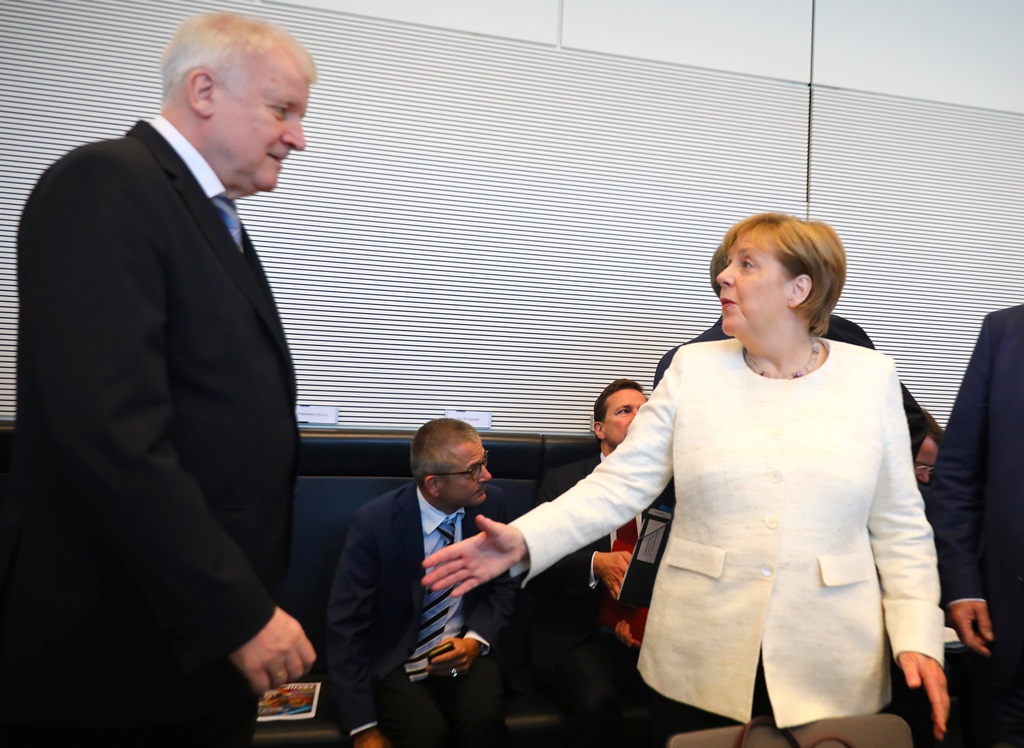
Brinkhaus’s unexpected victory, despite the support given to Kauder by Merkel and CSU Chairman Horst Seehofer, expresses the growing dissatisfaction of party members. In last year’s federal election, CDU/CSU achieved the lowest result since 1949 and is still grappling with falling support. The members give a poor assessment of the government’s efforts at economic reforms, viewing them as too passive. Also, there are conflicts within the coalition, namely a CSU-CDU squabble over asylum policy and with the Social Democrats (SPD) on the dismissal of the former counterintelligence chief. An additional factor aggravating the members is the growing support among the electorate for right-wing party Alternative for Germany (AfD) and Merkel’s lack of a convincing counter.
How important is the position of the head of the faction?
The caucus chairman acts as an intermediary between the party’s management and its representatives in parliament. The most important task of the role is to maintain discipline among deputies during voting so the result is consistent with the goals set out by the party’s leadership. Building a good relationship with the new chairman of the faction will be very important for Chancellor Merkel. Although Brinkhaus announced a “new style of working in the faction”, he also declared his full support for Merkel as head of her respective party and government. A conflict with the Chancellor would not be beneficial for Brinkhaus, who won the election by just 13 votes, which means for his support to grow, he must win over party members who backed the Chancellor’s candidate.
What does Brinkhaus’s election mean for Merkel’s position in the CDU?
The loss by Kauder, a candidate who is one of Merkel’s closest colleagues, weakens her authority as the leader of the party. However, Kauder’s defeat is not significant enough to provoke Merkel to suddenly resign as the head of CDU, rather it is a prelude to the December election for the party’s chairman. If Merkel fares poorly, it may speed up her resignation and open the discussion about succession. Among the future candidates for CDU leader are the Secretary General of the CDU Annegret Kramp-Karrenbauer, Minister of Economy Peter Altmeier, and Armin Laschet, prime minister of North Rhine-Westphalia, Germany’s most populous and strongest state in terms of GDP.
What will happen with the CDU/CSU-SPD coalition?
Brinkhaus’s election will not break the grand coalition. However, a crisis of leadership in the CDU stemming from Merkel’s weakened position and potential lack of change at the top of the party would have negative consequences for the further cooperation of the Christian Democrats and Social Democrats. It would make it difficult to make compromises within the coalition and adversely affect the functioning of the government. The weakening alliance of the Christian Democrats and Social Democrats would make them unable to implement their programme, not only in Germany but also in foreign and European policy. In that scenario, the likelihood of SPD leaving the government increases. That would mean breaking the coalition with CDU/CSU and early elections. This would be the most advantageous scenario for the opposition parties, in particular for AfD, which can count on more voter support.