Australia's Foreign Policy amid the U.S.-China Rivalry
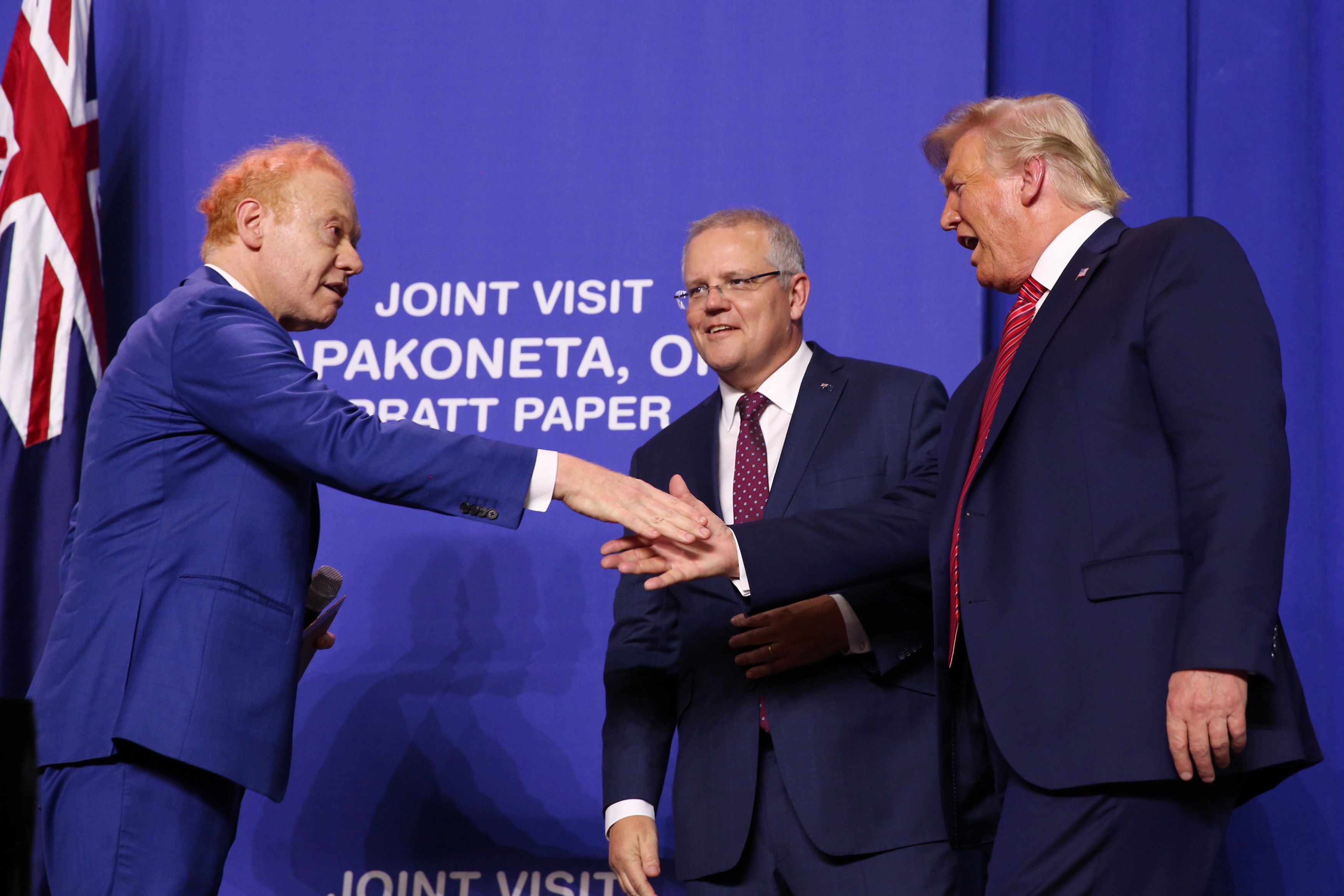
In May, the Coalition of the Liberal Party of Australia (LPA) and the National Party of Australia (NPA) won 77 out of 150 seats in parliament, retaining the top spot among all parties for the third consecutive time since 2013 and contrary to most public opinion polls and forecasts. The LPA’s victory meant that Morrison, who took over the leadership of the LPA in August 2018, renewed his mandate as prime minister. Although foreign policy enjoys broad bipartisan consensus, there were differences in the campaign. In contrast to the victorious LPA, one of the losing parties, the main opposition Australian Labour Party (ALP), proposed, among others, improving relations with China and increasing the commitment to stopping climate change.
Foreign Policy
Australia’s external outlook is explained fully in its 2017 Foreign Policy White Paper. The first of five priorities it lays out is to “promote an open, inclusive and prosperous Indo-Pacific region”—an area encompassing both the Indian and Pacific oceans. Australia’s main partners are China, Japan, South Korea, Indonesia, India, and Pacific island countries. Central to the region’s security is maintaining U.S. engagement. An important role is also played by cooperation with European countries with which Australia has had strong historical ties (at least because of European migration) and economic relations.
The Australian authorities emphasize their attachment to freedom, democracy, the rules-based international order, and multilateralism. At the same time, they point to the urgent need to reform the UN, WTO, and the rules of world trade so that they better reflect the changing international situation, including the rise of China. Prime Minister Morrison attaches great importance to the notion of national sovereignty. Fears of any restriction on it were one of the official reasons for Australia not signing the Global Compact on Migration of December 2018. More reservations about international organisations were raised in his speech of 3 October in Sydney when the prime minister warned against “negative globalism” and an “unaccountable internationalist bureaucracy” that seeks to coercively “impose a mandate” on sovereign governments.
Strategic Dilemma
The growing U.S.-China tensions are a key challenge for Australia, which maintains strong ties with both powers. The U.S. is its most important strategic ally and guarantor of security, linked through the ANZUS Treaty of 1951. In turn, China is Australia’s largest trading partner and the main outlet for its products, accounting for as much as 32% of its exports (compared to 3.6% to the U.S.). There is also a growing Chinese diaspora of around 1.2 million (5% of the 25 million population of Australia). In the event of further escalation of the U.S.-Chinese rivalry, Australia is wary of a situation in which it will have to explicitly take sides. Morrison, in his speech to the UN General Assembly on 25 September, said that Australia “will continue to resist this path … [towards] a polarised world where countries feel pushed to make binary choices.” He stated that Australia will seek to “maintain our great alliances and comprehensive partnerships.”
Despite these assurances, concern about China has prompted the coalition government to strengthen its defence cooperation with the U.S. Morrison’s state visit to the U.S. on 19–27 September—only the second visit with this rank during the Trump administration—confirmed the leaders’ good personal relationships and the special nature of this alliance of states. Australia has participated in most U.S. military interventions, including in Afghanistan and in Iraq, and in the fight against Islamic State. In August, Australia was the third country to join the U.S.-initiated coalition for “freedom of navigation” in the Strait of Hormuz. There are constant rotations of more than 500 Australian defence personnel in the U.S. and 2,500 U.S. Marines at the port of Darwin. The Americans plan to allocate more than $200 million for the expansion of military installations in Australia. The countries have agreed to jointly build a military base on the island of Manus in Papua New Guinea. Australia is also one of the “5 Eyes” group with which the U.S. maintains the highest level of intelligence cooperation. The Australian government is increasing defence spending to $27.5 billion this year, which will put it at 2% of GDP in 2020, up from 1.93% in 2019. A significant part of this amount—about $3 billion per year—is spent on the purchase of U.S. military equipment, including recently 72 F-35s. Australia is also strengthening its cooperation with NATO.
Rapprochement with the U.S. has led to deteriorating relations with China. In recent years, controversy has erupted over some Chinese investments in Australia, especially purchases of agricultural land and critical infrastructure, and there have been incidents of cyberattacks on the offices of major political parties and allegations of espionage involving Chinese students and Confucius Institutes. In August 2018, the Australian government was the first in the world to adopt new regulations regarding its planned 5G network that excludes Chinese firms Huawei and ZTE from involvement in providing the technology. Morrison also has shared allegations of unfair trade practices (e.g., intellectual property theft) by China and has characterised it as a “newly developed” rather than a “developing” country, which means it should assume more obligations under the WTO. China cites increasing Australia-U.S. military exercises and the renewal in 2017 of the Quadrilateral Security Dialogue (the Quad, which also includes Japan and India) as limiting Chinese influence in the Indo-Pacific.
Engagement with the EU
The Sino-U.S. tensions have helped to intensify Australia’s cooperation with the EU. In 2017, the parties signed a legally-binding framework agreement, and on 18 June 2018, officially started negotiations on the FTA. Four rounds of talks have taken place so far, and according to declarations in September this year, the agreement should be ready by the end of 2020. Australia is the EU’s 19th-largest trade partner (€47.5 billion) and accounts for only 1.2% of all exports, but there is a trade surplus for the Union of €24 billion. At the same time, the EU is Australia’s third-largest trading partner, accounting for 11.4% of exports, but the only one with which it has no FTA. Signing one would facilitate economic cooperation and signal their commitment to free trade. Such a deal is all the more important because the UK—which accounts for 17% of EU-Australia trade—is promising to conclude an FTA quickly after leaving the Union.
The EU and Australia share a view of major international challenges—they both support WTO reform, maintaining the nuclear agreement with Iran, denuclearisation of North Korea, and the promotion of high standards in connectivity projects. Australia also has maintained the sanctions on Russia imposed after the latter’s annexation of Crimea and continues to call for the punishment of those responsible for shooting down Flight MH17 over Ukraine in July 2014—blamed on Russia-backed separatists—in which 38 Australian citizens of 298 on board were killed.
Prime Minister Morrison has reaffirmed his country’s commitment to a 28% reduction of greenhouse gas emissions by 2030 (compared to 2005), although he himself is sceptical about adopting more ambitious goals. It is in the interests of both the EU and Australia to maintain the stability of the rules-based international system and to avoid divisions into hostile blocks based on the U.S.-China rivalry.
Conclusions for Poland
Australia’s increasing engagement with the U.S. and the EU creates good conditions for intensifying Polish-Australian relations. Both countries share close people-to-people links (the Polish diaspora there is around 170,000), growing economic cooperation ($1.1 billion in 2018 with a positive trade balance on the Polish side), and a similar approach to international challenges, for example, on Russia, migration, climate change, 5G, and the protection of international law. Poland and Australia are also beneficiaries of globalisation and one of the few countries that have recorded uninterrupted economic growth since 1992. The convergence of views and favourable geopolitical context offer an historic opportunity to strengthen bilateral cooperation. Poland’s president visited Australia in 2018, so it is worth making efforts to continue the high-level dialogue by receiving the Australian prime minister soon. Moreover, the signing of an FTA between the EU and Australia will help increase trade.