
Poland as a gateway to better EU–Iran relations?
15.12.2013, 00:00
15.12.2013, 00:00
15.12.2013, 00:00
The last presidential elections in Iran brought a wind of change that
may result in new cooperation between Iran and Poland. Polish–Iranian
relations and the situation in their respective regions were the main
topics of the inaugural Iranian–Polish Roundtable, which took place in
Teheran on 15 December 2013.
The last presidential elections in Iran brought a wind of change that may result in new cooperation between Iran and Poland. Polish–Iranian relations and the situation in their respective regions were the main topics of the inaugural Iranian–Polish Roundtable, which took place in Teheran on 15 December 2013.
Polish relations with Iran date back to the Middle Ages. At crucial times in history, Iran proved to be an ally: it was the only country, apart from Turkey, not to recognize the dramatic partition of Poland in the late 18th century. In the WW II, Anders’ Army found much-needed refuge in Iran. However, in the last two decades, Iran has only scarcely been present in Polish foreign policy. This void could now be filled as long as Iran is also looking to improve its relations with Europe. Even though Iran is indeed a major power in its region and Poland is an aspiring middle power in the European Union, the roundtable participants said they believed there was space for cooperation. According to the Iranians, Poland, as part of the European Union, could become a gateway to better EU–Iran relations.
There is no doubt that Iran’s perception and concerns about contemporary challenges are different from Poland’s. For example, a strong European Union speaking in unison is not in Iran’s interest. The Iranians are preoccupied with the role and the influence of the “big three” (the UK, France and Germany) in the process of European foreign policymaking, as well as with the U.S. missile defence system. The Polish understanding of these phenomena is different. Nevertheless, because of the appalling state of affairs between Europe and Iran today and the window of opportunity that opened with the Geneva nuclear agreement, there is an urgent need for improving these relations. At the think-tank level, more discussion is necessary about the visionary nature of the European Union and the interdependence of its Member States, challenges in regional security, and expanding economic cooperation between Iran and Poland.
Polish relations with Iran date back to the Middle Ages. At crucial times in history, Iran proved to be an ally: it was the only country, apart from Turkey, not to recognize the dramatic partition of Poland in the late 18th century. In the WW II, Anders’ Army found much-needed refuge in Iran. However, in the last two decades, Iran has only scarcely been present in Polish foreign policy. This void could now be filled as long as Iran is also looking to improve its relations with Europe. Even though Iran is indeed a major power in its region and Poland is an aspiring middle power in the European Union, the roundtable participants said they believed there was space for cooperation. According to the Iranians, Poland, as part of the European Union, could become a gateway to better EU–Iran relations.
There is no doubt that Iran’s perception and concerns about contemporary challenges are different from Poland’s. For example, a strong European Union speaking in unison is not in Iran’s interest. The Iranians are preoccupied with the role and the influence of the “big three” (the UK, France and Germany) in the process of European foreign policymaking, as well as with the U.S. missile defence system. The Polish understanding of these phenomena is different. Nevertheless, because of the appalling state of affairs between Europe and Iran today and the window of opportunity that opened with the Geneva nuclear agreement, there is an urgent need for improving these relations. At the think-tank level, more discussion is necessary about the visionary nature of the European Union and the interdependence of its Member States, challenges in regional security, and expanding economic cooperation between Iran and Poland.
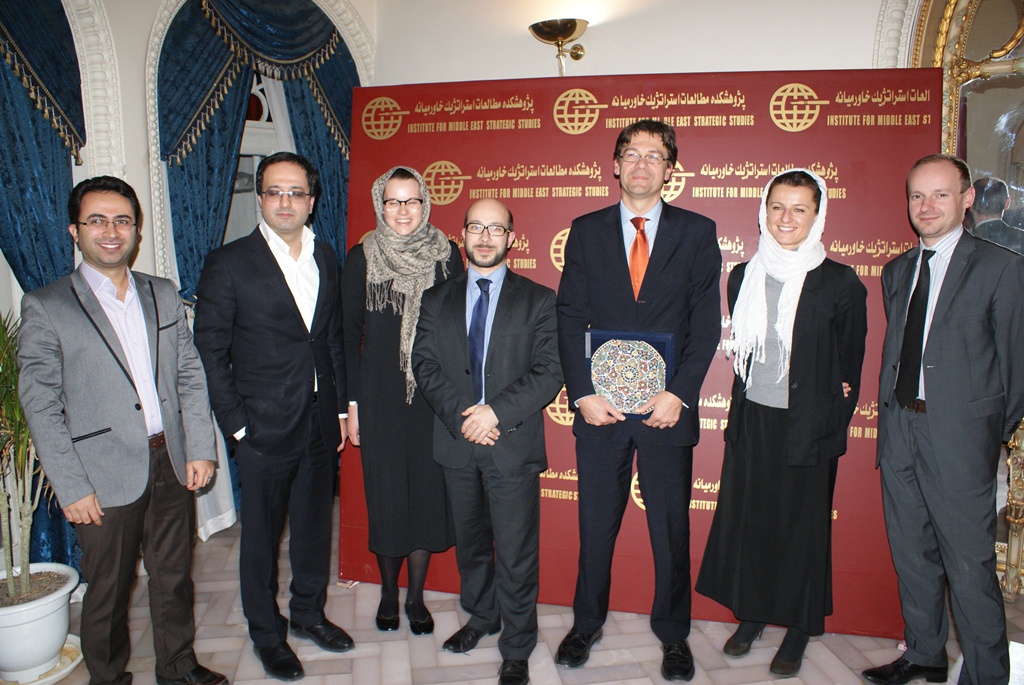
Apart from the roundtable hosted by the Institute for Political and International Studies (IPIS), PISM also participated in the seminar “Regional Relations in Light of the Syrian Crisis” organised by the Institute for Middle East Strategic Studies on 14 December 2013. Polish and Iranian experts also discussed security and strategic issues in the Middle East at the Center for Strategic Research (CSR) on 16 December 2013.
Programme of the Inaugural IPIS–PISM Joint Roundtable
Pictures from the seminar organised by the Institute for Middle East Strategic Studies